
Blog

10 Best Belt Conveying Equipment Manufacturers

Choosing a conveyor supplier can shape an entire production line. Small design errors may cause belt drift, product spills, or unexpected downtime.

This guide reviews 10 leading Belt Conveying Equipment manufacturers for industrial and commercial applications. It considers engineering capability, product range, installation support, and long-term reliability. Practical details matter. Belt width, load weight, incline angle, and operating speed can change the right selection. A food processor may need stainless steel frames and frequent washdown protection. A quarry may require impact-resistant belts, heavy-duty rollers, and stronger drive systems.

Performance is not the only concern. Service response, spare-parts availability, warranty terms, and maintenance guidance deserve equal attention. A conveyor that runs well for six months may still disappoint if replacement bearings take weeks to arrive. Experienced buyers also inspect guarding, emergency-stop access, tracking systems, and noise levels before approving a project.

No ranking is perfect.

Manufacturers often serve different industries and regional markets. A company that excels in mining may not suit pharmaceutical handling. Published specifications can also omit installation conditions, operator training, or lifetime maintenance costs. Therefore, this article treats the “best” manufacturers as strong candidates, not universal winners. Readers should verify current certifications, references, technical drawings, and service coverage directly with each supplier.

The goal is practical comparison. These manufacturers are assessed through visible engineering strengths, application experience, product consistency, and customer support. Careful selection can improve material flow, reduce manual handling, and protect production schedules. Yet even excellent equipment needs correct installation and regular inspection. Belts stretch. Rollers wear. Real reliability depends on both the manufacturer and the team operating the system.
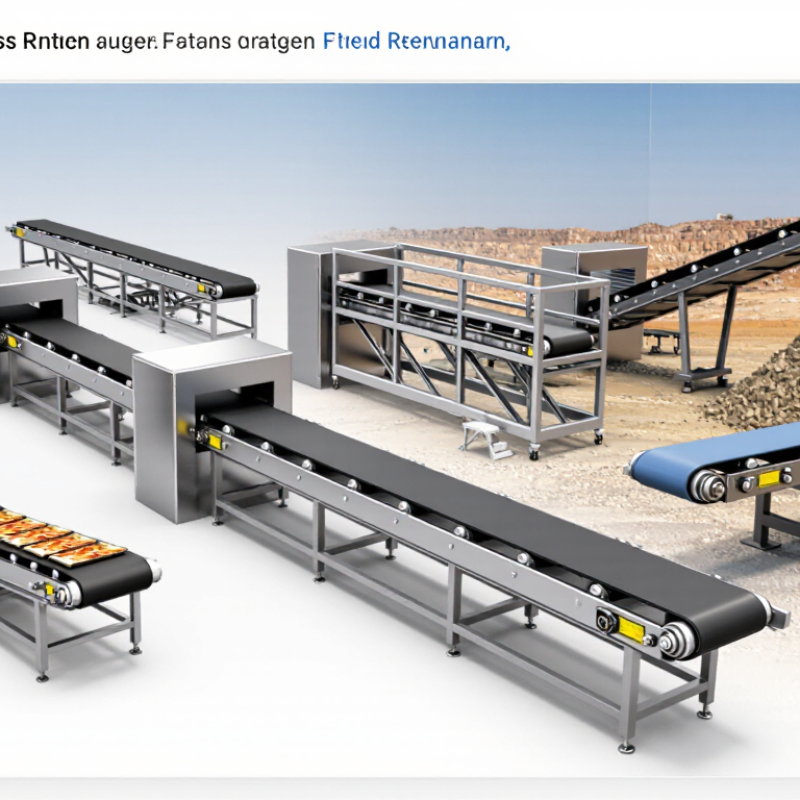
10 Best Belt Conveying Equipment Manufacturers

Belt Conveying Equipment: Types, Functions, and Applications

Belt conveying equipment moves bulk materials continuously across factories, warehouses, mines, and ports. Common types include troughed belt conveyors, flat belt conveyors, cleated systems, and enclosed pipe conveyors. Each design serves a different need.

Troughed belts support ore and grain. Flat belts handle cartons and parcels. Cleated belts carry products up steep inclines.

The equipment combines belts, pulleys, idlers, drives, frames, and controls. Its function is simple, but sizing is not. Belt width, speed, incline, material density, moisture, and loading impact performance.

Fortune Business Insights estimated the global conveyor belt market at USD 5.85 billion in 2023. The same report projects USD 8.35 billion by 2032.

These figures suggest steady demand, although market estimates differ by research method. Applications are expanding in e-commerce fulfillment, food processing, recycling, agriculture, and aggregate handling. A practical warning: theoretical capacity is rarely daily capacity. Spillage, belt cleaning, and uneven loading reduce real output.

Tips: Specify the material before selecting the belt. Measure density, particle size, temperature, and moisture. Leave access around transfer points for inspection.

Use guards and emergency stop systems. Check belt tracking weekly. Small alignment errors become expensive failures.

One assumption deserves review: faster is not always better. Lower speed may reduce dust, product damage, and maintenance. The U.S. Mine Safety and Health Administration also emphasizes guarding and safe conveyor access, making safety part of equipment design rather than an afterthought.

Key Criteria for Evaluating Belt Conveyor Manufacturers

10 Best Belt Conveying Equipment Manufacturers

Choosing among the 10 best belt conveying equipment manufacturers requires more than comparing prices. Start with the application. Check load weight, belt speed, product shape, moisture, temperature, and incline angle. A conveyor moving cartons needs different engineering from one carrying sharp aggregate.

Ask for drawings, material specifications, motor data, and documented test results. Reliable manufacturers explain belt tension, frame strength, pulley design, and emergency controls clearly. They should also provide guarding, maintenance access, spare-parts support, and realistic delivery schedules. A factory visit can reveal useful details. Look at weld quality, cable routing, bearing protection, and whether finished units run smoothly under load.

Tips: Request references for similar installations. Measure the available floor space twice. Ask who handles commissioning and future repairs. Compare total operating cost, not only the purchase price. A cheaper conveyor may consume more power or create frequent belt-tracking problems.

Good manufacturers also discuss failure risks before accepting an order. They should identify dust, vibration, sanitation, and overload concerns. Certification matters, but paperwork alone does not prove dependable performance. Watch a live test when possible. Listen for uneven rollers and inspect belt alignment after shutdown.

No supplier scores perfectly. Even careful projects can suffer from rushed measurements or unclear handover documents. That is why evaluation should include communication quality, corrective response, warranty limits, and operator training. A trustworthy partner admits design limits and records changes instead of hiding them.

Ten Leading Belt Conveying Equipment Manufacturers

Ten Leading Belt Conveying Equipment Manufacturers

The ten leading belt conveying equipment manufacturers are judged by more than production capacity. Their equipment must deliver stable material flow, accurate engineering, and maintainable designs.

MarketsandMarkets reported that the global conveyor system market could grow from about USD 9.4 billion in 2023 to USD 12.2 billion by 2028. This growth reflects stronger demand from mining, logistics, food processing, and bulk handling.

Real performance begins with site conditions. A reliable manufacturer studies belt width, incline angle, loading impact, material density, and moisture. It may recommend ceramic lagging for a wet transfer point or a stronger splice for heavy rock.

Operators should also inspect pulley alignment, idler noise, belt tracking, and emergency pull-cords during commissioning. Small details matter.

The top ten should provide documented testing, clear maintenance intervals, and responsive technical support. ISO-based quality procedures can improve consistency, but certification alone proves little.

Grand View Research estimates continued growth in conveyor belt demand through 2030, driven by automation and warehouse expansion. Yet reports rarely show the full cost of dust, mistracking, or unplanned stoppages.

That gap deserves attention. A cheaper conveyor may quietly become the expensive choice after months of corrective work.

Comparing Manufacturer Technologies, Services, and Market Strengths

Choosing among the 10 best belt conveying equipment manufacturers requires more than comparing catalog prices. Technology must fit the material, distance, incline, and operating environment. Robust systems may include variable-speed drives, enclosed transfer points, automatic belt tracking, and sensors for temperature or misalignment. These features reduce spillage and unexpected shutdowns. However, advanced controls are not automatically better. Operators may struggle with complex interfaces if training is weak. Real performance depends on practical design.

Service quality often separates a dependable manufacturer from an impressive seller. Evaluate installation support, spare-part availability, inspection routines, and response times. Ask for documented testing, maintenance records, and references from facilities with similar loads. Market strength also matters. A financially stable supplier may maintain parts for years and support regional technicians. Yet market size can create slow communication. During equipment reviews, I have seen teams overvalue international reach and undervalue local repair capability. That mistake can become expensive during a weekend failure.

Tips: Compare total ownership cost, not only the purchase quote. Request a clear warranty scope and service schedule. Test belt tracking under realistic load conditions. Check whether technicians can explain failures in plain language. Leave room for improvement; no conveyor design is perfect, and site conditions often reveal weaknesses after commissioning.

10 Best Belt Conveying Equipment Manufacturers - Comparing Manufacturer Technologies, Services, and Market Strengths

Comparative overview of ten anonymized manufacturer profiles. Company names and brand identifiers are intentionally omitted; capabilities are summarized using commonly documented industry offerings and market characteristics.
Profile Primary Conveyor Technologies Typical Belt Width Range Key Industries Served Engineering & Customization Automation & Digital Capabilities After-Sales Services Geographic Market Strength Sustainability Focus Technology Strength Service Strength Market Strength
Manufacturer 01 Overland conveyorsPipe conveyorsStackers Approx. 500–2,400 mm Mining, quarrying, bulk terminals, power generation Advanced site layouts, long-distance conveying, transfer-point engineering Condition monitoring, belt misalignment detection, PLC integration Commissioning, inspections, modernization, spare-parts support Strong in large mining and infrastructure projects worldwide Energy-efficient drives, dust suppression, regenerative conveying options 5/5 4/5 5/5
Manufacturer 02 Modular belt systemsSanitary conveyorsWashdown designs Approx. 150–1,500 mm Food processing, beverage, pharmaceuticals, personal care Hygienic frames, custom transfers, product-handling configurations Line controls, variable-speed drives, sensor-ready layouts Preventive maintenance, sanitation guidance, replacement modules Broad presence in North America, Europe, and Asia-Pacific Water-reduction designs, efficient motors, recyclable belt materials 5/5 5/5 4/5
Manufacturer 03 Steel belt conveyorsDrag conveyorsApron conveyors Approx. 300–2,000 mm Recycling, waste handling, foundries, scrap processing Heavy-duty construction, abrasive-material handling, impact-resistant transfers Load monitoring, jam detection, automated controls Field service, wear-part replacement, rebuild programs Established strength in North American industrial markets High-durability components that extend service life and reduce replacement waste 4/5 4/5 4/5
Manufacturer 04 Incline conveyorsCleated beltsMerges and transfers Approx. 200–1,200 mm Warehousing, parcel handling, e-commerce, distribution centers High-throughput layouts, compact transfers, application-specific belt profiles Sortation interfaces, barcode integration, warehouse-control connectivity On-site installation, system audits, upgrades, technical training Strong in automated logistics projects across developed markets Low-friction components, efficient gearmotors, optimized conveyor routing 4/5 5/5 5/5
Manufacturer 05 Telescopic conveyorsTruck loadersMobile conveyors Approx. 400–1,400 mm Parcel logistics, warehousing, ports, bulk loading Mobile configurations, height-adjustable structures, loading-bay customization Remote diagnostics, motor controls, operator safety interlocks Installation support, operator training, mobile-equipment servicing Strong in logistics and loading applications in Europe and the Middle East Reduced manual handling, variable-speed operation, lower idle energy use 4/5 4/5 4/5
Manufacturer 06 Steel cord systemsHigh-angle conveyorsOverland systems Approx. 800–3,000 mm Mining, minerals processing, cement, bulk export terminals High-capacity design, steep-angle layouts, complex terrain engineering Predictive maintenance, belt tension monitoring, centralized control systems Lifecycle contracts, audits, emergency response, component refurbishment Strong in large-scale projects across Latin America, Africa, and Asia Regenerative drives, reduced earthworks, optimized transfer points 5/5 4/5 5/5
Manufacturer 07 Roller-bed conveyorsAccumulation conveyorsPallet systems Approx. 300–1,800 mm Automotive, manufacturing, packaging, general material handling Modular system design, pallet handling, accumulation-zone engineering Programmable controls, motorized rollers, manufacturing execution interfaces Spare parts, retrofit packages, maintenance contracts, operator training Well established in industrial automation markets worldwide Zero-pressure accumulation, efficient motors, reduced compressed-air use 4/5 5/5 4/5
Manufacturer 08 Magnetic conveyorsChip conveyorsCoolant filtration Approx. 150–1,000 mm Machine tools, metalworking, machining, industrial recycling Custom filtration, chip-management layouts, coolant-recovery integration Level sensors, pump controls, machine-tool interfaces Application testing, replacement parts, repair and refurbishment services Strong in specialized metalworking markets in North America, Europe, and Asia Coolant recovery, reduced fluid waste, durable wear components 4/5 4/5 3/5
Manufacturer 09 Vacuum conveyorsFlexible screw systemsEnclosed conveying Approx. 100–600 mm Pharmaceuticals, chemicals, food powders, nutraceuticals Containment-focused layouts, dust-controlled transfers, cleanroom-compatible designs Recipe controls, batch tracking, integrated weighing and dosing Validation assistance, preventive maintenance, process optimization Strong in regulated process industries across Europe and North America Closed conveying reduces product loss, dust emissions, and cleaning requirements 5/5 5/5 4/5
Manufacturer 10 Portable conveyorsRadial stackersTracked systems Approx. 450–1,800 mm Aggregates, construction, demolition, recycling, temporary sites Rapid-deployment systems, mobile configurations, site-specific stockpiling layouts Remote fleet monitoring, hydraulic controls, safety shutdown systems Dealer networks, field repairs, rental-fleet support, wear-part supply Strong in mobile equipment markets in North America, Europe, and Australia Reduced truck haulage, lower site emissions, electric-drive options 4/5 4/5 4/5

How to Choose the Right Belt Conveyor Manufacturer

How to Choose the Right Belt Conveyor Manufacturer

Choosing among the 10 best belt conveying equipment manufacturers requires more than comparing prices. Start with the material, load, belt width, incline, and operating hours. A supplier should explain these calculations clearly, not hide them behind generic specifications. Ask for drawings, test records, maintenance intervals, and references from similar applications. Real experience matters here.

Energy performance also deserves careful attention. The U.S. Department of Energy reports that motor-driven systems use about 70% of industrial electricity in the United States. Therefore, request motor efficiency data, drive-control options, and expected energy consumption. The conveyor’s frame, pulley design, belt tracking, and emergency stopping system should match recognized safety requirements. A cheaper quotation may become expensive after repeated belt misalignment.

Service quality often separates capable manufacturers from average ones. Check spare-parts availability, technician response times, installation training, and remote diagnostics. Ask whether performance data is measured under realistic loads. The Conveyor Equipment Manufacturers Association publishes technical guidance widely used across the industry, but compliance alone does not guarantee good engineering. A spreadsheet can still miss dust, moisture, temperature changes, or awkward access around the conveyor. Review those conditions honestly. Slightly over-specifying critical components may be wiser than choosing the lowest initial bid.

10 Best Belt Conveying Equipment Manufacturers — How to Choose the Right Belt Conveyor Manufacturer

Before comparing manufacturers, define the operating requirements of your conveyor. Belt speed is a practical starting point because it affects throughput, product handling, dust generation, and equipment selection.

The ranges shown are typical engineering reference values for common conveyor applications. Actual specifications depend on material characteristics, belt width, loading rate, incline, safety requirements, and local standards. Use these ranges to compare whether a manufacturer can support your operating conditions.

Go to Top