
Blog

2026 Best Cable Protection Sleeve Buying Guide

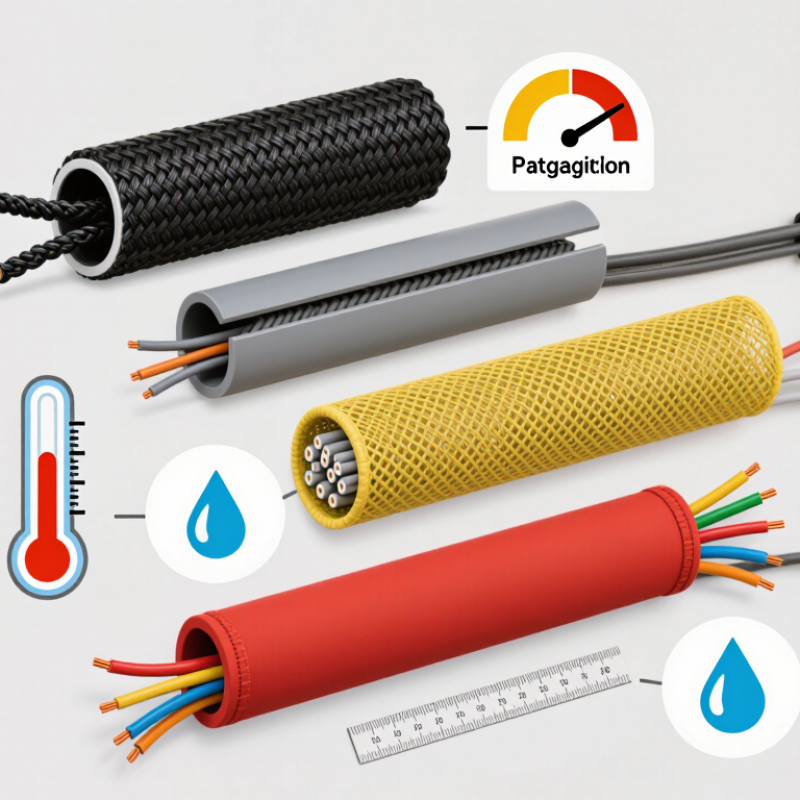
Choosing the right Cable Protection Sleeve in 2026 requires more than comparing prices and photographs. A sleeve may look durable online, yet fail when dragged across a sharp cabinet edge or exposed to engine heat. This guide examines practical details that buyers often overlook, including material strength, abrasion resistance, flexibility, temperature range, and installation speed. It also considers braided, split, expandable, and fire-resistant designs for different working environments.

Real conditions matter.

A workshop cable bundle faces dust, oil, vibration, and repeated movement. An office installation may need quiet routing, clean appearance, and easy access for future maintenance. We will explain how sleeve diameter, expansion range, closure design, and bend radius affect protection in daily use. Manufacturer data remains essential, especially for heat ratings, flame behavior, chemical resistance, and compatibility with cable jackets. Independent testing can add confidence, but not every product receives the same level of verification.

No sleeve is perfect.

A thicker design may resist abrasion better but complicate tight bends. A lightweight sleeve can install quickly but offer less shielding against crushing forces. Buyers sometimes choose based on appearance alone, and that decision can become expensive later. This guide combines field-based observations, technical comparisons, and careful product evaluation to support a more reliable purchase. It also acknowledges an important limitation: performance depends on correct sizing, routing, and installation. The best protection system is not always the most expensive one. It is the one that matches the cable, environment, and maintenance plan.
2026 Best Cable Protection Sleeve Buying Guide

What Is a Cable Protection Sleeve and Why Is It Important?

What Is a Cable Protection Sleeve and Why Is It Important?

A cable protection sleeve is a flexible cover placed around wires, cords, or cable bundles. It helps shield them from abrasion, heat, dust, moisture, and accidental pulling. Common materials include braided fabric, expandable mesh, woven polyester, and heat-resistant fiberglass. Each material suits different conditions. A workshop cable may need abrasion resistance, while an outdoor cable may require stronger moisture protection.

Small damage matters.

During cable assembly inspections, exposed wires often show wear near bends, connectors, and sharp frame edges. A sleeve creates a protective barrier and keeps several cables organized as one bundle. This reduces tangling and makes maintenance easier. It can also improve safety by limiting contact with damaged insulation. However, a sleeve cannot repair a broken cable. It may hide early damage, which is an easy mistake to make.

Choosing the right sleeve requires more than checking its appearance. Measure the cable bundle’s relaxed diameter and allow enough space for connectors and movement. Check temperature ratings, flexibility, flame behavior, chemical resistance, and installation method. A tightly fitted sleeve can restrict bending and increase stress near terminals. A loose sleeve may slide and expose vulnerable sections. In real installations, both errors occur. Inspect the sleeve regularly, especially where cables rub against metal, move repeatedly, or face oil and moisture. Reliable protection depends on correct sizing and ongoing inspection, not just the sleeve material.

Key Types of Cable Protection Sleeves and Their Best Uses

2026 Best Cable Protection Sleeve Buying Guide

Key Types of Cable Protection Sleeves and Their Best Uses

Cable protection sleeves are not interchangeable. Each type handles a different risk. Braided sleeves suit grouped wires that need airflow and flexible routing. Their woven structure expands around connectors and resists light abrasion. I often use them behind control panels, where heat buildup can become a quiet problem.

Split braided sleeves install quickly without disconnecting terminals. They work well for repairs, retrofits, and frequently modified equipment. However, the split can expose cables to sharp edges if it is not secured properly. Expandable sleeves offer a tighter, cleaner fit. Choose them for moving cable bundles, but check their expansion range before ordering. A poor fit leaves gaps.

Corrugated conduits provide stronger impact and crush protection. They are useful near machinery, under floors, and inside vehicle compartments. Use suitable fittings at both ends. Otherwise, dust and moisture may enter. Spiral wrap is easier to open than most sleeves. It fits irregular branches and temporary wiring, though it gives less complete coverage. Heat-shrink sleeves create a compact seal around individual cables or joints. They need controlled heating and the correct shrink ratio.

Material selection matters as much as sleeve style. Nylon handles general abrasion, while polyester offers flexible bundling. Fiberglass sleeves tolerate higher temperatures but can irritate skin during installation. Measure the cable bundle, movement, heat, and nearby fluids. I once chose a sleeve by diameter alone, and the routing failed after repeated bending. The specification looked right. The application was not.

2026 Best Cable Protection Sleeve Buying Guide - Key Types of Cable Protection Sleeves and Their Best Uses

Cable Protection Sleeve Type Typical Material Main Protection Typical Temperature Range* Flexibility and Installation Best Uses Key Advantages Important Limitations
Expandable Braided Sleeve Polyester (PET) monofilament and multifilament braid Abrasion, cable bundling and light mechanical wear Approximately −50°C to 150°C Expands to pass over connectors and contracts around cable bundles; can be cut to length Automotive harnessesIndustrial wiringComputer cables Lightweight, flexible, breathable and easy to install over irregular bundles Usually offers limited protection against crushing, liquids, chemicals and sharp objects; cut ends may fray without sealing
Flame-Retardant Braided Sleeve Flame-retardant polyester or polyamide braid Abrasion and flame-spread reduction when the product is appropriately certified Commonly approximately −40°C to 150°C; verify the specific construction Expandable and flexible; installed by sliding over cables or routing through the open braid Control cabinetsRail equipmentTransportation systems Combines cable organization with improved flame performance; available in continuous lengths “Flame-retardant” does not mean fireproof; certification, wall thickness and installation conditions must match the application
Split Corrugated Loom Polyethylene (PE) or polypropylene (PP) Abrasion, impact, routing damage and moderate environmental exposure PE versions commonly approximately −40°C to 93°C; PP versions may support higher temperatures Longitudinal slit allows cables to be inserted without disconnecting terminals; relatively rigid Vehicle engine compartmentsMachine wiringUnder-desk cable routing Fast retrofit installation, good crush resistance and strong bundle organization Less flexible than braided sleeves; the split can open under severe movement unless secured with clips or ties
Spiral Cable Wrap Polyethylene, polypropylene or nylon Basic abrasion protection and cable separation Commonly approximately −40°C to 93°C, depending on material Wraps around existing cables; branches can exit at almost any point; easy to remove and reuse Office equipmentRoboticsAdjustable cable bundles Low cost, reusable, highly adaptable and suitable for bundles with frequent branch-outs Provides limited coverage at the spiral gaps and is not a sealed barrier against water, dust or chemicals
Hook-and-Loop Cable Sleeve Woven polyester, nylon or polypropylene with hook-and-loop closure Abrasion, organization and repeated access Commonly approximately −40°C to 85°C; verify the fabric and closure rating Wraparound design opens along its length; ideal when cables must be added or removed regularly Server racksAudio/video systemsTest benches Reusable, tool-free installation and excellent access for maintenance or cable changes Not normally suitable for high-temperature zones, immersion, high-pressure washing or severe mechanical exposure
Silicone-Coated Fiberglass Sleeve Fiberglass braid coated with silicone rubber High-temperature exposure, abrasion and incidental contact with molten splash Often approximately −60°C to 260°C; some constructions have higher short-term limits Flexible braided sleeve; may require expansion or a slit for installation over terminated cables FurnacesWelding equipmentMotors and generators Excellent heat resistance, electrical insulation and flexibility around hot equipment Not automatically resistant to every chemical, flame or pressure condition; confirm required approvals and abrasion rating
Heat-Shrinkable Tubing Cross-linked polyolefin, fluoropolymer or elastomer Electrical insulation, moisture sealing, strain relief and abrasion Polyolefin commonly approximately −55°C to 135°C; specialty materials may cover wider ranges Requires heating after placement; must be selected with an appropriate shrink ratio and recovery temperature Cable splicesTerminationsConnector backshells Provides a close-fitting, durable covering and can seal against moisture when properly selected and installed Usually cannot be installed over large connectors without a high shrink ratio; heat can damage sensitive cables or nearby components
Heavy-Duty Protective Hose Polyurethane (PU), thermoplastic rubber (TPR) or reinforced PVC Impact, abrasion, crushing and outdoor handling damage Commonly approximately −40°C to 90°C, depending on formulation More rigid and heavier than textile sleeves; may use split, hinged or end-entry designs Construction equipmentFactory floorsRobotic dress packs Strong mechanical protection and better resistance to dragging or repeated contact with rough surfaces Large bend radius, added weight and limited suitability for compact or highly flexible cable paths
Metal Braided Sleeve Stainless steel or tinned copper braid High abrasion, heat, mechanical damage and, for suitable designs, electromagnetic shielding Stainless-steel versions may withstand temperatures above 500°C; insulation and adjacent materials may limit the assembly Flexible but heavier and less compliant than textile braid; often installed before connectors are fitted High-heat machineryShielded assembliesIndustrial sensors Excellent mechanical and thermal performance; conductive versions can support grounding or shielding designs Can be electrically conductive, may require grounding, can have sharp cut edges and is generally more expensive and difficult to terminate
Cable Drag Chain with Internal Sleeve Engineering polymer chain with textile, plastic or custom internal cable protection Repeated bending, guided motion, abrasion and cable separation Often approximately −20°C to 80°C for common polymer systems; check the chain and sleeve ratings Designed for a defined bend radius, travel distance and fill ratio; requires correct routing and strain relief CNC machinesAutomated equipmentPick-and-place systems Controls cable movement and protects wiring during continuous reciprocating motion Requires engineering calculations for speed, acceleration, bend radius and cable compatibility; unsuitable for unplanned routing
Chemical-Resistant Fluoropolymer Sleeve PTFE, FEP or PVDF Chemicals, solvents, moisture, high temperature and electrical insulation Commonly approximately −60°C to 200°C; PTFE constructions may support higher continuous temperatures Available as tubing or thin-wall braid; tubing requires access over the cable end before termination Laboratory equipmentChemical processingAerospace wiring Very good chemical resistance, low friction and stable electrical properties across a broad temperature range Higher cost, less stretch than textile sleeves and potentially difficult processing or termination
Fire-Barrier Sleeve Silica, ceramic fiber, fiberglass or specialized coated textile Radiant heat, flame exposure and short-duration thermal protection Product-specific; some ceramic and silica constructions are rated above 500°C Usually flexible but thicker; may use hook-and-loop, split or end-entry construction Exhaust systemsFurnace wiringEmergency equipment Provides a thermal barrier where ordinary plastic or textile sleeves would soften or fail Must be selected by continuous temperature, exposure duration and flame standard; it may not provide sealing or electrical insulation by itself
Buying note: Temperature ranges are typical material-level values, not universal guarantees. Before purchase, confirm the exact product’s continuous and short-term temperature ratings, flame classification, chemical compatibility, bend radius, cable bundle diameter, installation method and required industry approvals.

How to Choose the Right Cable Protection Sleeve

2026 Best Cable Protection Sleeve Buying Guide

How to Choose the Right Cable Protection Sleeve

Choosing a cable protection sleeve starts with the working environment, not its appearance. Measure the cable bundle, then add enough space for movement and future changes. A sleeve that fits tightly may compress cables or make repairs difficult. In my experience, abrasion resistance matters most near sharp brackets, moving machinery, and vehicle panels.

Match the material to the conditions. PET braided sleeves are flexible and suitable for everyday abrasion protection. Split sleeves install quickly when connectors cannot be removed. Heat-resistant fiberglass options suit areas near engines or industrial equipment, but they may feel stiff. Check the stated temperature range, chemical resistance, UV performance, and flame behavior. Do not assume a thicker sleeve is always safer. I once selected an oversized sleeve, and it shifted during vibration.

Tips: Measure the largest connector. Check the sleeve’s expanded and closed diameters. Leave room for bends without forcing the cables. Choose a closure that matches maintenance needs, such as hook-and-loop, zipper, or split construction. For outdoor use, confirm UV resistance and moisture performance from technical documents. Avoid relying only on product photos. A sleeve can look durable while its stitching or edge treatment remains weak. Test a short sample around the tightest bend before purchasing a full length. That small step can reveal unexpected friction, noise, or installation problems.

Essential Features, Materials, and Performance Factors

2026 Best Cable Protection Sleeve Buying Guide
Essential Features, Materials, and Performance Factors

Choosing a cable sleeve starts with the working environment, not appearance. During field inspections, I measure bundle diameter after connectors and bends are installed. A sleeve that fits perfectly on the bench may bind during maintenance. Allow room for movement, expansion, and future cables. Check temperature, abrasion, moisture, chemicals, and flame behavior before comparing prices. These details determine real performance.

Material selection affects flexibility, durability, and installation speed. Braided polyester sleeves are lightweight and useful for general abrasion protection. Nylon usually handles tougher rubbing and repeated movement. Silicone-coated fiberglass sleeves suit areas exposed to high temperatures, but they may feel stiff. Split sleeves improve access during repairs, while expandable designs fit changing bundle sizes. A tight sleeve is not always safer.

Performance should be judged through installation and repeated use. Look for stable expansion, clean cut resistance, and closures that resist vibration. Test a sample around the actual cable route. Bend it near a cabinet edge. Pull gently at both ends. I once underestimated heat near a motor, and the outer braid hardened within months. That mistake changed my checklist. Published temperature and flame ratings matter, but test methods can differ. Ask for test conditions and traceable technical data. Leave inspection points visible where failure would be costly.

2026 Best Cable Protection Sleeve Buying Guide

Essential features, materials, and performance factors for selecting cable protection sleeves in automotive, industrial, electrical, and high-temperature applications.

The chart shows typical maximum continuous operating temperatures for common cable-sleeve material categories. Actual ratings vary by construction, wall thickness, chemical exposure, flexing, and installation conditions. Always verify the manufacturer’s technical datasheet before specifying a sleeve.

Installation, Maintenance, and Buying Tips for 2026

2026 Best Cable Protection Sleeve Buying Guide

Installation starts with accurate measurements. Measure the cable bundle, bends, connectors, and nearby heat sources. Choose a sleeve with enough inner clearance for movement. A tight fit can crush insulation during pulling or vibration. A loose fit may slide and expose the cable.

Clean the cable surface before installation. Remove dust, oil, and sharp debris. Check the sleeve for cuts, weak stitching, or uneven edges. Secure the ends with suitable clamps or bands, but avoid excessive pressure. In field work, rushing this step often creates hidden damage. I once underestimated a bend radius, and the sleeve wore through earlier than expected. That mistake reinforced the need for a wider curve and a final hand inspection.

Tips: Select materials according to heat, abrasion, moisture, and chemical exposure. Confirm the sleeve’s temperature range before purchase. Leave access near connectors for future testing. During maintenance, inspect high-contact points every few months. Look for flattening, frayed fibers, discoloration, and cable movement. Replace damaged sections promptly. Keep installation records, including measurements and environmental conditions. Product specifications are useful, but real site conditions deserve equal attention. Check compatibility with the cable jacket, because some materials can soften or become brittle over time.

Go to Top