Choosing a cable assembly manufacturer in 2026 means looking beyond a polished website or a low unit price. Global buyers need partners who can interpret drawings, manage component sourcing, and deliver repeatable quality across production runs. A connector that fits perfectly in a sample may still fail when cable length, shielding, or routing changes. Small details matter.
This guide examines manufacturers through practical questions: What industries do they serve? Can they support prototypes and volume orders? Do they provide clear inspection records, traceability, and relevant test data? Buyers should also ask about lead times, engineering communication, and how suppliers handle design changes. These checks help reveal whether a manufacturer can support a real project, not just make a convincing sales presentation.
There is no universal “best” supplier. A medical-device team, an industrial equipment maker, and an automotive buyer may need different certifications, testing, and production capacity. A strong shortlist should match those needs with evidence, such as documented quality systems, sample evaluation, and transparent process controls. Verify claims directly. Details can change.
The comparisons ahead are intended to help global buyers assess options more consistently, not to replace supplier audits or technical review. Even a careful overview has limits: public information may not show how a factory performs under schedule pressure. Treat rankings as a starting point, then confirm the details that affect your assembly, delivery plan, and long-term reliability.

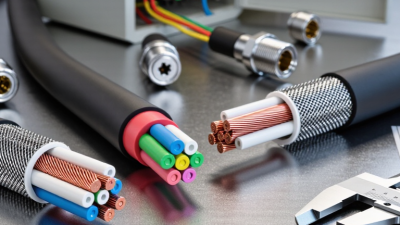
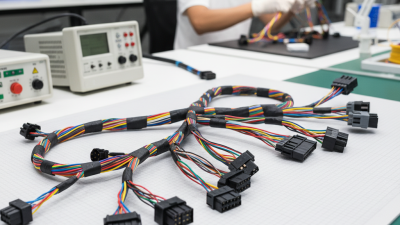
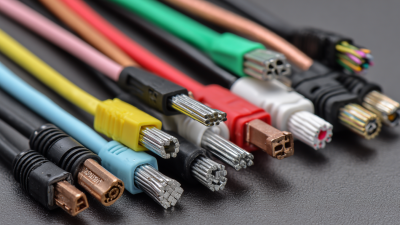
Cable assembly types solve different problems. Wire harnesses bundle several wires into a routed, labeled unit, often with clips or branches for a vehicle or machine. They simplify installation, but tight bends can strain conductors or loosen terminals. Coaxial cables carry high-frequency signals through a central conductor and surrounding shield. Check impedance, connector fit, and shielding continuity; a poor termination can invite interference. Fiber-optic assemblies transmit data as light. They resist electromagnetic interference and suit long data links, though end-face cleanliness and bend radius need careful control. Power assemblies carry current, so conductor size, insulation, and temperature rise matter. Heat is easy to underestimate.
For global sourcing, match the manufacturer’s process to the assembly, not just the quoted price. Ask how it controls crimp height, soldering, optical end-face inspection, and electrical testing. Request drawings, material traceability, and sample results tied to your actual operating conditions. A sample should fit the enclosure and route without force. Small detail. Also confirm how packaging protects connectors during transit and whether production changes are documented. Standards and test methods vary by application, so specify the ones your engineering team requires. One uncomfortable truth: a polished sample can hide inconsistent production. Review repeatability, not appearance alone. The right supplier should explain trade-offs clearly, including limits in materials, lead time, and test coverage.
For global buyers, a low unit price means little if crimps loosen under vibration. IPC/WHMA-A-620 defines three workmanship classes, matched to different product uses. Class 1 covers general electronic products; Class 2 addresses products requiring dependable service; Class 3 applies to high-performance or harsh-environment products. These are acceptance categories, not grades of supplier prestige.
The standard gives inspectors observable checks, including crimp appearance, conductor position, insulation support, and soldering quality. A practical audit can compare a sample harness against the class named on its drawing, then record measured crimp height and visible defects. IPC/WHMA-A-620 is the key industry reference here; it defines requirements, but does not publish a universal defect-rate benchmark. Don’t confuse compliance paperwork with consistent workmanship.
Small details matter. A terminal may look neat yet fail a pull test. Buyers should confirm the required class, inspection method, and sampling plan before production starts. Class 3 may suit critical service, but applying it everywhere can add cost without improving the actual use case. I would also challenge one assumption: a signed checklist alone cannot prove stable process control. Ask for recent inspection records, calibration evidence, and corrective-action examples, then verify them against the agreed acceptance criteria.
ISO 9001:2015 offers a practical framework for evaluating cable assembly suppliers, but a certificate is only a starting point. Its ten clauses cover scope, references, and terms, followed by requirements for context, leadership, planning, support, operations, performance evaluation, and improvement. The ISO Survey 2022 reported 1,265,216 valid ISO 9001 certificates across 189 countries and economies. That scale makes careful supplier-level verification essential.
Review clauses 4–6 for the supplier’s defined scope, management accountability, and risks affecting production. Under clause 7, check operator training records, controlled work instructions, and calibration records for crimp-height gauges. Clause 8 deserves close attention: trace a sample order from wire cutting through crimping, continuity testing, and final inspection. Look for dated records, not just polished procedures. Small gaps matter.
Clauses 9 and 10 test whether the system learns from results. Ask for internal audit findings, defect trends, and corrective-action evidence tied to repeat failures. ISO 9001:2015 requires monitoring and improvement; it does not certify every harness design or batch. A neat manual can still hide weak shop-floor habits. I’d also compare documented controls with what operators actually do—a step that is easy to rush.
For global buyers, a cable assembly’s compliance file should match the exact materials and construction being purchased. RoHS restricts ten substances: lead, mercury, cadmium, hexavalent chromium, PBB, PBDE, DEHP, BBP, DBP, and DIBP. The usual limits apply to each homogeneous material, not the finished assembly as a whole: 0.1% for most substances and 0.01% for cadmium. Exemptions may apply, so a supplier’s “RoHS compliant” statement is not enough by itself. Ask for current declarations and supporting test records tied to the part number.
Details matter. A jacket, insulation layer, and contact plating may use different materials. Check that documentation covers each relevant part, and confirm whether the cited test method and report remain valid after a material or process change. A neat spreadsheet can still hide an old revision. That happens.
UL 758 addresses appliance wiring materials, including construction and electrical ratings. It does not automatically certify an entire cable assembly or prove RoHS compliance. For a proposed assembly, verify the wire’s exact type, temperature and voltage ratings, and whether its intended use matches the design. Request applicable certification records and traceable material specifications. Then review the finished assembly against the destination market’s requirements; rules and customer expectations can differ. One overlooked substitution can undo a carefully prepared file.
The chart shows the EU RoHS maximum concentration limits by weight in each homogeneous material: 0.1% for nine substances and 0.01% for cadmium. Applicable exemptions may affect specific uses. UL 758 is a separate standard for appliance wiring material; check the relevant requirements and product documentation when evaluating cable assemblies.
Comparing cable assembly manufacturers means looking beyond quoted price. Engineering depth shows in drawing reviews, material traceability, and how quickly teams resolve a pinout change. Ask for first-article records, crimp-height measurements, and test plans tied to your actual build. Ask for evidence. A polished factory tour cannot replace recent quality data.
Capacity is more than floor space. Check available tooling, trained operators, backup processes, and realistic weekly output. Deloitte and MAPI’s 2024 smart-manufacturing survey found that 86% of manufacturers viewed smart manufacturing as a key future competitiveness driver. For buyers, that makes traceable work instructions and production data worth examining—not just impressive automation. The 2021 Deloitte–Manufacturing Institute report projected 2.1 million U.S. manufacturing jobs could remain unfilled by 2030, a broad workforce warning that also puts staffing stability on the supplier checklist. Lead times deserve similar scrutiny: request component-level schedules, test turnaround, and the assumptions behind quoted dates. One weak point can stretch the whole order. Even a detailed comparison misses something; actual performance may change when a design, forecast, or material source shifts.
2026 Manufacturer Comparison: Engineering, Capacity, Testing, and Lead Times
| Comparison Dimension | What Buyers Should Compare | Evidence to Request | Practical Comparison Method |
|---|---|---|---|
| Engineering capability | Design-for-manufacture support, drawing and BOM review, wire and connector selection, prototype support, and engineering-change control. | A documented design-review process, sample inspection records, revision-control procedures, and examples of engineering feedback with confidential details removed. | Submit the same drawing package to each candidate and compare clarification quality, identified risks, and response time. |
| Production capacity | Available output for the specific assembly, production shifts, equipment constraints, staffing plan, and ability to manage demand changes. | A capacity statement tied to the quoted product, stated in units per week or month, plus current loading, ramp plan, and contingency arrangements. | Compare capacity against your forecast and peak demand; distinguish demonstrated output from uncommitted or planned capacity. |
| Quality system | Quality-system scope, traceability, nonconformance handling, corrective action, supplier controls, and change management. | Current certificates with scope and expiry dates, audit information, sample inspection reports, and documented corrective-action procedures. ISO 9001 is a quality-management-system standard; certification alone does not establish product conformity. | Check that the certificate covers the relevant site and activities, then assess product-specific controls separately. |
| Assembly workmanship | Crimping, soldering, splicing, routing, marking, protection, and inspection requirements for the supplied cable or wire harness. | The agreed workmanship specification and acceptance criteria. IPC/WHMA-A-620 is a commonly used requirements and acceptance standard for cable and wire harness assemblies; confirm the applicable revision and class in the purchase documents. | Require the same standard, class, drawing revision, and acceptance criteria in every quotation to make offers comparable. |
| Electrical and functional testing | Continuity, shorts, pin mapping, insulation resistance, hipot, or application-specific functional tests as required by the design. | A test plan linked to the product specification, tester capability, calibration records, test limits, and sample test reports. Not every assembly requires every test. | List required tests and acceptance limits in the RFQ; compare test coverage, records, and unit-level traceability. |
| Material and compliance control | Control of wire, terminals, connectors, labels, and customer-approved substitutions, together with applicable regulatory and environmental requirements. | Material declarations and certificates applicable to the supplied parts, lot traceability, and a written approval process for substitutions. Verify any requested UL or other compliance claim against the exact component or finished-product scope. | Compare the evidence for the exact part numbers and intended market; do not treat a component approval as approval of the complete assembly. |
| Lead time | Prototype, first-article, production, and replenishment lead times, including material procurement and any approval dependencies. | A dated quotation stating the lead-time start point, assumptions, material availability, production slot, shipping terms, and treatment of engineering or customer-approval delays. | Compare like-for-like schedules and ask for separate estimates for samples, initial production, and repeat orders. There is no universal industry lead time. |
| Delivery performance | On-time delivery definition, measurement period, handling of partial shipments, and escalation process for schedule risks. | Recent, anonymized delivery-performance data with the calculation method and reporting period clearly stated. | Use the same on-time definition and period for all candidates; distinguish historical performance from contractual commitments. |
| Global logistics and support | Export documentation capability, shipping options, packaging requirements, time-zone coverage, and issue-escalation contacts. | A sample shipping-document checklist, proposed Incoterm, packaging specification, and named operational and quality escalation roles. | Evaluate total landed cost and response coverage for the destination market, not quoted unit price alone. |
© 2023 JEM Electronics, Inc. – United States Cable Assembly. All rights reserved.