
2026 Best Gummy Making Machine for Global Buyers?
Choosing the 2026 best Gummy Making Machine requires more than comparing speed, price, or promotional claims. Global buyers need equipment that performs reliably across different recipes, climates, production volumes, and food safety systems. A machine that works smoothly in a dry European plant may behave differently in a humid tropical facility. Small details matter, including depositor accuracy, cooking control, cooling capacity, mold compatibility, cleaning access, and spare-part availability.
Dr. Richard W. Hartel, a respected confectionery technology expert, has emphasized a practical principle: “Consistent confectionery quality depends on controlling the process, not simply choosing good ingredients.” That idea guides this review. The best Gummy Making Machine should maintain stable temperatures, accurate syrup weights, repeatable depositing, and dependable texture from batch to batch. It should also support transparent documentation, operator training, and compliance with applicable food regulations.
Performance is visible on the production floor. Look for evenly filled molds, clean release, limited waste, and gummies that hold their shape after cooling. Maintenance should not require excessive downtime. Neither should sanitation feel like an afterthought.
Still, no machine is perfect. A high-speed system may demand skilled operators, stronger utilities, or more complicated maintenance. A lower-cost model may appear attractive, yet create hidden expenses through inconsistent output and delayed support. This guide compares practical factors for international buyers, including capacity, automation, customization, energy use, installation, and after-sales service. The final choice should reflect your real factory conditions, not only a polished specification sheet.
What Is a Gummy Making Machine?
2026 Best Gummy Making Machine for Global Buyers?
What Is a Gummy Making Machine?
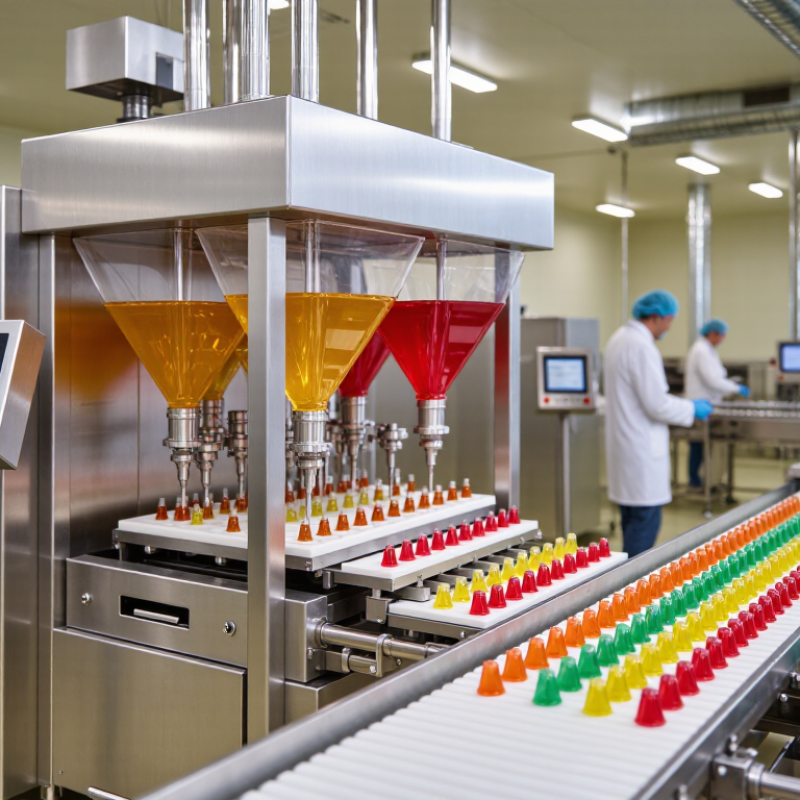
A gummy making machine is a food-processing system that turns liquid candy syrup into shaped gummies. It usually includes a cooking tank, mixing unit, depositor, molds, cooling area, and cleaning controls. The system heats ingredients evenly, removes excess moisture, and deposits precise amounts into starch or silicone molds. After cooling, the gummies are demolded, inspected, and prepared for packaging.
In practical production, temperature control matters greatly. A few degrees can change texture, color, and setting time. A reliable machine should offer adjustable depositing speed, stable heating, food-grade contact surfaces, and easy access for sanitation. Production capacity also deserves careful attention. A compact line may suit small batches, while a larger system can support continuous output. However, higher speed is not always better. It may increase waste when recipes or molds are not properly tested.
Tips: Check the machine’s heating accuracy, mold compatibility, cleaning method, and operator safety features. Ask for sample testing before purchase. Review electrical requirements for your country. Do not ignore after-sales training. That small omission can become an expensive problem. Buyers should also confirm documentation, material certificates, and maintenance access. I have found that specifications alone can be misleading; actual gummy trials reveal more than a polished equipment sheet.
2026 Best Gummy Making Machine for Global Buyers? - What Is a Gummy Making Machine?
| Machine Type | What It Does | Typical Production Capacity | Gummy Forming Method | Best For | Main Advantages | Key Limitations | Typical Utility Requirements | Global Buyer Considerations | Recommended Buyer Profile |
|---|---|---|---|---|---|---|---|---|---|
| Manual or Semi-Automatic Depositor | A gummy making machine that heats, mixes, and deposits liquid gummy mass into molds with manual or partially automated operation. | Approximately 5–30 kg per hour, depending on the hopper size, recipe, mold size, and operator speed. | Depositing into starch, silicone, or metal molds. | Product development, small confectionery businesses, pilot production, and seasonal products. | Lower initial investment, simple operation, flexible mold changes, and convenient recipe testing. | Lower labor efficiency, less consistent dosing than fully automatic systems, and limited large-scale output. | Usually single-phase or three-phase electricity; heated hopper or cooking vessel; compressed air may be required for pneumatic dosing. | Confirm local voltage, plug configuration, food-contact materials, spare-part availability, and operator training requirements. | Small-scale and start-up buyers |
| Automatic Gummy Depositor | An integrated production unit that automatically controls heating, mixing, dosing, and depositing of gummy candy mass. | Approximately 30–150 kg per hour, depending on the number of depositing nozzles and product formula. | Multi-nozzle depositing into starch, silicone, or metal molds. | Growing confectionery factories and regular commercial production. | Improved portion accuracy, reduced manual labor, repeatable production, and faster mold filling. | Higher purchase cost, more complex cleaning, and greater sensitivity to recipe viscosity and temperature. | Commonly three-phase electricity, heated processing tanks, compressed air, cooling water, and suitable drainage. | Check electrical frequency, sanitation design, installation space, food-grade seals, and documentation for import clearance. | Medium-sized commercial producers |
| Automatic Gummy Production Line | A complete system that may include cooking, mixing, depositing, cooling, demolding, oiling, sugar coating, and conveying. | Approximately 100–500 kg per hour, with capacity determined by line configuration and gummy size. | Continuous or batch depositing with automated mold handling. | High-volume gummy candy production and standardized product ranges. | High throughput, consistent quality, reduced handling, and easier integration with packaging equipment. | Large footprint, higher capital cost, longer commissioning time, and less economical for low-volume products. | Three-phase power, compressed air, process water or cooling water, ventilation, drainage, and adequate factory utilities. | Evaluate shipping dimensions, container loading, factory layout, installation support, local service, and regulatory compliance. | Large-scale manufacturers and contract producers |
| Starch Mogul System | A gummy production system that uses starch trays to form, condition, and release gummy pieces after depositing. | Often approximately 100–500 kg per hour, depending on tray size, cycle time, and line design. | Depositing into starch molds formed in trays. | Traditional gummy candy, high-volume shapes, and products requiring starch molding. | Suitable for complex shapes, established confectionery processes, and efficient large-batch production. | Starch handling creates dust and cleaning requirements; humidity control and starch management are important. | Heating, compressed air, cooling, ventilation, starch conditioning, and space for tray circulation and storage. | Consider local occupational-safety rules, dust control, starch disposal, humidity conditions, and cleaning procedures. | Industrial confectionery plants |
| Silicone Mold Gummy Line | A system that deposits gummy mass into reusable silicone molds and transfers the molds through cooling and demolding stages. | Approximately 30–300 kg per hour, depending on mold quantity, cavity design, and automation level. | Depositing into reusable silicone molds. | Premium shapes, low-starch production, functional gummies, and frequent product changes. | Lower starch use, flexible product shapes, easier visual inspection, and good suitability for different formulations. | Silicone molds require proper cleaning and replacement planning; mold cost can increase with many shapes. | Electric heating, cooling air or chilled water, compressed air, and washable drainage systems. | Verify silicone compliance for food contact, mold durability, cleaning validation, and compatibility with local food regulations. | Flexible and premium-product manufacturers |
| Functional Gummy Depositor | A precision depositing machine designed for formulations containing vitamins, minerals, botanical extracts, or other active ingredients. | Approximately 10–150 kg per hour, depending on product viscosity, dosage accuracy, and ingredient sensitivity. | Precision depositing into silicone, starch, or metal molds. | Dietary supplements, nutraceutical products, and controlled-dose gummy formats. | Accurate dosing, recipe traceability, temperature control, and compatibility with smaller serving sizes. | Active ingredients may be sensitive to heat, oxidation, shear, or moisture; process validation is essential. | Controlled heating, accurate weighing, compressed air where applicable, cooling, and hygienic water and drainage systems. | Review local supplement regulations, batch records, allergen controls, cleanability, calibration, and validated dosing performance. | Supplement and nutraceutical producers |
| Research and Development Gummy Machine | A compact laboratory or pilot-scale unit used to test recipes, colors, flavors, active ingredients, and mold designs. | Approximately 1–20 kg per hour, depending on batch size and depositing configuration. | Small-batch depositing into laboratory or production-representative molds. | Product development, universities, test kitchens, and quality-control laboratories. | Small material consumption, quick formulation changes, and useful scale-up data. | Not intended for continuous industrial production; manual steps may remain necessary. | Standard laboratory or industrial electricity, heated vessel, ventilation, and optional compressed air. | Check data logging, calibration, sample traceability, cleaning access, and compatibility with laboratory procedures. | R&D teams and new-product developers |
| High-Speed Servo Depositor | A precision depositing system using servo-controlled pumps or valves to regulate gummy volume, speed, and filling patterns. | Approximately 150–600 kg per hour, depending on the number of lanes, cavities, and product characteristics. | High-speed multi-nozzle depositing into automated mold systems. | Large factories requiring high output and repeatable piece weight. | Fast operation, accurate dosing, programmable recipes, and reduced variation between production batches. | Higher technical complexity, greater maintenance requirements, and limited value for small production volumes. | Three-phase power, compressed air, cooling systems, process controls, and factory-grade sanitation facilities. | Assess automation integration, control-system language, remote support, cybersecurity, spare parts, and technician training. | High-volume and automation-focused producers |


© 2023 JEM Electronics, Inc. – United States Cable Assembly. All rights reserved.