Industrial heating decisions affect product quality, cycle time, and operating costs. Rod Heaters are used in equipment such as molds, hot plates, packaging machinery, and process tooling. Their compact form can deliver heat close to a working surface, but a close fit alone does not guarantee reliable performance. Small details matter. A poorly matched heater may create uneven temperatures, shorten service life, or slow production.
This 2026 buyer’s guide examines the specifications that deserve attention before a purchase. Compare voltage, wattage, diameter, heated length, sheath material, and lead configuration against the equipment design. Check the application’s target temperature, heat-up time, and surrounding conditions. Watt density is especially important: excessive loading for a given installation can contribute to premature failure. Fit comes first. Confirm dimensions and tolerances with the equipment drawing, rather than relying on a product name or a visual estimate.
The guide also considers practical sourcing questions, including available custom options, documentation, quality checks, delivery expectations, and replacement support. Ask suppliers for clear specifications and relevant test records, then review them against your operating requirements. A heater’s advertised maximum temperature may not reflect its performance in your assembly. Not always. Real results depend on heat transfer, installation, controls, and maintenance. The right choice is the one supported by verifiable data and a realistic understanding of the process—not simply the lowest quoted price.
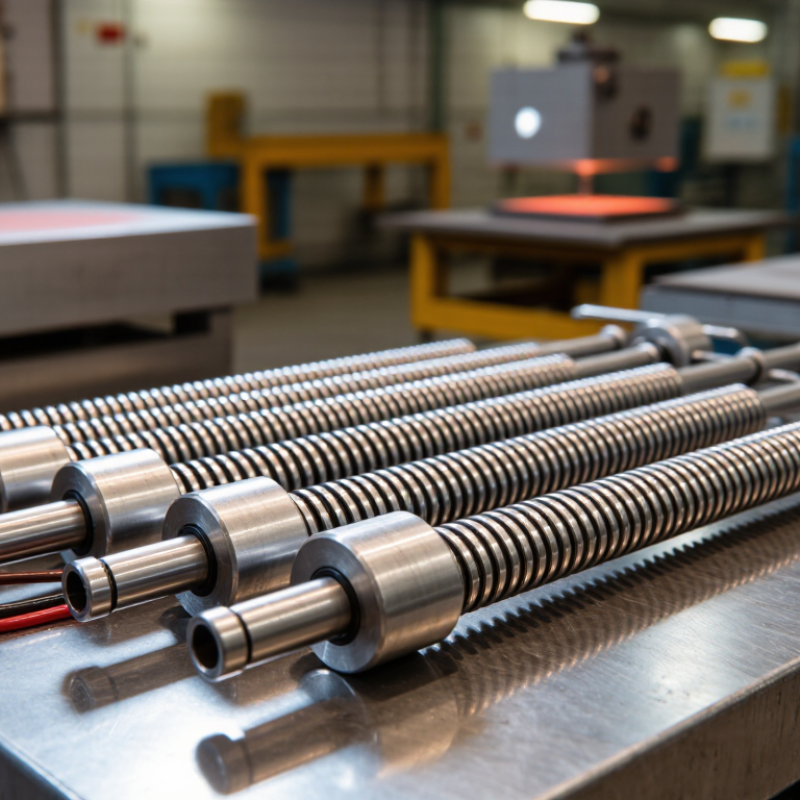
Rod heaters convert electrical energy into heat through resistance. Current passes through a resistive element inside a metal sheath, warming the rod. Heat then transfers by conduction into a surrounding metal block, die, tank, or other material. In a drilled bore, close contact matters: gaps slow heat transfer and can create hot spots. The heater itself is simple. The installation is not always.
Rod-style heaters suit compact, localized heating tasks where equipment needs a steady operating temperature. Engineers match rod diameter, heated length, voltage, wattage, and sheath material to the application. Temperature sensors and controllers help limit overshoot, while proper grounding and secure installation support dependable operation. A heater rated for a dry metal block may not suit a fluid tank. That detail is easy to miss.
The U.S. Department of Energy’s process-heating technical resources estimate that process heating accounts for about 36% of manufacturing energy use. This helps explain why heater selection and control can affect both production and energy demand. For buyers, check the component’s operating temperature, heat losses, and duty cycle before sizing. A small mismatch can mean slow warm-up or premature failure. Real equipment varies, so calculations should be confirmed against actual operating conditions.

Rod heaters are not one design. Cartridge heaters fit drilled bores in dies, plates, and tooling, where close contact helps move heat into a solid workpiece. Their compact form supports high watt density, but a loose bore can create hot spots and shorten service life. Fit matters.
Tubular heaters use a resistance coil insulated inside a metal sheath, commonly with compacted magnesium oxide. They can be bent or formed for air ducts, platens, and clamp-on heating. Immersion heaters use similar sheathed elements, but place them directly in tanks or process fluids. Their sheath material must suit the fluid, while circulation and minimum liquid level affect safe operation. These types are not interchangeable.
The U.S. Department of Energy’s 2007 process-heating sourcebook estimates that process heating accounts for about 36% of energy used in U.S. manufacturing. That figure makes heat transfer and control practical buying concerns, not small details. Compare watt density, operating temperature, sheath material, and sensor placement against the actual load. There is no universal winner. Even careful sizing can miss real-world heat loss around fixtures or tank walls. A useful specification records those conditions, not only the heater’s rated power.
Approximate maximum element temperatures by resistance-element material commonly used in rod-style heaters.
Design differences: Nickel-chromium elements are widely used for general heating; iron-chromium-aluminum elements support higher element temperatures; molybdenum disilicide elements are used in high-temperature furnace applications. These are approximate element-material limits, not guaranteed heater or sheath operating temperatures. Actual limits depend on construction, atmosphere, watt density, and installation.
For 2026 purchasing, compare more than rated wattage. Check voltage, power tolerance, heated length, and overall rod diameter against the machine’s available space. A 12 mm rod may fit a worn bore differently from a new one. That detail can affect heat transfer and service life.
Compare watt density with the material being heated and the expected operating temperature. Excessive surface loading may cause uneven heating or shorten heater life. Review sheath material, insulation resistance, lead-wire temperature limits, and connection style for the actual environment.
Not always. A specification sheet may not show how a heater performs through frequent start-stop cycles, so ask for test data when cycling is common. Confirm dimensional tolerances and cold-section length before ordering; small mismatches can complicate installation.
Also check control compatibility and available over-temperature protection. A lower-cost unit can look suitable on paper, yet still require changes to wiring or mounting. Record the conditions each heater must handle, including temperature, runtime, and exposure to moisture or debris.
A rod heater should match the process, not just the available space. Start with the material being heated, its operating temperature, and the time allowed for warm-up. A tank of viscous oil needs a different heat profile from a metal block or a moving air stream. Details matter.
Check the heater’s wattage and watt density against the process fluid and the available heat-transfer area. Excessive surface loading can lead to local overheating, especially when fluid flow is weak or deposits build up. Confirm the required insertion length, clearance, and sheath material with the equipment supplier. Corrosive fluids and frequent cleaning can change the material choice. Measure twice.
Operating conditions matter just as much. Note the supply voltage, temperature cycling, ambient moisture, vibration, and control method. A thermostat may be enough for a simple application, while a sensor and controller can help manage tighter temperature limits. Include room for thermal expansion and safe access during maintenance. A tidy drawing can still miss a cable route or a nearby obstruction, so verify dimensions on the equipment itself.
For a sound selection, compare the heater’s rated conditions with actual process data, not ideal assumptions. Ask how the unit behaves during low-flow or dry-start conditions, if those could occur. I would be cautious about choosing by wattage alone. The operating record is sometimes incomplete; confirm uncertain details before ordering.
2026 Best Rod Heaters for Industrial Buyers
Rod heaters may look simple, but installation details shape their safety and service life. The U.S. Department of Energy’s Improving Process Heating System Performance sourcebook estimates that process heating uses about 17% of U.S. industrial energy. Even modest heat loss deserves attention. Match heater watt density and sheath material to the process fluid, operating temperature, and available flow. Keep the active heating section fully immersed where required, and avoid tight bends or unsupported loads on the terminals. A neat installation can still be wrong.
Before wiring, isolate and verify the supply is de-energized. Bond the metal sheath, protect terminals from moisture, and use independent overtemperature protection where process conditions warrant it. IEC 60519-1:2020 provides general safety requirements for industrial electroheating installations; confirm applicable site requirements with a qualified electrical professional. During maintenance, inspect connections for discoloration, loose lugs, corrosion, and damaged insulation. Check for scale or deposits that can trap heat, then verify sensor readings against a calibrated reference. Record current draw and operating temperature at consistent intervals. Trends help reveal drift before a heater fails, though they do not replace inspection. Small details matter. A missed deposit can be easy to explain after a fault, but harder to catch beforehand.
| Rod Heater Type | Best-Fit Industrial Use | Installation Requirements | Safety Requirements | Maintenance Requirements | Key Procurement Checks |
|---|---|---|---|---|---|
| Cartridge-style rod heater | Heating metal tooling, dies, platens, and other solid components with accurately sized bores. | Use a clean, correctly sized bore with close contact between the heater and surrounding metal. Provide for lead routing and thermal expansion; do not force an oversized element into a bore. | Use temperature control and independent overtemperature protection appropriate to the application. Confirm the heater is fully seated as specified and that leads are protected from heat, abrasion, and moving parts. | With power isolated and the assembly cool, inspect leads, terminals, and the bore for wear, contamination, or looseness. Check resistance and insulation condition according to the maintenance plan. | Confirm bore diameter and depth, heated length, voltage, power, lead style, operating temperature, and the supplier’s installation clearances. |
| Straight tubular rod heater | General-purpose heating in equipment where a sheathed element can be supported in a channel, fixture, or assembly. | Support the element as specified and avoid sharp bends, crushing, or direct contact with incompatible materials. Allow room for expansion and ensure connections remain accessible. | Ground metal sheaths and equipment as required by applicable electrical codes. Use suitable overcurrent protection, temperature controls, and guards against accidental contact with hot surfaces. | Inspect the sheath for corrosion, deformation, or damage and check terminals for looseness or overheating. Replace elements showing electrical or mechanical damage. | Check sheath material, dimensions, bend configuration, wattage, voltage, connection type, and compatibility with the process environment. |
| Finned rod heater | Heating moving air in ovens, ducts, and industrial air-handling equipment where increased surface area is useful. | Install with adequate airflow and the orientation and clearances specified for the assembly. Keep fins unobstructed and provide suitable supports for the heater and wiring. | Use airflow or fan interlocks where loss of airflow could cause overheating. Provide overtemperature protection and prevent combustible deposits from accumulating on hot surfaces. | Isolate power before cleaning. Remove dust and deposits using a method that will not bend fins or damage the sheath; inspect airflow components and electrical connections. | Verify airflow, duct dimensions, air temperature, fin material, pressure-drop constraints, power supply, and required temperature limits. |
| Flanged or screw-plug immersion rod assembly | Heating liquids in tanks or process vessels when the assembly is designed for direct immersion. | Install through a compatible vessel opening with appropriate sealing and mechanical support. Keep the active heating section immersed at the required liquid level and allow access for removal. | Use low-liquid-level protection or another suitable means to prevent dry firing. Confirm the sheath and seal materials are compatible with the liquid, temperature, and operating conditions. | Before servicing, isolate and cool the equipment and drain the vessel when required. Inspect for scale, corrosion, leakage, and damaged terminals; clean using methods suitable for the sheath material. | Check liquid chemistry, vessel pressure and temperature, immersion depth, sheath material, flange or plug dimensions, sealing method, and electrical requirements. |
| High-watt-density rod heater | Compact installations requiring substantial heat output from a limited element surface area, subject to process and material limits. | Install only in the specified fit and heat-transfer conditions. Confirm that the surrounding material or fluid can remove heat adequately and that control sensors represent the actual process temperature. | Assess the risk of localized overheating, especially in viscous, stagnant, or low-level conditions. Use suitable temperature limits and process interlocks; do not exceed the heater’s rated conditions. | Monitor for hot spots, deposits, discoloration, or changes in electrical readings. Investigate recurring element failures before installing a replacement. | Request the rated watt density and its basis, operating limits, required heat-transfer conditions, control recommendations, and compatibility data for the application. |
| Low-watt-density rod heater | Applications where gentler heat transfer is preferred, such as temperature-sensitive processes or liquids prone to fouling, when the design permits. | Confirm the element has sufficient active surface area and is installed in the intended medium or assembly. Maintain the specified immersion, spacing, and support conditions. | Use process-appropriate temperature control and protection against low liquid level or loss of heat transfer. Verify electrical enclosure and wiring suitability for the installation environment. | Inspect for deposits and corrosion that may reduce heat transfer. Check wiring, seals, and element condition during planned shutdowns. | Compare required heat output, available installation area, process temperature, medium properties, and the element’s rated operating conditions. |
Selection note: “Rod heater” can describe different element and assembly designs. Confirm the exact construction and intended medium with the supplier. Final sizing, wiring, grounding, controls, and installation must follow the heater documentation and applicable electrical and process-safety codes.
© 2023 JEM Electronics, Inc. – United States Cable Assembly. All rights reserved.