2026 Best Porcelain Bushing Types for Global Buyers
Global buyers comparing Porcelain Bushing types need more than a catalog image or voltage rating. They need to understand how design, materials, and installation conditions affect service life. A bushing that performs well in a clean indoor substation may face very different demands near a salt coast, in heavy rain, or beside industrial dust.
This guide compares common porcelain bushing designs by application, electrical rating, mounting arrangement, and operating environment. It also highlights details buyers should confirm with manufacturers: creepage distance, insulation level, conductor connection, dimensions, and applicable test documentation. Small details matter. A mismatched flange can delay installation; an unsuitable creepage distance can raise concerns in polluted conditions. Specifications should be checked against the actual equipment and site, not selected by price alone.
A credible named expert quotation cannot be verified from the material provided, so I have not invented one. That matters. A fabricated quotation would weaken buyer confidence rather than build it. Before placing an order, ask suppliers for technical drawings, routine and type-test records, and clear guidance on storage and handling. Porcelain is strong under compression, but impact can cause hidden damage. Inspect each unit carefully. This comparison offers a practical starting point, not a substitute for engineering review.
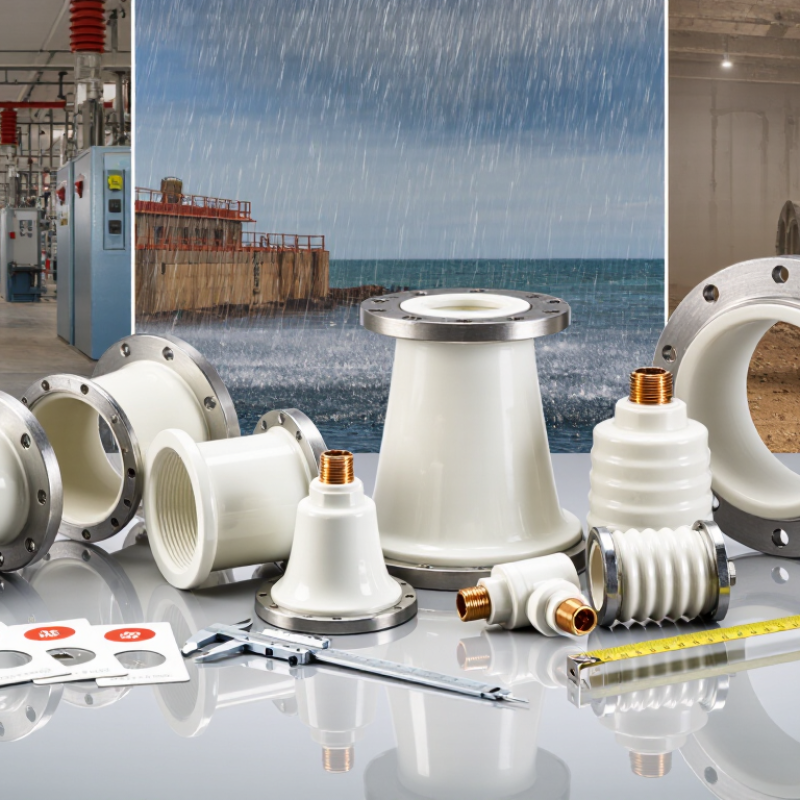
What Is a Porcelain Bushing and What Does It Do?
A porcelain bushing is an insulated passage that lets an energized conductor cross a grounded barrier safely. At a transformer tank, for example, it carries current through the metal wall while keeping the conductor electrically separated from the enclosure. It also helps support the conductor and maintain clearance from grounded parts. Without a sound bushing, current may track across the insulation or flash over. That is the job.
The porcelain body provides electrical insulation and a durable outer surface. Its sheds—the ridges around the ceramic—lengthen the path that current would have to travel across a wet or contaminated surface. Some high-voltage designs also use internal capacitive grading to manage the electric field. Details vary. A bushing’s construction depends on its voltage class, location, and equipment.
For a practical selection, check the rated voltage and current, mounting dimensions, terminal arrangement, and required creepage distance. Outdoor units may need longer sheds where rain, salt, or dust are concerns. Inspect the ceramic for cracks and damaged glaze; impact can weaken it even when the part looks substantial. Looks can mislead. Compare the equipment drawing with verified test data, since a bushing that fits mechanically may still be unsuitable electrically.
2026 Best Porcelain Bushing Types for Global Buyers — What Is a Porcelain Bushing and What Does It Do?
What the chart shows: A porcelain bushing insulates an energized conductor where it passes through a grounded barrier, such as a transformer tank. These selected IEC standard highest voltages for equipment (kV) provide context for choosing a bushing’s voltage class; they are not ratings for every porcelain bushing design. Actual suitability depends on the equipment, insulation system, and applicable standards.
How Are Porcelain Bushings Classified by Design and Voltage?
Porcelain bushings are commonly classified by insulation design, mounting location, and rated voltage. These categories can overlap, so a product label alone may not describe its full application. A solid porcelain design often suits lower-voltage equipment, while hollow designs can accommodate a central conductor and connect equipment such as transformers or switchgear.
For higher voltage levels, condenser-type bushings use layered insulation to control the electric field. Some designs use oil-impregnated paper; others use resin-impregnated materials. The choice depends on equipment layout, operating conditions, and maintenance requirements. Small details matter. A flange, gasket, or terminal arrangement must match the equipment interface, not just the drawing.
Voltage classifications are usually stated as a rated system voltage or equipment voltage class, but the number is only a starting point. Buyers should check insulation levels, service conditions, and required creepage distance, especially where dust, salt, or moisture may collect on the porcelain surface. Indoor and outdoor versions can differ in sheds and surface dimensions. The labels are not perfectly tidy across suppliers, so comparing technical drawings and test data is safer than comparing voltage figures alone. A cautious check can prevent a bushing that fits electrically but not physically.
Which Porcelain Bushing Types Suit Different Applications?
Porcelain bushings suit different applications according to voltage, current, insulation medium, and installation environment. A transformer bushing carries a conductor through the grounded tank wall while keeping electrical clearances around it. For lower-voltage service, a solid porcelain design may be suitable. Higher-voltage transformers often use condenser-graded designs to control electric stress along the insulation. Check the equipment drawings: mounting dimensions and connection details must match.
Wall bushings are used where conductors pass through substations or building enclosures. Outdoor versions typically have longer sheds to increase creepage distance, which can help in coastal or dusty locations. Indoor installations may use shorter sheds when contamination and moisture exposure are limited. Details matter. A post insulator may support a busbar, but it does not automatically replace a bushing that must pass through a grounded barrier.
For selection, compare rated voltage and current with the system requirements, then check pollution exposure, altitude, temperature, and mechanical loading. Confirm the porcelain profile, flange arrangement, and terminal orientation against the actual installation. In practice, a neat catalog match can still be wrong if the site is unusually humid or polluted. That deserves a closer review. Manufacturers’ test data and applicable equipment specifications provide useful checks before purchase.
How Do Standards and Environmental Conditions Affect Selection?
For global buyers, porcelain bushing selection starts with the equipment rating and the standards named in the project specification. IEC and IEEE documents cover relevant design and testing requirements, but they are not interchangeable in every application. Check the required editions, voltage class, insulation levels, and test records with the supplier. Small details matter. A bushing that passes a factory test may still be unsuitable if its mounting dimensions or terminal arrangement differ from the site drawing. Review continuous current, temperature rise, impulse withstand, and cantilever strength before approval.
The installation environment can change the choice. Coastal salt, cement dust, or industrial deposits increase surface contamination and may call for greater creepage distance. At high altitude, thinner air can reduce external insulation performance; confirm whether derating or added clearance is needed. Cold mornings followed by hot operating conditions also stress seals and connected hardware. Consider humidity, vibration, seismic loads, and maintenance access. A clean datasheet can still miss the actual site problem. I would not choose by voltage rating alone. Ask for pollution-class assumptions, material and test documentation, and installation limits, then compare them with measured site conditions. Some projects lack reliable contamination data, so the final selection may need review after a site survey.
How Can Global Buyers Compare and Choose Porcelain Bushings in 2026?
2026 Best Porcelain Bushing Types for Global Buyers
Global buyers should compare porcelain bushings by service conditions, not by voltage rating alone. Start with the equipment type: transformer, wall, switchgear, or instrument applications use different interfaces and loads. Confirm rated voltage, continuous current, insulation level, and terminal dimensions against the equipment drawing. Then examine creepage distance, pollution exposure, altitude, and temperature range. These details shape performance. At a coastal site, salt deposits may require a different surface path than at a clean inland substation. Ask for applicable IEC or IEEE references and routine-test records, clearly linked to the model being offered.
Mechanical strength deserves equal attention. Check cantilever load, mounting orientation, conductor weight, and expected vibration. For outdoor service, inspect the porcelain glaze and end fittings for chips, cracks, or uneven sealing. Request dimensions, mass, packing details, and hardware specifications before shipment. Compare lead time and spare-part availability too. A low purchase price can become expensive when a bushing does not fit the existing flange. One caution: a polished datasheet is not proof of field suitability. Compare test evidence with actual site conditions, and ask which assumptions remain uncertain. That question is easy to miss.