
Blog

What Are Agitators and How Do They Work?

What Are Agitators and How Do They Work? The answer begins with a simple idea: Agitators move fluids, powders, or suspended solids inside a vessel. Their rotating blades create controlled flow, helping materials mix more evenly. You may see them in stainless-steel tanks, wastewater basins, food-processing lines, and chemical production systems.

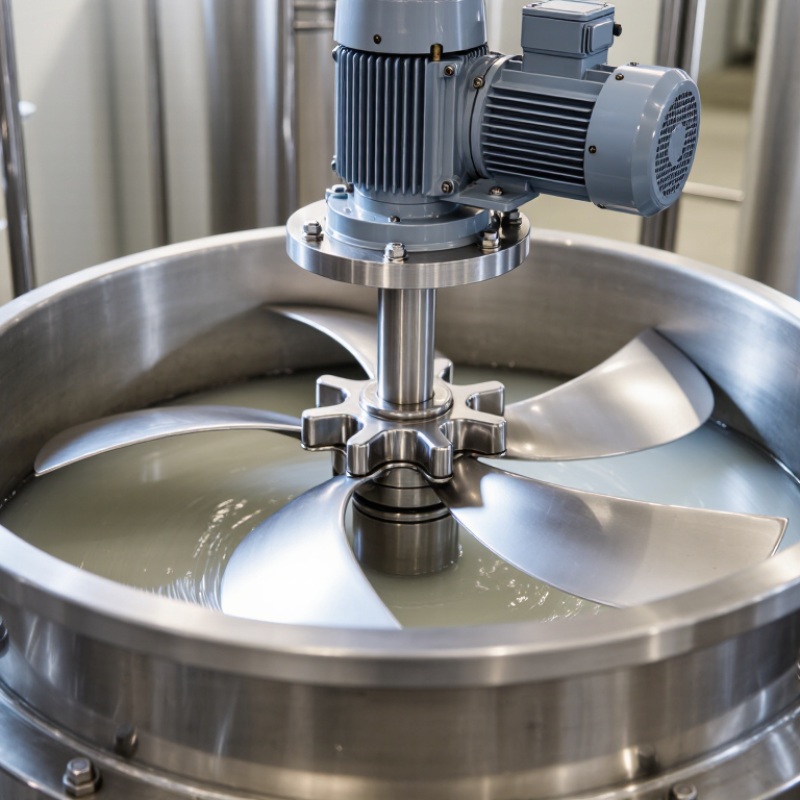
An agitator usually includes a motor, gearbox, shaft, impeller, and support structure. The motor supplies rotation. The shaft transfers that motion into the tank. The impeller then pushes material upward, downward, or outward. Blade shape, speed, tank size, and fluid viscosity determine the final mixing pattern. A small propeller may blend a thin liquid quickly. A broad paddle may handle thicker products with less turbulence.

The details matter.

In practice, engineers select agitators by studying density, temperature, viscosity, and required mixing time. They also consider heat transfer and solids suspension. For example, a poorly matched impeller can leave powder settled near the tank floor. Excessive speed may create a deep vortex, wasting energy and pulling air into the product. That outcome is easy to overlook.

Reliable design depends on testing, operating data, and maintenance records. Inspectors often check seals, bearings, vibration, and shaft alignment. These observations can reveal wear before production stops. Still, no single agitator works perfectly for every process. Real tanks are rarely ideal. Scale-up calculations can also miss small but important flow differences. Careful trials and ongoing review remain essential for safe, consistent performance.
What Are Agitators and How Do They Work?

What an Agitator Is and the Role It Serves

An agitator is a mechanical device that moves liquid, powder, or suspended particles inside a process vessel. It usually includes a motor, drive shaft, and rotating impeller. The impeller transfers energy into the material. This movement creates circulation throughout the tank.

Its role depends on the process. An agitator can blend two liquids, keep solid particles from settling, or improve heat transfer near a vessel wall. It may also disperse gas into a liquid. In a food process, gentle movement protects texture. In a chemical process, stronger shear may help a reaction proceed evenly. Tank shape, viscosity, filling level, and impeller design all influence performance.

A calm surface can be misleading. The liquid may still move well below it. Conversely, a fast surface vortex may indicate wasted energy, not better mixing. Baffles often reduce this swirling and improve vertical circulation. Operators should check samples from different tank locations, not only the outlet. That small step can reveal poor blending.

Choosing an agitator requires practical testing. A design suitable for water may struggle with syrup or a thick suspension. Excessive speed can introduce air, heat the material, or damage delicate ingredients. Insufficient speed leaves dead zones behind. Real systems are rarely perfect. Even a carefully designed agitator may need speed adjustments as viscosity changes during processing.


Core Components and Design Features of Agitators

What Are Agitators and How Do They Work?

Core Components and Design Features of Agitators

An agitator is a mechanical system that moves liquid, slurry, or suspended solids inside a vessel. Its core components include a motor, gearbox, shaft, impeller, mounting plate, and sealing assembly. The drive system supplies rotational force, while the gearbox adjusts speed and torque for the process. A rigid shaft transfers this energy to the impeller below the liquid surface.

Geometry matters. Axial-flow impellers move material vertically, supporting circulation through tall tanks. Radial-flow impellers push material outward and create stronger local shear. Engineers select the impeller according to viscosity, solids concentration, tank dimensions, and required mixing time. A poorly matched impeller can waste power and leave stagnant zones.

Inside the vessel, baffles reduce swirling and improve bulk movement. Without them, the liquid may rotate as one mass. That looks active but may mix poorly. Material selection also affects service life, especially with corrosive or abrasive fluids. Mechanical seals prevent leakage around the rotating shaft, while bearings support alignment and reduce vibration. Small leaks matter.

Variable-speed drives allow operators to adjust mixing intensity during changing conditions. Torque capacity must account for startup loads, not only normal operation. During field inspections, technicians should check vibration, seal temperature, unusual noise, and motor current. A common design mistake is assuming more speed always means better mixing. That assumption can increase heat, foam, and wear. Good design leaves room for maintenance, although this requirement is sometimes underestimated during installation planning.

How Agitators Create Motion and Mix Materials

What Are Agitators and How Do They Work?

Agitators create motion inside tanks, vessels, and processing equipment. A motor turns a shaft, while blades transfer energy into the material. That energy produces circulation, turbulence, or controlled shear. The resulting flow moves particles, spreads heat, and distributes ingredients more evenly. It may look simple. It is not.

Blade shape controls the movement pattern. Axial-flow blades push material vertically, while radial-flow blades drive it outward against the vessel wall. Helical designs can move thick materials with less slipping. Engineers select these patterns by studying viscosity, density, solids content, and tank geometry. The U.S. Department of Energy reports that motor-driven systems can consume roughly 60% of industrial electricity in some facilities. Poorly selected agitators can therefore waste substantial energy. More speed is not always better.

A practical check begins with the impeller tip speed and power demand. Operators should watch for dead zones, surface whirlpools, vibration, and uneven temperature readings. These details reveal whether the tank is truly mixed. Industrial mixing guidance commonly compares power consumption using the power number, Reynolds number, and impeller diameter. Yet calculations still need field verification. A material may behave differently after heating, dilution, or particle loading. That is where many designs become less certain.

Sometimes a slower agitator, better baffle placement, and longer residence time outperform a faster motor. The result can be quieter, cooler, and easier to control.

Main Agitator Types and Their Operating Differences

What Are Agitators and How Do They Work?

Main Agitator Types and Their Operating Differences

An agitator is a rotating device that moves liquid, slurry, or suspended solids inside a tank. A motor turns the shaft, while blades transfer energy into the process fluid. Baffles usually prevent a deep vortex and improve circulation. The result depends on blade shape, speed, tank geometry, and fluid viscosity.

Propeller agitators create strong axial flow, pushing material from top to bottom. They suit low-viscosity liquids and blending duties. Turbine agitators produce stronger radial flow, making them useful for gas dispersion and moderate solids suspension.

Paddle agitators move gently and work well in shallow tanks. They are not ideal for rapid blending. Anchor agitators sweep close to the tank wall, supporting heat transfer in thick fluids. Helical ribbon agitators handle very viscous products with slower, broader movement.

Operating differences become obvious during production. A high-speed propeller can blend water quickly but may add unwanted air. An anchor turns slowly, yet it keeps paste moving near heated surfaces. In hands-on trials, technicians should check dead zones, shaft vibration, surface foam, and settling after shutdown. Small changes in speed can alter power demand sharply. More speed is not always better.

Some selections still go wrong. Engineers may focus on viscosity and overlook particle size or temperature changes. A reliable assessment should use measured process data, not guesswork.

Common Uses and Performance Considerations of Agitators

What Are Agitators and How Do They Work?

Common Uses and Performance Considerations of Agitators

Agitators are mechanical devices that move liquids, powders, or suspended solids inside a vessel. A motor turns a shaft, which drives blades or an impeller through the material. In processing tanks, agitators maintain uniform temperature, blend ingredients, and prevent particles from settling. They also support chemical reactions, fermentation, and controlled heat transfer. A tank holding syrup may need steady movement to avoid cold zones near its walls. Small changes matter.

Performance depends on viscosity, density, batch volume, and the required mixing time. A low-speed agitator often suits thick fluids, while a faster impeller can disperse lighter materials. However, speed alone does not guarantee better mixing. Excessive speed may create a vortex, draw in air, or increase power consumption. Impeller shape and tank geometry matter too. During commissioning, operators should inspect vibration, motor load, noise, and product consistency. Real production results sometimes differ from laboratory predictions. That gap deserves attention.

Tips: Measure viscosity at the actual operating temperature. Check whether solids settle during downtime. Keep the impeller clear of tank fittings. Record mixing time and motor load for each batch. Do not ignore unusual vibration. A short trial can reveal more than a calculation. Recheck assumptions when the formulation changes.

What Are Agitators and How Do They Work? - Common Uses and Performance Considerations of Agitators

Agitator Type How It Works Typical Flow Pattern Common Uses Suitable Fluid Conditions Main Performance Considerations
Axial-Flow Impeller Moves liquid primarily parallel to the shaft, creating strong top-to-bottom circulation throughout the vessel. Vertical circulation
Bulk turnover
Blending low- to medium-viscosity liquids, suspending solids, and maintaining uniform temperature or concentration. Low to medium viscosity liquids; suitable for many water-based process fluids. Blade angle, impeller diameter, liquid depth, and baffle arrangement strongly affect pumping capacity and mixing time.
Radial-Flow Impeller Discharges fluid outward from the shaft toward the vessel wall, producing a strong radial flow and higher local turbulence. Side-to-side circulation
High turbulence
Gas dispersion, liquid blending, and processes that need relatively high shear near the impeller. Low to medium viscosity liquids, especially when gas-liquid contact is important. Power demand, gas flooding, impeller submergence, and excessive shear should be evaluated during scale-up.
Marine-Style Propeller Uses angled blades to generate efficient axial pumping with comparatively low resistance and moderate shear. Axial flow
Rapid circulation
Simple blending, dilution, heat-transfer support, and keeping light solids or crystals in suspension. Low-viscosity liquids and applications requiring economical circulation. Effective at relatively high rotational speed; poor vessel geometry or inadequate baffling can cause vortexing.
Pitched-Blade Turbine Angled blades combine axial and radial flow, providing a balance between circulation and shear. Mixed flow
Moderate turbulence
Blending, solids suspension, crystallization, heat transfer, and general-purpose batch processing. Low to medium viscosity liquids and liquid-solid mixtures. Blade pitch, clearance from the tank bottom, and solid settling velocity influence suspension quality.
Hydrofoil Impeller Uses streamlined blades to pump a large volume of liquid with lower drag than many conventional turbines. Strong axial flow
Low shear
Large-volume blending, solids suspension, wastewater treatment, and temperature equalization. Low to medium viscosity fluids where energy efficiency is important. Often provides good circulation per unit of power, but performance depends on proper installation and tank geometry.
Anchor Agitator Rotates close to the vessel wall and sweeps material around the tank, reducing stagnant regions near the surface. Wall-following flow
Low circulation
Viscous product blending, heat-transfer processes, and wall-scraping service when fitted with suitable wiping elements. Medium to high viscosity materials, pastes, creams, and shear-sensitive products. Usually operates at low speed; torque, wall clearance, heat-transfer area, and motor sizing are critical.
Helical-Ribbon Agitator Helical blades move material both around the vessel and along the shaft, producing strong circulation in viscous fluids. Combined axial flow
Intensive bulk movement
Blending polymers, adhesives, resins, pastes, and other high-viscosity formulations. High-viscosity liquids and non-Newtonian materials. Requires high starting torque; temperature-dependent viscosity and drive-train strength must be considered.
Gate or Paddle Agitator Moves material across a broad blade area, generally with gentle sweeping action rather than intense turbulence. Gentle radial flow
Near-wall movement
Slow blending, maintaining uniformity, and handling products that may be damaged by high shear. Low to medium viscosity fluids and some delicate suspensions. Offers gentle mixing but may require longer mixing times; dead zones should be checked during equipment design.
High-Shear Rotor-Stator A rotating element passes close to a stationary stator, creating intense local velocity gradients and strong dispersion forces. Localized high shear
Fine-scale turbulence
Emulsification, deagglomeration, wetting powders, and producing fine dispersions. Low to medium viscosity liquids, emulsions, and formulations requiring particle-size reduction. Can increase heat generation, air entrainment, and product damage; residence time and temperature control are important.
Magnetic or Sealed Agitator Transfers rotational motion through a magnetic coupling or sealed drive arrangement, minimizing or eliminating a conventional shaft seal. Depends on impeller
Closed-vessel operation
Contained processing, sterile service, hazardous fluids, and applications where leakage control is a priority. Low to medium viscosity fluids; selection depends on pressure, temperature, and containment requirements. Coupling torque, seal-free containment, cleanability, vessel pressure, and heat removal must be verified.
Gas-Dispersion Agitator Breaks an introduced gas stream into bubbles and distributes those bubbles through the liquid for mass transfer or reaction. Radial dispersion
Gas-liquid circulation
Fermentation, oxidation, hydrogenation, stripping, and other gas-liquid reactions. Low to medium viscosity fluids with controlled gas flow. Gas flow rate, bubble size, power input, flooding limit, pressure, and mass-transfer area determine performance.
Common Design Variable The agitator transfers mechanical power to the process fluid through an impeller, shaft, drive, and supporting structure. System-dependent
Geometry-sensitive
Applies to blending, suspension, dispersion, heat transfer, reaction, crystallization, and aeration. Selection depends on viscosity, density, solids loading, gas rate, temperature, and chemical compatibility. Key checks include mixing time, power per volume, torque, shear rate, vortex control, baffling, materials, and scale-up method.
Go to Top