Choosing the best Hosiery Knitting Machines in China starts with understanding what you need to produce. A machine suited to basic cotton socks may not handle fine-gauge styles or complex patterns equally well. The right choice depends on product range, production volume, budget, and operator experience.
Chinese manufacturers offer machines with different gauges, needle counts, cylinder sizes, and levels of automation. These specifications affect fabric feel, pattern options, and output. A smooth sample sock is useful, but it cannot tell the whole story. Ask suppliers to knit your yarn and design, then inspect the fabric, toe closure, and consistency across several pairs. Not always obvious.
Reliable comparisons should also cover machine setup, spare-parts availability, training, warranty terms, and response times for technical support. Ask for written specifications and references from factories producing similar hosiery. If possible, watch the machine run and note how easily operators access the knitting area for routine cleaning or adjustments. Small details matter.
There is no single machine that is best for every factory. A high-speed model may look attractive, yet be a poor fit if its maintenance needs exceed your team’s capacity. I would treat advertised output as a starting point, not a promise; yarn, design, and operating conditions can change results. This guide explores the key machine types and practical buying criteria, helping you compare options with clearer expectations and fewer costly surprises.
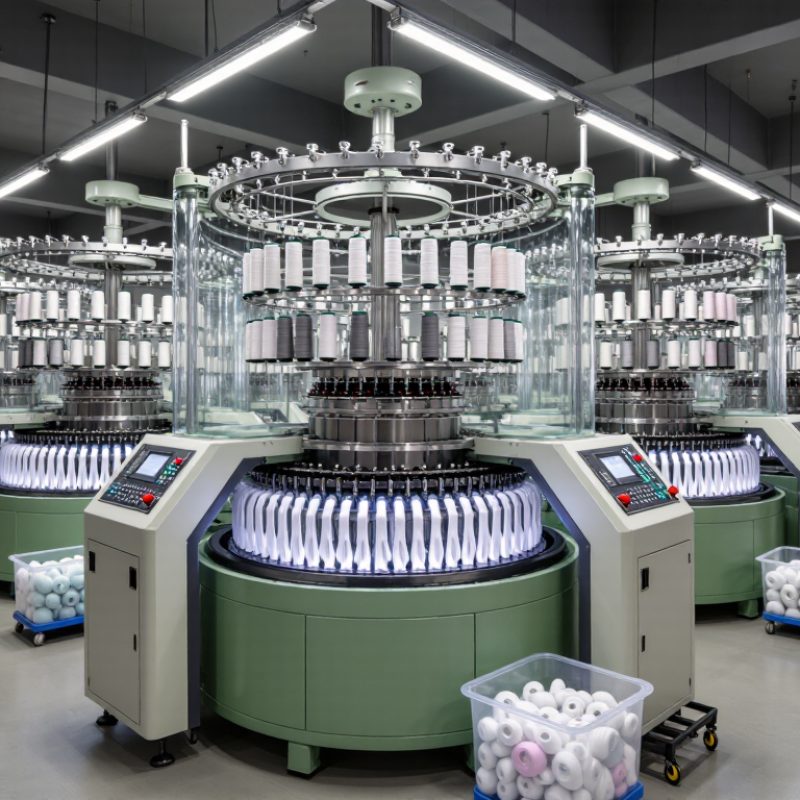
Hosiery knitting machines form socks and other close-fitting hosiery by interlocking yarn loops. Many models use a circular needle cylinder, which knits a continuous tube as the cylinder rotates. Needles rise and fall along shaped cams, while yarn feeders guide threads into the hooks. Simple in principle. Precise in practice.
During operation, the machine controls needle movement, yarn tension, and stitch length. These settings affect fabric density, stretch, and appearance. For example, loose tension can create uneven loops, while excessive tension may make fabric feel tight. A sock’s heel and toe may be shaped on the machine, depending on its design. Some production lines complete toe closing in a separate process. The details matter.
When comparing hosiery knitting machines made in China, check practical specifications such as cylinder size, needle count, supported yarn types, and production speed. Ask how speed was measured; a test sample may not reflect a full production shift. Small changes matter. Operators often adjust settings after inspecting the first pieces, and that judgment is not always captured in a brochure. A smooth sample is useful, but repeatable quality across a full batch is a better measure of how the machine works in daily production.

China-made hosiery knitting machines are commonly grouped by cylinder design and product type. Computerized single-cylinder machines produce everyday socks, from thin dress styles to thicker sports socks. They can vary stitch patterns, heel shaping, and welt construction during a run. Double-cylinder machines support rib structures and shaped patterns on both sides of the fabric. Useful, but setup and operator skill still matter.
Terry machines add looped yarn inside the sock for cushioning, often around the sole and heel. Pantyhose machines use finer yarns and larger knitting diameters to make continuous legwear. The categories can overlap: some sock machines offer terry options or multiple gauges. Buyers should check sample quality, needle configuration, and changeover time, not just advertised output. ITMF’s International Textile Machinery Shipment Statistics reported about 24,000 large circular knitting machines shipped worldwide in 2023, down 31% from 2022. This is a broad machinery category, not a hosiery-only count, so it signals market conditions rather than sock-machine demand. Ask for production trials. A neat sample may hide slow changeovers or uneven toe closure.
Hosiery machines are commonly classified by cylinder configuration and knitting capability. Single-cylinder models can produce plain, terry, or jacquard hosiery, while double-cylinder models are used for rib and interlock structures. The chart shows the number of cylinders, not machine performance or market share.
A high-quality hosiery knitting machine earns its value through stable stitch formation, not a glossy control panel. Look for a rigid frame, accurately aligned needles, and a cylinder that rotates smoothly. These parts help reduce dropped stitches and visible lines in the fabric. Check whether the machine supports the yarn types and sock structures your production actually requires. More options are not always better.
Pay close attention to yarn-feed control and tension adjustment. Even tension helps keep the leg, heel, and toe consistent, especially when yarn thickness changes. Useful sensors can flag yarn breaks or missed stitches before a whole batch is affected. Clear controls matter, too. Operators should be able to change patterns and settings without guesswork. Ask for a production trial using your own yarn, then inspect several pairs under normal lighting. Feel the toe seam. Stretch the rib. Check the heel shaping. Small flaws show up there. Service access and readily available spare needles also affect uptime. A machine may knit quickly on paper, yet require frequent adjustment on the factory floor. That trade-off deserves an honest look.
| Evaluation Dimension | High-Quality Machine Indicators | Why It Matters | How to Verify |
|---|---|---|---|
| Machine configuration | The cylinder arrangement and knitting functions match the intended product, such as single-cylinder construction for many everyday socks or double-cylinder construction for designs that require needle transfer. | Different constructions support different patterns, rib structures, and production requirements. | Run a sample matching the required sock construction and inspect the fabric and shaping. |
| Gauge and needle setup | Gauge and needle count are specified for the required yarn, fabric density, and sock size; needle selection and replacement are supported with suitable parts. | Gauge affects stitch size, fabric appearance, and the range of yarns and products the machine can handle. | Confirm the cylinder specifications and knit the intended yarn before purchase. |
| Pattern and control system | The controller supports the required pattern changes, clear program storage, and practical adjustment of knitting parameters; operating instructions are available in a language the team can use. | Accessible controls can reduce setup errors and make product changeovers easier. | Ask the operator to load a pattern, adjust settings, and recover from a simulated stop. |
| Yarn feeding and tension | Yarn feeders deliver yarn consistently, tension can be adjusted for the materials used, and the machine includes practical yarn-break detection or stop functions where applicable. | Stable feeding helps maintain even stitches and can limit defects caused by yarn breaks or uneven tension. | Knit with the planned yarns and check for dropped stitches, visible tension variation, and reliable stop response. |
| Heel and toe capability | The machine can produce the required heel and toe construction, with shaping functions and transfer operations appropriate to the specified sock design. | Heel and toe quality affects fit, durability, and the amount of manual finishing needed. | Inspect a complete sample sock, especially the heel, toe, and transition areas. |
| Terry and specialty functions | For terry or other specialty socks, the machine has the relevant knitting and yarn-handling setup; optional functions are matched to the actual product specification. | Specialty functions can expand product options but may add setup and maintenance requirements. | Request a sample made with the same terry structure, yarn, and pattern planned for production. |
| Production consistency | The machine maintains repeatable settings across production runs and provides accessible checks for common faults; performance claims are supported by a defined test and product conditions. | Consistent output helps with quality control, planning, and reducing rejected products. | Compare samples from a sustained run, not only a single demonstration sock. |
| Maintenance and spare parts | Routine service points are accessible, maintenance guidance is clear, and essential wear parts—such as needles and sinkers—can be identified and sourced. | Straightforward maintenance and parts availability help limit avoidable downtime. | Review the maintenance schedule, spare-parts list, warranty terms, and service response arrangements. |
| Safety and installation | The machine has appropriate guards and emergency-stop controls, with installation and operating guidance for the required site conditions. | Safe operation and correct installation are essential for operators and dependable production. | Check safety devices, electrical requirements, installation instructions, and operator training arrangements. |
Note: Machine suitability depends on the sock design, yarn, gauge, and production requirements. Confirm specifications and evaluate a production-representative sample before purchase.
Chinese hosiery-machine makers offer options shaped by product type and production volume. In Zhejiang’s sock-making clusters, buyers commonly find single-cylinder machines for everyday socks, double-cylinder models for rib structures, and terry machines for cushioned soles. Jacquard configurations add patterned designs, while automatic toe-closing units can reduce handling between knitting and finishing. Ask suppliers to demonstrate your yarn and target stitch density, not just a sample fabric. Small details matter.
ITMF’s 46th International Textile Machinery Shipment Statistics reported that global shipments of large circular knitting machines fell 18% in 2023, while flat knitting machine shipments fell 12%.
These categories are broader than hosiery equipment, so the figures are market context, not a direct measure of sock-machine demand. Still, they suggest buyers should compare machine utilization and service support carefully, rather than relying on broad growth claims.
When assessing Chinese manufacturers, check needle-cylinder specifications, achievable courses per minute, compatible yarn counts, and spare-part lead times. Request a trial run using the intended sock design, including heel and toe shaping. A fast machine may lose its advantage if setup changes take too long.
I would also verify local technician availability; brochures rarely show the full maintenance burden. One limitation is unavoidable: public shipment reports do not provide a clean, comparable ranking of hosiery-machine makers.
A hosiery knitting machine should be selected against the product mix, not its advertised speed. List the styles you actually plan to make: basic crew socks, fine-gauge dress socks, or patterned compression-style products. Then check cylinder diameter, needle count, gauge, feeder configuration, and whether the machine supports the required single- or double-cylinder construction. Ask for a sample knitted with your yarn, at your target size. Inspect the heel, toe, and fabric density. Small flaws matter.
roughly 24,000
large circular knitting machines shipped worldwide
The ITMF’s International Textile Machinery Shipment Statistics 2023 reported roughly 24,000 large circular knitting machines shipped worldwide, about 16% fewer than in 2022. This category is broader than hosiery machines, so it cannot predict local demand. It does show why buyers should compare actual output needs with investment timing. Ask suppliers to document sustained production speed, not just peak speed, and measure good pieces per shift after changeovers and routine stops.
Plan for operators and maintenance, too. Confirm needle and cylinder availability, training time, cleaning access, and the skills needed for pattern changes. A machine that handles many designs may still lose hours during setup. That trade-off is easy to underestimate. Calculate cost per saleable pair using your yarn, labor, electricity, and expected downtime. Then test the figures in a short production run. No brochure replaces that check. I would still revisit the assumptions after the first month.
© 2023 JEM Electronics, Inc. – United States Cable Assembly. All rights reserved.