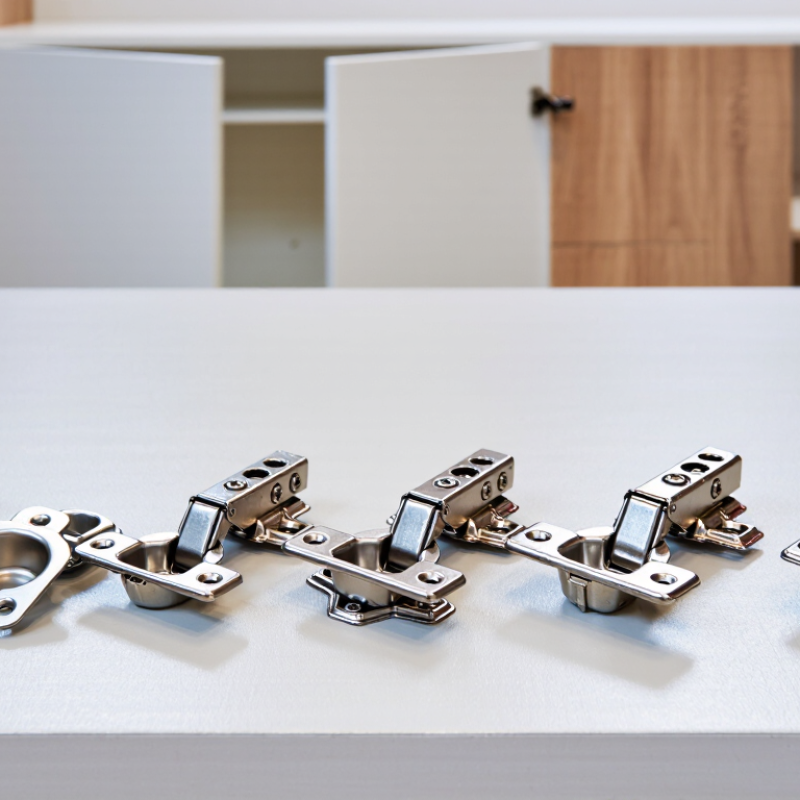
Choosing the best Door Cabinet Hinges is not a minor hardware decision. It affects alignment, opening force, noise, durability, and the cabinet’s daily feel. A hinge may look excellent in a showroom, yet fail when a heavy oak door is opened dozens of times each day. That assumption can fail.
Industry research supports this practical concern. The NKBA 2024 Kitchen Trends Report highlights durability, storage performance, and user convenience as continuing priorities in kitchen design. Houzz’s 2024 U.S. Kitchen Trends Study also shows that cabinet upgrades remain a major part of renovation projects. These findings suggest that hinge selection deserves more attention than its small size implies. It is hidden hardware. It still carries real responsibility.
This guide compares concealed, semi-concealed, inset, overlay, soft-close, and heavy-duty hinge designs. It considers load capacity, adjustment range, cup diameter, opening angle, corrosion resistance, installation skill, and replacement access. Technical references, including the ANSI/BHMA A156.9 standard and manufacturer testing data from brands such as Blum and Häfele, provide useful benchmarks for performance. However, published cycle ratings do not always predict every household’s experience. Dust, poor drilling, uneven frames, and overfilled doors can change the result. I have seen a smooth hinge become noisy after careless installation. Small details matter. The best choice depends on the door material, cabinet construction, usage frequency, and required appearance. There is no universal winner.
What Is the Best Type of Door Cabinet Hinges?
Types of Door Cabinet Hinges and Their Main Features
The best cabinet hinge depends on door style, weight, opening angle, and installation space. Concealed hinges sit inside the cabinet and create a clean, modern appearance. Many models offer three-way adjustment for height, depth, and side alignment. This helps correct small gaps after installation. Measure carefully.
Surface-mount hinges remain visible on the cabinet face. They suit traditional furniture and are usually easier to install. Butt hinges provide strong support for solid wood doors, but they need accurate mortising. Pivot hinges allow a smooth swing and work well on unusual or wider doors. Soft-close hinges reduce slamming with a controlled final movement. That matters in busy kitchens.
Door position also changes hinge selection. Full-overlay hinges cover most of the cabinet frame. Half-overlay hinges let two doors share a narrower partition. Inset hinges place the door inside the frame and demand precise spacing. From practical fitting work, screw placement often matters as much as hinge quality. A heavy door can pull loose from weak material. Reinforcing the mounting area may be necessary. No hinge is perfect.
Check the hinge’s load capacity, cup size, opening angle, and adjustment range. Stainless or corrosion-resistant finishes are useful near sinks, although they still need cleaning. Test the door before tightening every screw. Small errors show quickly.
The best cabinet door hinge depends on the door’s position, weight, and daily use. Overlay hinges suit doors covering the cabinet frame. Inset hinges fit inside the opening and require more accurate installation. Semi-concealed hinges offer a traditional appearance while hiding part of the hardware.
Concealed hinges create a clean, modern surface and usually allow height, depth, and side adjustments. Soft-close models reduce slamming, which protects both the door and cabinet box. A hinge rated for heavier doors is safer for wide solid-wood panels. However, more adjustment does not always mean better performance. Poor drilling or a weak mounting area can still cause sagging. I have found that a small alignment error becomes obvious under bright kitchen lighting.
Tips: Measure the door overlay before choosing hardware. Check the hinge opening angle, especially near drawers or corner units. Tighten screws gently, then test the door several times. A 110-degree hinge may work well, but cramped layouts sometimes need a wider angle. Keep the installation notes nearby. They are easy to forget.
How cabinet door hinges differ in function and design
Opening angle is one practical way to compare cabinet hinges. Concealed cup hinges are widely used because they provide a clean appearance and convenient adjustment. Wide-angle concealed hinges offer greater access, while butt and pivot hinges can provide very wide opening ranges but usually require more visible or specialized hardware. The best choice depends on door overlay, cabinet construction, required access, and installation preference.
The best cabinet hinge depends on the door, cabinet box, and daily use. A concealed soft-close hinge suits modern kitchens with full-overlay doors. It keeps the exterior clean and reduces slamming. Face-frame cabinets may need a compact hinge or a specialized mounting plate. Inset doors demand accurate adjustment because even a small gap becomes visible.
Choosing the best hinge type requires more than appearance. Check door weight, thickness, opening angle, and available installation space. The 2024 Houzz U.S. Kitchen Trends Study reports a median major kitchen remodel cost of about $75,000, making durable hardware a sensible investment. The NKBA 2024 Kitchen Trends Report also emphasizes accessibility, storage efficiency, and long-term performance. A hinge with three-way adjustment can help maintain alignment after seasonal movement. Still, “premium” does not always mean suitable. A strong hinge can fail when screws enter weak particleboard.
Tips: Test one door before ordering every hinge. Open it fully beside a wall. Listen for noise. Measure the overlay carefully. For tall pantry doors, use extra hinges and confirm the manufacturer’s load rating. Industry hardware reports, including Freedonia Group’s cabinet hardware research, identify remodeling and replacement demand as major market drivers. That suggests homeowners are repairing more existing cabinetry, not only installing new units. A careful installer should inspect old screw holes first. Sometimes replacement is wiser than adjustment.
| Hinge Type | Typical Door Application | Opening Angle | Installation and Adjustment | Main Advantages | Important Limitations | Best Selection Factors | Overall Suitability |
|---|---|---|---|---|---|---|---|
| Concealed European Hinge | Full-overlay, half-overlay, and inset cabinet doors | Commonly 100°–110°; wider-angle versions are available | Requires a cup boring operation in the door; many models offer three-way adjustment | Clean appearance, concealed hardware, easy alignment, and broad compatibility with modern cabinetry | Requires accurate drilling and sufficient door thickness around the cup area | Choose it when appearance, adjustability, and repeatable installation are priorities | Excellent for most modern cabinets |
| Soft-Close Concealed Hinge | Frequently used on kitchen, bathroom, office, and storage cabinet doors | Usually about 100°–110°, depending on the design | Installed like a concealed hinge; integrated damping controls the final closing movement | Reduces slamming, noise, vibration, and stress on the cabinet box and door | Generally costs more; the damper may need adjustment or replacement over time | Choose it for quiet operation, family kitchens, and frequently used doors | Best for comfort and noise reduction |
| Self-Closing Concealed Hinge | Overlay and inset doors that should return to the closed position | Commonly 100°–110° | Uses an internal spring; installation is similar to other concealed cup hinges | Helps keep doors closed without a separate catch or magnetic device | Closing force can make the door feel less gentle; very heavy doors may require suitable hinge capacity | Choose it when reliable closing is more important than the softest closing action | Very good for everyday storage cabinets |
| Butt Hinge | Traditional framed cabinets, furniture doors, and visible or semi-visible installations | Often approximately 90°–180°, depending on the leaf and stop design | Mounted to the door and cabinet with screws; accurate positioning is important | Simple construction, strong load support, and a classic furniture appearance | Usually visible; may require mortising or careful preparation; limited adjustment after installation | Choose it for traditional styling, robust construction, or furniture-style cabinetry | Best for traditional and furniture designs |
| Piano Hinge | Long, narrow doors, continuous cabinet fronts, boxes, and access panels | Often close to 180°, subject to the hinge geometry and surrounding clearance | Runs along much of the door edge and is attached with multiple screws | Distributes load along the full length and helps reduce localized stress | Visible along the edge; alignment must be accurate over the entire hinge length | Choose it when continuous support and a long, straight hinge line are required | Best for long or narrow doors |
| Pivot Hinge | Inset doors, frameless panels, glass doors, and minimalist cabinet designs | Varies by model; some designs allow wide or near-full opening | Mounted at pivot points, commonly near the top and bottom of the door | Creates a discreet appearance and can support distinctive door movement | Needs precise top-and-bottom positioning; door weight and clearance must be checked carefully | Choose it for design flexibility, inset doors, or a minimal visible-hardware effect | Best for specialized and minimalist installations |
| Glass-Door Hinge | Glass cabinet doors and display cabinets | Commonly 90°–110°, depending on the hinge design | Some models clamp or insert into prepared glass; drilling requirements depend on the hardware | Designed to hold glass without requiring a conventional wooden hinge cup | Glass thickness, edge condition, load rating, and clearance must match the hinge specifications | Choose it only after confirming glass thickness, door weight, and mounting method | Best for glass display doors |
| Surface-Mount Hinge | Cabinet doors where drilling a concealed hinge cup is unsuitable | Often approximately 90°–180°, depending on the hinge and stop design | Attaches directly to the cabinet and door surfaces; generally simpler to install | Useful for retrofit work, thin doors, and projects with limited tooling | Hardware remains visible; adjustment range is usually smaller than that of a European hinge | Choose it when easy installation or preservation of the door material is important | Best for retrofit and simple repairs |
| Inseparable Security Hinge | Cabinet doors requiring additional resistance to removal when closed | Varies by model, commonly within a standard cabinet-door opening range | Installed similarly to a surface or butt hinge, with a design that limits pin removal | Improves resistance to unauthorized hinge-pin removal | May be more visible and less adjustable; unnecessary for ordinary indoor cabinets | Choose it for utility, service, or storage areas where security is a specific concern | Best for security-focused applications |
| Spring-Loaded Hinge | Doors that need automatic closing without a separate closing mechanism | Depends on the hinge design and built-in stop | Requires correct spring tension and secure mounting to prevent uneven closing | Provides automatic return action and can help keep a door shut | May close abruptly; excessive tension can increase stress on the door and mounting points | Choose it when automatic closing is needed and soft-close performance is not essential | Good for functional utility doors |
| Heavy-Duty Concealed Hinge | Large, thick, or heavier-than-standard cabinet doors | Frequently 100°–120°, depending on the model | Requires accurate cup drilling and mounting; the rated load must be verified for the complete door | Offers concealed styling while supporting higher door loads than standard light-duty hardware | Usually needs stronger mounting material and may require more installation clearance | Choose it according to door weight, height, thickness, material, and hinge quantity | Best for oversized or heavy doors |
| Small-Angle or Restricted-Opening Hinge | Cabinets beside walls, appliances, corners, or other areas with clearance limits | Typically restricted to a specified angle below a wide-opening hinge | Installed according to the cabinet overlay or inset configuration; the opening limit must be checked before fitting | Prevents the door from striking adjacent surfaces or equipment | Provides less access to the cabinet interior and is not suitable where a wide opening is required | Choose it after measuring nearby walls, handles, appliances, and door swing clearance | Best for clearance-limited locations |
| Adjustable Clip-On Concealed Hinge | Modular kitchen and storage cabinets requiring convenient door removal | Commonly 100°–110° | Uses a mounting plate and clip mechanism; the door can often be removed without fully removing the screws | Speeds up installation, servicing, cleaning, and door replacement | Clip and plate compatibility must be confirmed; incorrect engagement can affect safety and alignment | Choose it for cabinets that need frequent maintenance or efficient assembly | Best for easy servicing and installation |

Choosing the best door cabinet hinge starts with the cabinet environment, not appearance. In my cabinet fitting work, nickel-plated steel has handled ordinary kitchens reliably and economically. Stainless steel performs better near sinks, humid rooms, and frequent cleaning. Brass can add warmth, but its surface may change over time. That is not always a fault. It depends on the desired finish.
Mounting style affects both installation and door movement. Full-overlay hinges cover the cabinet side, creating a continuous front. Half-overlay hinges suit paired doors sharing one partition. Inset hinges place the door inside the frame, demanding more accurate measurements. Frameless cabinets often use concealed cup hinges, while face-frame cabinets may require a suitable mounting plate. Small adjustments matter. A door can look level initially, then rub after the cabinet settles.
Opening angle deserves equal attention. A 95-degree hinge works well beside a wall or another door. A 110-degree hinge gives broader access for everyday storage. Wide-angle hinges, sometimes reaching 165 degrees, help drawers and corner cabinets open more freely. However, maximum movement is not always better. A wide-opening door can strike an adjacent wall or handle. Check the door thickness, overlay, cabinet clearance, and hinge load rating before drilling. I once selected a wide-angle hinge for a tight corner and had to reposition the cabinet. The specification was correct; the planning was not.
What Is the Best Type of Door Cabinet Hinges?
Steps for Selecting Hinges for Different Cabinet Doors
Choosing cabinet door hinges starts with the door’s position, thickness, and opening style. Measure the door and frame instead of guessing from an old hinge. Measure twice. A half-overlay door covers part of the cabinet side. A full-overlay door covers nearly all of it. An inset door sits inside the frame. Each position needs different hinge geometry. Small gaps matter. A tight gap can cause rubbing after seasonal movement.
For an inset door, select an adjustable concealed hinge designed for the frame depth. Check its cup size, mounting plate, and opening angle. Full-overlay doors often need a wider offset or a compatible overlay plate. Partial-overlay doors require careful spacing between neighboring doors. Place two hinges near the top and bottom, then add another for tall or heavy doors. Soft-closing action is useful in kitchens, but it should not hide poor alignment. Test with a cardboard spacer first. It saves drilling mistakes.
Material also affects the decision. Solid wood may expand, while thin panels can crack around screw holes. Use the recommended screw length and predrill dense panels. For glass or framed doors, choose hinges made for that construction. Do not use a standard wood-door hinge automatically. I once treated hinge capacity as a minor detail; the door sagged within weeks. That mistake taught me to check load ratings, cycle testing, and adjustment range together. Open the door fully before final tightening. Then inspect the reveal from eye level. It may look even from above but uneven beside the handle.
© 2023 JEM Electronics, Inc. – United States Cable Assembly. All rights reserved.