
A Bubble Pendant Lamp can soften a modern room without making it feel overly formal. Its rounded glass orbs catch daylight, then glow like small moons after dusk. George Nelson, the American designer behind the classic Nelson Bubble Lamps, is often credited with the line, “Design is a response to social change.” That idea suits pendant lighting: the best choice reflects how a room is actually used, not just how it looks in a photograph.
This guide presents ten Bubble Pendant Lamp styles for different spaces, from compact kitchen islands to open-plan dining areas. Each option deserves a closer look at its shape, finish, light direction, and visual scale. A wide cluster may become the room’s focal point. A single clear globe can feel quieter. Small details matter. Check the fixture’s dimensions against the table, and consider ceiling height before choosing a low-hanging design. Glass can show fingerprints, too.
The list is a starting point, not a universal ranking. A lamp that looks airy in a bright showroom may feel heavy above a narrow table. Warm bulbs can bring out inviting tones, while clear glass may reveal the bulb and create glare. Not every bubble shape feels restful. That is worth remembering. The right fixture should offer pleasing light, fit the room’s proportions, and remain comfortable to live with after the first impression fades.
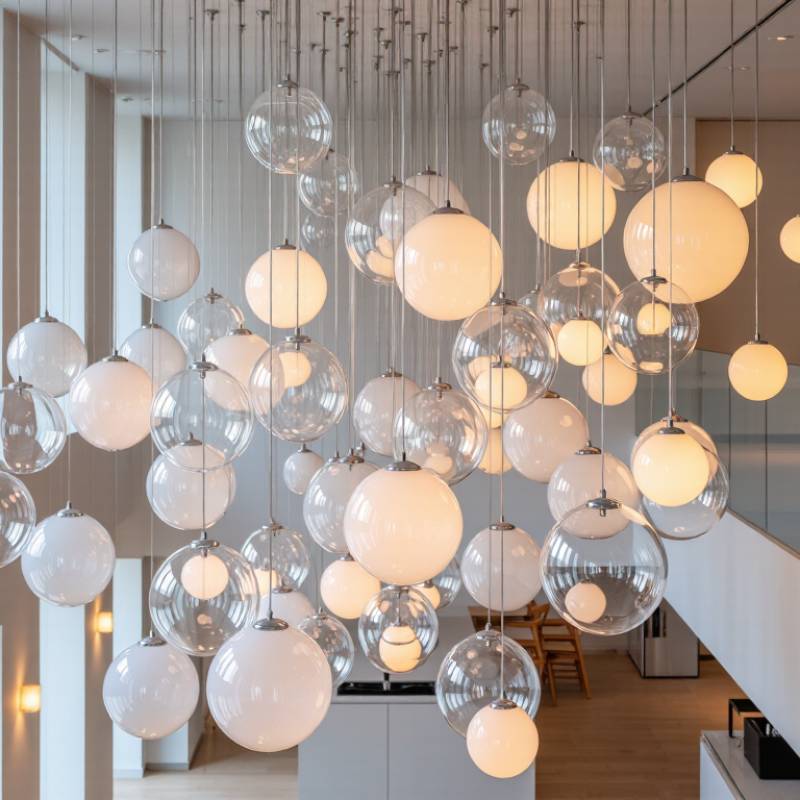
A bubble pendant lamp is defined by its clustered, rounded shades, not by one fixed material or construction. The globes may be clear, frosted, or softly tinted glass, arranged around a central frame or suspended at different heights. Seen above a dining table, the best designs balance visible bulbs with enough open space to keep the fixture from feeling heavy. The term is broad, though. Some “bubble” pendants use a single globe, so shape alone does not tell you how evenly they light a room.
Look closely at the shade and the light source. Clear glass reveals the bulb and can create sharp reflections; opal glass softens the glow and hides the bulb. Scale matters, too: a wide cluster can dominate a small room, while closely packed globes may cause glare at eye level. The U.S. Department of Energy’s 2020 U.S. Lighting Market Characterization estimated that LEDs accounted for 47% of installed U.S. lighting in 2020. Its Energy Saver guidance says LEDs use at least 75% less energy than incandescent lighting. These figures describe lighting broadly, not bubble pendants specifically. So an attractive glass form is not automatically efficient; check the bulb type, dimming compatibility, and light output before choosing. A little practical caution helps.

Bubble pendant lamps suit modern interiors because their rounded glass softens straight architectural lines without making a room feel traditional. A single globe can sit above a compact dining table; a cluster gives a taller stairwell a visible focal point. Clear glass keeps the fixture visually light, while opal or tinted glass can soften the bulb’s appearance. Scale matters. Oversized clusters may crowd a small room, even when the ceiling is high.
Their appeal is practical as well as visual, but the bulb and layout determine performance. The U.S. Department of Energy reports that LED bulbs use at least 75% less energy and last up to 25 times longer than incandescent bulbs. Choose compatible LEDs and dimmers, and check the fixture’s recommended bulb type. For a dining area, aim light toward the table and use other light sources to reduce harsh contrast. Glass can create bright reflections, though; I still find that a beautiful fixture sometimes needs careful positioning to avoid glare at eye level. That detail is easy to miss.
Bubble pendant lamps get their soft, airy look from rounded shades and visible light. Common materials include clear glass, opal glass, acrylic, and metal. Clear glass keeps a room feeling open, but it can expose the bulb and create glare. Opal glass diffuses light more evenly, making it a practical choice above a dining table. Acrylic weighs less than glass, though its surface may show scratches over time. Metal fittings add contrast and help define the fixture’s shape. Small details matter.
The shades may appear as single globes, paired spheres, or loose clusters at varied heights. A single pendant suits a compact breakfast nook, while a cluster can anchor a taller stairwell or living area. Odd-numbered arrangements often feel balanced, but ceiling height and furniture scale matter more than a fixed rule. A cluster that looks elegant in a showroom can feel crowded above a small table. It is easy to misjudge.
Lighting design changes the mood as much as the material does. A globe with a broad opening may cast more direct light, while a frosted shade softens shadows on nearby walls. Warm white bulbs create a relaxed evening feel; cooler tones can make work areas appear clearer. Dimming is useful when the same fixture serves meals and reading. Check the bulb’s brightness and the shade’s glare from seated eye level. That small test can reveal an uncomfortable reflection before installation.
Opal glass is a common choice for softly diffused light, while clear and colored glass add transparency or visual accent. This illustrative tally groups ten representative design configurations by their primary material combination; it is not market-share or sales data.
Ten bubble pendant lamps can bring soft light and sculptural detail to modern rooms. A single clear globe suits a compact breakfast nook. A frosted globe softens glare above a bedside table. An opal-glass cluster adds depth over a dining table. Smoked glass creates a quieter, moodier look. Ribbed glass casts delicate lines across nearby walls. An asymmetrical cluster feels relaxed above a stair landing. A straight row of globes works well over a kitchen island. Colored glass adds a restrained accent to neutral rooms. An oversized globe can anchor a high-ceilinged entry. A multi-drop pendant lets you vary the height of each sphere. Scale matters. A lamp that looks balanced in a showroom may overwhelm a small room.
Tips: Measure the table and ceiling before choosing a fixture. Leave comfortable headroom in walkways, and check the recommended bulb type. For a dining table, hang the lowest glass shade high enough to preserve clear sightlines. Installation can depend on ceiling wiring and fixture weight, so ask a qualified electrician when unsure.
Bubble pendants look best when their shape has room to breathe. Keep nearby décor simple, or repeat one glass tone in a vase or cabinet detail. I sometimes prefer a slightly uneven cluster; it feels more lived-in, though it may not suit every interior. Test the light in the evening, when reflections and shadows become easier to judge.
| No. | Pendant Style | Typical Shade Material | Typical Overall Size | Light Source | Suitable Placement | Interior Effect |
|---|---|---|---|---|---|---|
| 01 | Single globe | Opal or clear glass | 20–30 cm diameter | 1 replaceable LED bulb; socket varies by region | Bedside, reading nook, or small entryway | A simple rounded accent with focused light below and a soft glow through the shade. |
| 02 | Large single globe | Opal glass or translucent acrylic | 35–50 cm diameter | 1–2 LED bulbs, or an integrated LED module | Living room or dining area with adequate clearance | A calm focal point that suits uncluttered, contemporary rooms. |
| 03 | Cluster of small globes | Blown glass | Canopy cluster about 40–70 cm wide; globes 10–20 cm each | 3–7 LED bulbs; fitting and sockets vary | Over a dining table or in a stairwell | Creates a layered composition and spreads light across a wider area. |
| 04 | Linear bubble pendant | Opal glass globes on a metal frame | 80–120 cm long; globes typically 12–20 cm | 3–6 LED bulbs, or integrated LEDs | Centered above a dining table or kitchen island | Balances long surfaces with an evenly distributed row of rounded forms. |
| 05 | Multi-tier globe cluster | Clear, frosted, or opal glass | 40–70 cm wide and 60–120 cm tall | 5–12 LED bulbs; exact quantity depends on the design | High-ceiling living rooms, foyers, or stairwells | Adds vertical emphasis and makes use of generous ceiling height. |
| 06 | Smoked-glass globe | Grey or bronze-tinted glass | 20–35 cm diameter | 1 LED bulb; a visible filament-style bulb can be used if compatible | Living rooms, dining corners, or bedrooms | Introduces a darker accent; tinted glass usually transmits less light than clear glass. |
| 07 | Textured-glass bubble pendant | Ribbed, seeded, or lightly textured glass | 20–35 cm diameter | 1 replaceable LED bulb or an integrated LED module | Entryways, bedside areas, or compact dining spaces | Softens the appearance of the light source and adds surface detail. |
| 08 | Bubble-and-disc combination | Glass globes with metal or acrylic discs | 50–90 cm wide; overall drop varies by model | Several LED bulbs or integrated LEDs | Dining rooms and larger living spaces | Combines spherical shades with flatter elements for a more sculptural profile. |
| 09 | Adjustable-height globe pendant | Opal or clear glass with a metal suspension | 20–35 cm shade diameter; drop is adjustable on many models | 1 replaceable LED bulb; check the fitting’s rated wattage | Kitchen islands, dining tables, or rooms with sloped ceilings | Allows the hanging height to be tailored to the surface and ceiling conditions. |
| 10 | Oversized statement bubble | Hand-blown glass or lightweight translucent acrylic | 50–80 cm diameter | 1–3 LED bulbs or an integrated LED system | Large living rooms, open-plan spaces, or spacious foyers | Provides a prominent sculptural centerpiece; confirm ceiling support and clearance before installation. |
Sizes and lighting configurations are typical planning ranges, not specifications for a particular product. Actual dimensions, bulb bases, dimming compatibility, and installation requirements vary by fixture. Follow the manufacturer’s instructions and local electrical codes.
When choosing a bubble pendant lamp, match its scale to the room and the surface below it. Measure the table or island, then compare its width with the fixture’s overall span. A large cluster can feel crowded in a narrow dining nook, while one small globe may disappear above a long table. Scale matters. Look at the glass as well as the frame: clear bubbles keep a room feeling open, while tinted or frosted shades soften the light. Check the bulb type and whether the fixture supports dimming; decorative glass can look lovely but may create glare with a bright, exposed bulb.
Position the pendant where it lights a useful area without blocking views. Above a dining table, the bottom of the fixture often sits about 30–36 inches above the tabletop; adjust for ceiling height and seated sightlines. Over an island, space multiple pendants evenly and keep them clear of cabinet doors. Not every layout needs perfect symmetry. A slightly shifted placement can suit an off-center table, though it may look accidental if the shift is too small. Test the position with a paper template before installation, and use layered room lighting so the pendant is not doing every job alone.
© 2023 JEM Electronics, Inc. – United States Cable Assembly. All rights reserved.