
China Top 10 Long Distance Radios for Global Buyers?
Choosing the right radio for extended communication is rarely as simple as comparing advertised range. Buildings, hills, weather, antenna height, battery condition, and local regulations can change real-world performance. This guide examines China Top 10 Long Distance Radios for Global Buyers, focusing on practical features rather than impressive packaging claims.
The selection considers transmission range, receiver sensitivity, battery endurance, audio clarity, durability, charging options, and supplier support. It also reviews whether product specifications appear realistic and whether documentation is clear enough for responsible purchasing. Some radios may perform well in open fields but struggle inside concrete warehouses. That difference matters.
Real experience often reveals details that brochures miss. A radio with a bright display may still have uncomfortable controls. A powerful battery may require hours to recharge. Small details matter. We will compare handheld and vehicle-oriented designs, digital and analog functions, accessories, and common communication scenarios. Buyers should verify frequency permissions, certification requirements, import rules, and after-sales service in their own countries. Legal requirements differ worldwide, and compliance should never be assumed from a product listing.
This overview is designed for distributors, outdoor equipment retailers, transport teams, event organizers, and professional users seeking dependable Long Distance Radios. It does not treat any model as universally perfect. Rankings can change when testing conditions change. That limitation deserves attention. By combining published specifications with careful supplier verification and realistic use cases, global buyers can make more informed decisions and reduce costly purchasing mistakes.
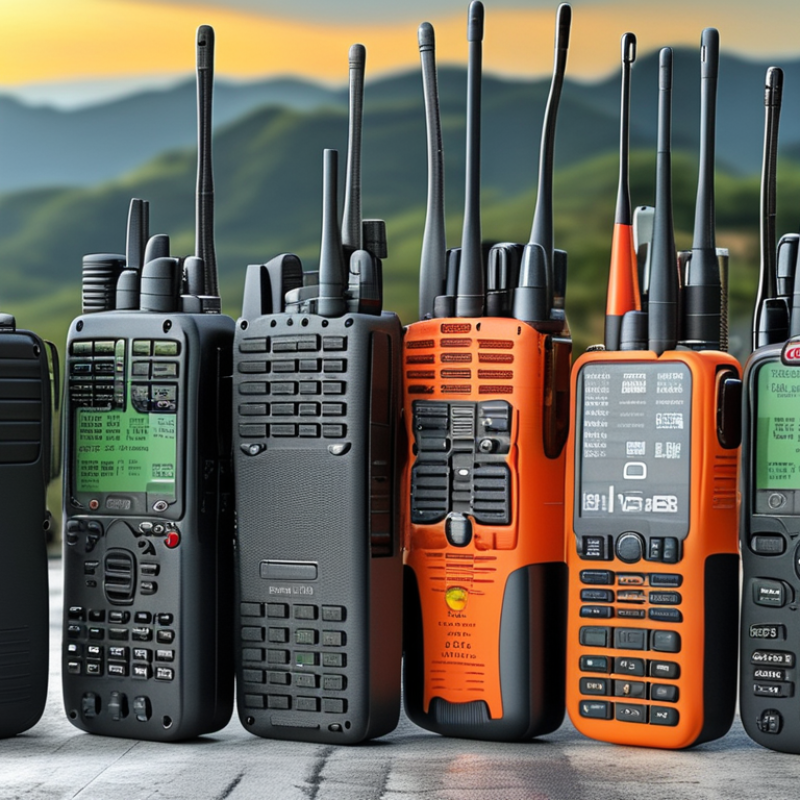
How to Define Long-Distance Radio Performance: VHF, UHF, and RF Output
For global buyers, “long distance” is not a fixed number. It is a field result shaped by terrain, antenna height, weather, buildings, and user position. VHF usually travels well across open ground and bends slightly around obstacles. UHF often performs better inside cities and buildings, where shorter wavelengths can work through crowded spaces. Neither band wins everywhere. A radio promising a large range may disappoint between concrete walls.
RF output matters, but more power does not automatically mean better communication. Higher wattage can extend usable range, yet it also increases battery drain and heat. Receiver sensitivity, filtering, antenna efficiency, and audio clarity may matter just as much. In practical checks, test the radio at one, five, and ten kilometers, if the site allows it. Record voice quality, dropped words, and reconnection time. Do not measure only whether a signal appears.
A reliable buyer should ask for continuous and peak RF output, not a vague “high power” label. Confirm whether figures are measured at the antenna or inside the transmitter. Local spectrum rules control permitted frequencies, bandwidth, and power settings. Purchase documents should state these details clearly. I have seen range estimates fail when sellers ignored antenna placement. That is an easy mistake. It is also a useful warning. For international projects, compare verified test data with the actual landscape, not an idealized laboratory map.
| Rank | Radio Profile | Typical Form Factor | Operating Band | Typical Frequency Range | RF Output | Channel Bandwidth | Typical Use Case | Practical Range Potential | Long-Distance Strength |
|---|---|---|---|---|---|---|---|---|---|
| 1 | High-Power VHF Base/Vehicle Radio | Fixed or mobile | VHF | 136–174 MHz | 25–50 W | 12.5 / 25 kHz | Rural transport, utilities, agriculture, emergency coordination | 20–60 km with elevated antenna and favorable terrain | Excellent over open and rolling terrain |
| 2 | VHF Repeater-Ready Professional Radio | Portable, mobile, or base | VHF | 136–174 MHz | 5 W portable; 25–50 W mobile/base | 12.5 / 25 kHz | Wide-area voice networks using repeaters | 5–15 km direct; 30–100+ km through a well-positioned repeater network | Very strong network scalability |
| 3 | VHF Marine and Coastal Radio | Fixed, handheld, or vessel-mounted | VHF | 156–174 MHz | 1–25 W, depending on equipment class | 12.5 / 25 kHz | Coastal navigation, port operations, vessel communications | 10–30 nautical miles with a mast-mounted antenna and clear horizon | Excellent over unobstructed water |
| 4 | VHF Long-Range Digital Portable Radio | Handheld | VHF | 136–174 MHz | 1–5 W | 12.5 / 25 kHz | Field teams, forestry, construction, outdoor operations | 5–15 km in open areas; less in dense urban or mountainous terrain | Good propagation with portable convenience |
| 5 | UHF Repeater-Ready Mobile Radio | Vehicle or fixed installation | UHF | 400–470 MHz | 25–50 W | 12.5 / 25 kHz | Urban fleets, industrial sites, logistics, security services | 8–30 km direct; wider coverage through repeaters | Excellent in built-up areas with network support |
| 6 | UHF Professional Handheld Radio | Handheld | UHF | 400–470 MHz | 1–5 W | 12.5 / 25 kHz | Warehouses, hotels, event venues, factories, campuses | 1–8 km, depending heavily on building density and antenna position | Very good building penetration and user mobility |
| 7 | UHF High-Power Base Station | Fixed site | UHF | 400–470 MHz | 25–50 W | 12.5 / 25 kHz | Industrial compounds, campuses, transport terminals | 10–35 km with a high-gain antenna and clear elevation | Strong for controlled-area coverage |
| 8 | Dual-Band VHF/UHF Portable Radio | Handheld | VHF/UHF | Typically 136–174 MHz and 400–470 MHz | 1–5 W | 12.5 / 25 kHz | Multi-site teams operating across mixed environments | 3–15 km, depending on selected band and terrain | Flexible frequency coverage |
| 9 | Low-Power License-Free UHF Radio | Handheld | UHF | Region-dependent license-free allocations | Typically 0.5–2 W | 12.5 / 25 kHz | Retail, hospitality, short-range site coordination | 0.5–5 km in typical commercial environments | Simple deployment; limited long-distance capability |
| 10 | HF Long-Range Radio System | Base, vehicle, or portable station | HF | 2–30 MHz | 20–150 W | Mode- and system-dependent | Remote-area communication beyond reliable VHF/UHF coverage | 50–1,000+ km when propagation and antenna conditions are suitable | Exceptional beyond-line-of-sight potential; more complex operation |


© 2023 JEM Electronics, Inc. – United States Cable Assembly. All rights reserved.