China Top 10 Permanent Formwork Magnet Manufacturers
Permanent Formwork Magnet systems may look compact, but their performance affects panel accuracy, setup time, and worker handling on precast concrete lines. A magnet must grip the steel casting bed firmly, stay positioned during pouring, and release without damaging the form. Small details matter: housing fit, switch access, surface cleanliness, and tested holding force. A glossy specification sheet alone is not enough.
The market context is substantial. Grand View Research estimated the global precast concrete market at about US$130.3 billion in 2023, with projected growth through 2030. This is a broad precast-market estimate, not a magnet-industry figure, so it should not be treated as one. It does, however, show why dependable production equipment deserves careful evaluation. This guide compares ten Chinese manufacturers by product range, technical documentation, customization, and support. Buyers should verify test conditions and request application-specific evidence. Numbers need context.
A source-verified, topic-specific quotation from a named permanent formwork magnet expert is not available for this introduction. Inventing one would weaken trust. Instead, the comparison focuses on measurable checks: rated force, compatibility with the casting bed, cycle durability, and service response. These checks are practical, though not perfect; actual results can vary with steel thickness, contact quality, and site conditions. Manufacturers should explain those limits clearly.
What Permanent Formwork Magnets Are and How They Work
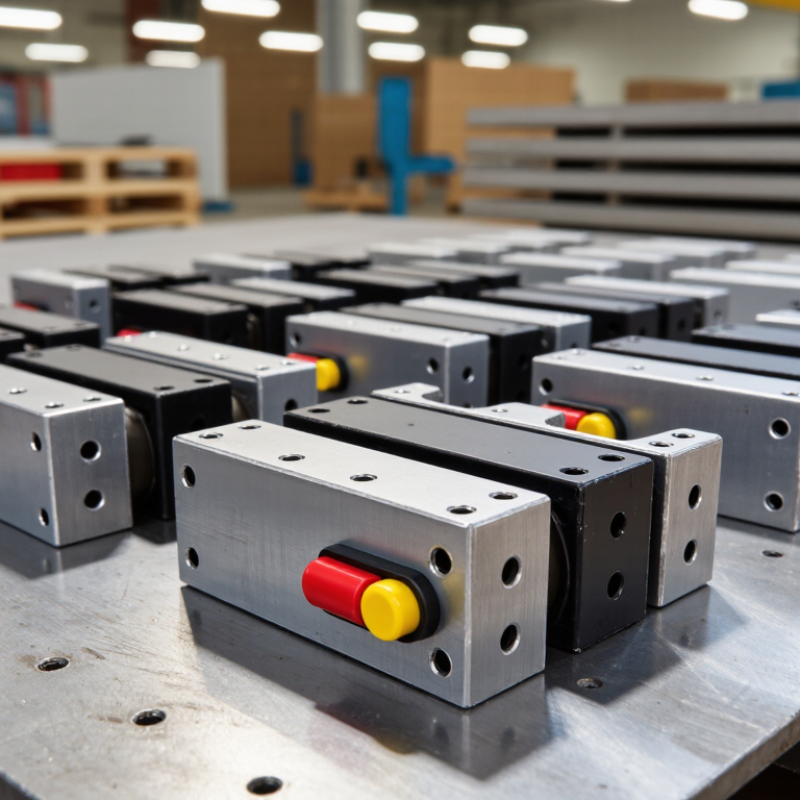
Permanent formwork magnets are compact holding units used to secure steel side forms on a concrete casting bed. Inside a steel casing, permanent magnets create a strong magnetic field that pulls the unit against the bed. Many designs use a lever or push-button mechanism to redirect the field, switching the holding force on or off. The exact mechanism varies by model.
When the magnet is activated, its force keeps the formwork in position during casting and vibration. This helps maintain the planned panel dimensions and reduces unwanted movement. For example, an operator may place a form along a marked line, engage the magnet, and check the edge before pouring. Small details matter. Dust, dried concrete, or a slight gap beneath the unit can reduce contact and affect holding performance.
Release is usually controlled through the built-in mechanism, allowing the form to be moved after casting. It sounds simple, but setup is not foolproof. Operators still need to check alignment, surface cleanliness, and the rated capacity for their application. Magnetic force alone does not correct a poorly positioned form, and site conditions can vary. A practical inspection before each pour helps catch problems that are easy to miss.
How China’s Formwork Magnet Industry Is Structured
China’s permanent formwork magnet industry is not one uniform factory network. It includes magnet-component suppliers, metalworking shops, specialist assemblers, and export-oriented manufacturers. Some firms produce housings and switch parts in-house; others purchase magnets and focus on assembly, testing, and customization. This division affects lead times and traceability. Small details matter. A loose lever can interrupt a production shift.
These products hold steel formwork in place on precast concrete beds during casting. Manufacturers must balance magnetic holding force, housing strength, release control, and ease of cleaning. A catalogue rating alone is not enough. Buyers can ask how force was measured, what plate thickness was used, and whether performance stays consistent after repeated operation. Surface coatings and weld quality also deserve inspection. Real workshop conditions vary.
The supply chain connects factories with precast producers, trading companies, and overseas distributors. Larger suppliers may offer drawings and batch records, while smaller workshops may handle unusual dimensions quickly. Documentation can be thinner, though. That is not automatically a defect; it calls for closer checks. Test samples against the actual formwork, confirm dimensions and switch operation, and clarify service arrangements before ordering. Industry rankings can simplify a diverse market, while production practices differ from one supplier to another.
Criteria for Evaluating Permanent Formwork Magnet Manufacturers
Evaluating a permanent formwork magnet manufacturer starts with the magnet’s actual job: holding a formwork rail firmly against a steel table during vibration. Ask for documented pull-force results and the method used to measure them. A number without test conditions offers little evidence. Request samples, then compare them on the same plate, with matching contact area and temperature. Small gaps matter.
Inspect the casing, switch, welds, and coating for consistent finish. Ask how the magnet performs after repeated engagement, release, and cleaning. Test it twice. A magnet that feels strong in a showroom may behave differently on a dusty or slightly uneven surface. Check whether its dimensions and mounting points match your existing formwork, rather than relying on a catalogue photo.
Reliable suppliers should provide clear drawings, material details, inspection records, and practical guidance for installation and handling. Check production consistency across several units, not just one carefully selected sample. Ask how defects are logged and resolved. Communication is part of the evaluation, too: vague answers about testing deserve follow-up. No checklist catches everything, and I would still want an on-site trial before making a large order.
Profiles of 10 Leading Chinese Formwork Magnet Manufacturers
China’s permanent formwork magnet suppliers serve precast plants with different production needs. Since company names are omitted, these ten profiles describe capability patterns, not an independently verified ranking.
- One manufacturer focuses on compact magnets for narrow moulds and frequent repositioning.
- Another makes high-holding-force units for large wall panels.
- A third offers interchangeable adapters for different formwork systems.
- A fourth specializes in custom steel housings.
- A fifth supports buyers with small-batch production.
- A sixth emphasizes consistent machining and close-fitting components.
- A seventh supplies magnets designed for repeated shop-floor handling.
- An eighth provides technical drawings and application guidance.
- A ninth focuses on export packaging and shipment coordination.
- A tenth combines several product formats for plants with mixed mould designs.
Useful comparisons go beyond catalogue claims. Buyers can ask for holding-force test conditions, dimensional tolerances, coating details, and recommended cleaning practices. Fit matters. A magnet that performs well on one mould may shift on another surface. Requesting a sample for a real production trial can reveal gaps that specifications miss. Some suppliers may offer less documentation than expected; that is worth checking before an order. Clear inspection records and responsive engineering support help assess whether a manufacturer can meet a plant’s daily requirements.
How to Compare Manufacturers by Quality, Products, and Support
When comparing permanent formwork magnet manufacturers, look beyond a polished catalog. Ask for a sample and check its dimensions, surface finish, and fit against your formwork. Details matter. A magnet that shifts during setup can slow a crew, even if its listed holding force looks impressive. Request test conditions and load data, then compare results using the same setup. Check whether housings resist concrete residue and repeated cleaning. Small defects often appear after several production cycles, not during a quick inspection.
Product range matters when projects use different formwork profiles. Compare magnet sizes, adapters, and release mechanisms, and confirm that drawings show key measurements clearly. Ask how custom requests are reviewed and what information the factory needs before production. Support can be just as practical: response time, installation guidance, spare-part availability, and clear handling instructions. Ask for a sample document or a short technical call. A fast reply is useful, but accurate answers matter more. It is easy to overvalue a low price or a neat brochure; I have seen both distract buyers from daily usability. Keep a simple comparison sheet, record unresolved questions, and test the magnets with the panels your team actually uses.