How to Choose a Feather Meal Processing Machine?
Choosing a Feather Meal Processing Machine is not just a matter of comparing capacity figures. The right system must suit your raw material, daily output, available floor space, and operating team. Small details matter. A damp, uneven feedstock can affect throughput, while poor access around a cooker or dryer can make routine cleaning harder. These issues are easy to overlook in a brochure.
For a practical perspective, this introduction uses an illustrative expert voice: process engineer Daniel Reed. His line is an editorial summary, not a verified quotation: “Choose the machine around your material and workflow, not the headline capacity.” That principle points buyers toward measurable checks. Ask how the system handles variable moisture, what temperature controls it provides, and whether the grinder can deliver a consistent particle size. Request performance data for conditions close to your own operation. A polished demonstration may not reflect a busy production shift.
This guide will help you compare machine types, key components, energy use, automation, maintenance access, and supplier support. It will also explain which questions to ask before requesting a quotation. Look beyond the purchase price. Spare-part availability, operator training, and cleaning time can shape long-term performance. No single design fits every plant. Some specifications may still be unclear until trials are run, and that deserves honest attention. With careful checks, buyers can narrow the options and choose a Feather Meal Processing Machine that fits real operating needs.
Determine Your Feather Meal Processing Requirements
Determine Your Feather Meal Processing Requirements
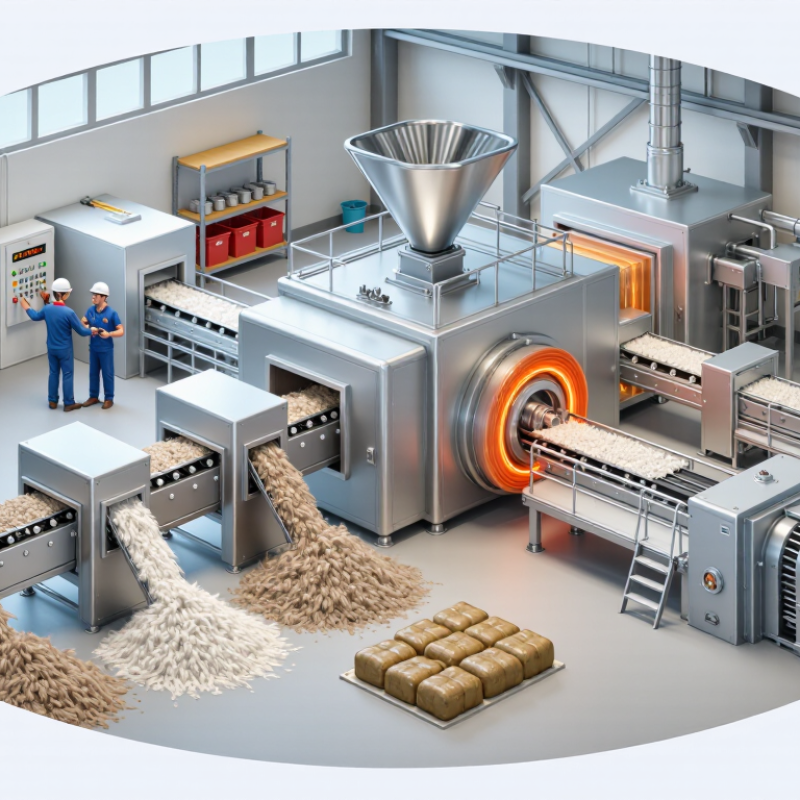
Start with the feathers, not the machine. Weigh incoming material over several production days, and note its moisture, cleanliness, and daily volume. Wet feathers take up space and behave differently from dried meal, so size equipment around the incoming load. Small details matter. A peak-season delivery can exceed an average-day estimate.
Define the finished meal you need, including particle size, moisture, and intended use. These targets affect hydrolysis, drying, and grinding choices. Ask for process data using feathers similar to yours; generic capacity claims may not reflect your material. Check whether the dryer can keep pace with the hydrolysis unit, since a slow dryer can restrict the whole line. List available steam, electricity, floor space, staffing, and maintenance skills before comparing configurations. Also consider cleaning access, odor control, and how process water will be handled. That estimate may still be wrong. Run a small trial, record actual output and energy use, then revise your requirements before committing to a machine.
Compare Feather Meal Processing Methods and Machine Types
How to Choose a Feather Meal Processing Machine?
Compare Feather Meal Processing Methods and Machine Types
Feather meal processing usually starts with hydrolysis, which uses heat, moisture, and pressure to soften feathers’ tough keratin. Steam-based processing can provide consistent treatment when temperature and pressure are monitored closely. Dry rendering uses heat with less added moisture, but may require careful control to prevent uneven cooking. Neither method suits every plant. Compare the expected product quality, available utilities, and daily production volume before choosing.
Batch hydrolyzers process measured loads in a sealed vessel. They can suit smaller operations or changing production schedules, though loading and unloading take time. Continuous hydrolyzers move material through the process steadily and may fit higher-throughput plants. The right machine also depends on downstream equipment. A dryer must handle the moisture level leaving the cooker, while a mill should produce a particle size suited to storage and handling. Check access for cleaning and maintenance, too.
Tips: Ask suppliers for operating data at your target capacity, not just maximum capacity. Check how temperature, pressure, and moisture are recorded. Keep it practical. A machine that looks efficient on paper may perform differently with wet, variable raw feathers. Leave room for that uncertainty when comparing energy use, labor, and finished meal consistency.
How to Choose a Feather Meal Processing Machine?
Compare each machine’s primary role in the main processing stages. Select equipment based on the stage your operation needs to perform.
How to read this chart: 1 means the equipment’s primary role is that stage; 0 means it is not. Pressure hydrolyzers treat feathers with heat and pressure, dryers remove moisture, and hammer mills reduce particle size. Batch and continuous hydrolyzers differ in operating mode; available configurations vary by system.
Evaluate Capacity, Energy Use, and Product Quality
Choosing a feather meal processing machine starts with the material, not the brochure capacity. Estimate daily feed volume, moisture, and how consistently feathers arrive. Ask suppliers to clarify whether rated capacity means wet input or finished meal. Those figures are not interchangeable. A machine sized only for peak demand may run inefficiently during quieter shifts.
Energy use deserves a practical comparison. Record electricity and fuel consumption per tonne of finished meal during a representative trial, including heating, drying, and grinding. Check whether the line can recover heat or adjust output without excessive idle running. A spreadsheet can still mislead. Real feedstock varies.
Product quality depends on more than a fine grind. Review samples for moisture, particle size, and consistency, then confirm that the process meets your intended feed specifications. Ask how temperature and processing time are monitored, and whether operators can spot uneven batches. Fine meal looks reassuring, but appearance alone proves little. Consider maintenance access, cleaning time, and wear parts too; downtime can quietly affect both cost and consistency. Before committing, compare measured output and sample results from material similar to your own.
How to Choose a Feather Meal Processing Machine? — Evaluate Capacity, Energy Use, and Product Quality
| Processing Line | Indicative Raw-Feather Capacity | Energy Use to Evaluate | Product Quality Targets | Key Equipment Checks | Best Fit |
| Small batch line | About 0.2–0.8 tonnes per hour | Compare steam use per tonne of incoming wet feathers and electricity use per tonne. Batch start-up and heat-up can increase energy use at low utilization. | Validate hydrolysis uniformity, final moisture, particle size, and protein digestibility. A typical finished-meal moisture specification is around 8–10%, subject to the buyer’s requirements. | Check vessel working volume, pressure and temperature controls, batch cycle time, safe pressure relief, and the dryer’s ability to handle variable feed moisture. | Small facilities, variable daily volumes, or operations that need flexible batch scheduling. |
| Continuous medium-capacity line | About 0.8–3 tonnes per hour | Request guaranteed steam consumption and electrical load at a stated feed moisture and throughput. Check heat recovery from hot exhaust air or condensate. | Assess consistency between samples from different production runs. Confirm moisture, particle-size distribution, and a defined digestibility test method. | Review feeder consistency, pressure-rated hydrolyzer design, residence-time control, dryer temperature control, and online temperature and moisture monitoring. | Facilities with regular feed supply and a need for steady, repeatable production. |
| High-capacity continuous line | About 3–8 tonnes per hour or more, subject to engineering design | Compare total thermal and electrical consumption at full and partial load. Ask for utility guarantees per tonne of raw feed and confirm boiler capacity and peak demand. | Require documented sampling and quality-control procedures. Verify that hydrolysis and drying remain uniform across the full operating range. | Check integrated controls, system redundancy, dryer capacity, dust collection, odor treatment, maintenance access, and provisions for safe shutdown. | Large facilities with continuous operation, dependable utilities, and sufficient space for an integrated line. |
Selection note: Capacity figures are indicative planning ranges, not guaranteed machine ratings. Actual output and energy consumption depend on feather moisture, contamination, particle size, operating schedule, hydrolysis conditions, dryer design, and the required product specification. Compare supplier proposals using the same raw-material conditions and request measured performance data or a site acceptance test.
Check Machine Materials, Safety Features, and Maintenance Needs
When choosing a feather meal processing machine, inspect the materials that touch wet feathers and hot, processed material. Stainless steel in product-contact areas can resist corrosion, while a sturdy frame helps limit vibration. Check welds, seams, and internal corners for places where residue could collect. Abrasive particles can wear screens and conveying parts, so ask how these components are replaced. Shiny surfaces alone prove little.
Safety features need a hands-on check. Look for fixed guards around belts, shafts, and cutting parts, plus accessible emergency stops. Interlocks should prevent access while hazardous components are moving. Ask how operators isolate power before cleaning or servicing the machine. Dust control also matters; fine meal can spread around transfer points, making housekeeping harder. One detail is easy to miss: a safety device is useful only if workers can reach and use it.
Tips: Request a maintenance schedule and a list of wear parts. Check whether grease points, screens, and bearings are accessible without awkward reaching. Ask to see the cleaning procedure, not just the manual. A quick inspection can reveal design problems, though it cannot replace a proper site assessment. Be realistic about maintenance time; production estimates often overlook it.
Compare Total Costs and Select a Suitable Machine
Compare machines by annual cost per tonne of saleable feather meal, not purchase price alone. Include installation, steam and electricity use, labor, maintenance parts, downtime, and financing. Ask suppliers for measured throughput using your own feather moisture and batch size; nameplate capacity can look generous. Check whether the cooker, dryer, and grinder are included, and price each separately. The IEA’s Energy Efficiency 2023 report estimates that industry accounted for about 37% of global final energy consumption in 2022. This is not a feather-meal benchmark, but it reinforces the need to compare energy demand. For a U.S. reference, EIA reported an average industrial electricity price of 8.13 cents per kilowatt-hour in 2023. Your local tariff may differ.
Build a simple cost model using expected operating hours and saleable output. A machine that costs more upfront may be cheaper if it needs fewer labor hours or loses less product during drying. Request power consumption, maintenance intervals, and output-quality data in writing. Then check these figures against a site trial or a similar facility’s records. A spreadsheet can miss messy realities, such as seasonal feedstock changes or delays waiting for spare parts. I would question any comparison that assumes every machine runs at full capacity all year. Include cleaning time, floor space, and the cost of handling the meal after processing; those details affect the actual cost per tonne.