
Choosing Fish Meal Rendering Equipment in 2026 requires more than comparing motor power, drum size, or supplier prices. Global aquatic production reached approximately 185.4 million tonnes in 2022, according to the FAO State of World Fisheries and Aquaculture 2024 report. This scale increases pressure on processors to protect nutrients, reduce energy use, and maintain stable output. IFFO reports that the marine ingredients sector produces roughly five million tonnes of fishmeal annually. Small process losses can therefore become significant commercial losses.
Neil Auchterlonie, Technical Director at IFFO, has emphasized a practical principle: “Processing cannot repair poor raw material.” That warning should guide every equipment decision. A reliable Fish Meal Rendering Equipment line must handle raw material quickly, limit oxidation, and control temperature through cooking, pressing, drying, and cooling. Imagine unloading fish at 8:00 a.m. on a warm coastal morning. Delays, weak sealing, or uneven drying can affect protein quality before the meal reaches storage.
The best system is not always the largest one. It should match species, moisture variation, daily capacity, available steam, labor skills, and wastewater controls. The OECD-FAO Agricultural Outlook 2024–2033 also highlights continuing demand for aquatic products and feed inputs. Energy recovery and automated monitoring deserve serious attention.
There is no perfect specification. Some buyers still overvalue throughput and underestimate maintenance access. That is a mistake worth reconsidering. Supplier references, verified performance data, food-safety compliance, spare-parts availability, and lifecycle cost should shape the final choice.
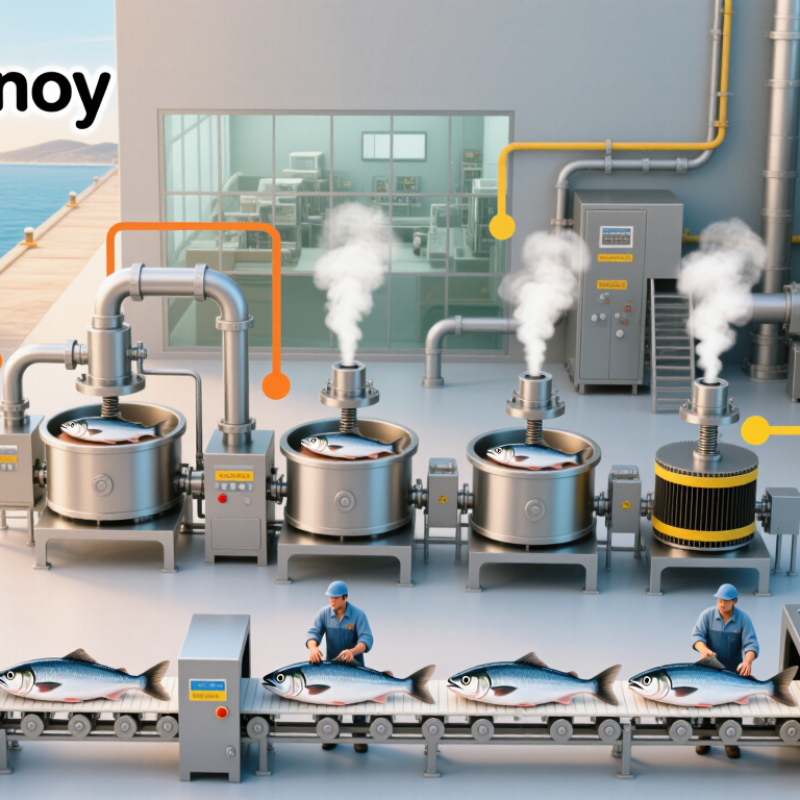
Define the product before comparing equipment. The FAO’s State of World Fisheries and Aquaculture 2024 reported 185 million tonnes of aquatic animal production in 2022. About 89% went directly to human consumption. The remainder supported reduction industries, including fish meal and oil production. This split matters because whole-fish processing demands different handling than trimmings.
Set measurable production requirements. Record raw-material volume, moisture, fat, bone content, and seasonal variation. Then define the required protein level, digestibility, ash content, and final moisture. A plant processing wet trimmings may need stronger dewatering capacity. A high-fat feedstock may require tighter cooking and pressing control. Small errors here become large energy costs.
The OECD-FAO Agricultural Outlook 2024-2033 expects aquaculture to supply an increasing share of global aquatic food. That trend may increase demand for consistent marine ingredients. Your specification should therefore include hourly throughput, heat recovery, odor control, wastewater load, and cleaning time. Do not size equipment only for today’s average volume. Peak deliveries can expose weak conveyors, undersized dryers, and poor storage planning. I have seen theoretical capacity look impressive on paper, yet fail during wet-weather receiving. That possibility deserves honest testing. Pilot trials, laboratory analysis, and verified mass balances provide stronger evidence than sales claims.

How to Choose Fish Meal Rendering Equipment in 2026?
Choosing fish meal rendering equipment starts with the raw material, not the machine catalogue. Whole fish usually contain more moisture and oil than trimmings. They need steady cooking, effective pressing, and controlled drying. Byproducts may include skin, frames, viscera, and bone. Their size and composition can change every hour.
For fresh whole fish, continuous steam cooking can provide even heat and stable throughput. Indirect heating often protects protein quality better than aggressive direct drying. A screw press then separates liquor from the solid cake. The liquor needs centrifugation to recover oil and remove fine particles. For mixed byproducts, a twin-shaft grinder can improve feeding, but excessive grinding may create a thick, difficult-to-separate slurry. Small details matter.
Drying technology deserves careful comparison. Direct hot-air dryers are simple and fast, yet they can increase oxidation when temperatures rise too sharply. Vacuum drying uses lower temperatures and may preserve a fresher aroma, although it demands stronger sealing and more maintenance. I once saw a line perform well with clean trimmings but struggle after viscera increased. The equipment was not defective. The feed changed. That lesson still matters. Measure moisture, oil, ash, and particle size before selecting capacity. Also inspect cleaning access, temperature sensors, and emergency controls. A beautiful specification sheet cannot replace stable operation beside a wet, salty receiving floor.
| Rendering configuration | Typical raw-material fit | Indicative throughput | Typical process conditions | Typical finished meal moisture | Energy profile | Main advantages | Main limitations | Best choice when |
|---|---|---|---|---|---|---|---|---|
| Batch cooker + screw press + indirect dryer | Whole fish, trimmings, heads, frames and mixed byproducts with variable composition | Approximately 1–8 tonnes of raw material per hour | Cooking commonly around 90–100°C; pressing follows thermal coagulation; drying generally reduces meal moisture to storage level | Usually 8–10% | Moderate steam demand; batch operation can increase start-up and idle losses | Flexible, comparatively simple, suitable for smaller or seasonal plants, and tolerant of changing feedstock | Lower automation and less uniform residence time than continuous systems; more labor and floor space per tonne | Raw-material supply is intermittent or the plant needs flexible production in several batches |
| Continuous steam cooker + twin-screw press + indirect dryer | Fresh whole fish and consistent streams of fish offal from processing operations | Approximately 5–25 tonnes of raw material per hour | Continuous cooking commonly around 90–100°C, followed by mechanical dewatering and controlled drying | Usually 6–10% | Efficient steam utilization when operated near design capacity; heat recovery can reduce fuel use | Higher capacity, stable product quality, good automation potential and lower labor per tonne | Higher capital cost; stable feed rate and effective size reduction are important for reliable pressing | The plant operates for long periods with a predictable supply of raw fish or byproducts |
| Continuous cooker + press + direct hot-air dryer | High-moisture fish solids and mixed byproducts where rapid evaporation is required | Approximately 5–30 tonnes of raw material per hour | Hot drying gas contacts the pressed solids; outlet conditions are controlled to protect meal quality | Usually 6–10% | High thermal demand and significant exhaust-air handling; heat recovery is valuable | Fast drying, high evaporation capacity and relatively compact dryer equipment | Greater risk of oxidation, odor release and localized overheating if air temperature or residence time is poorly controlled | High throughput is required and the plant can install effective odor, dust and exhaust treatment |
| Indirect steam-tube or disc dryer | Pressed fish cake, protein-rich solids, oily raw material and products requiring controlled heating | Approximately 3–25 tonnes of raw material per hour, depending on the upstream press and evaporative load | Steam-heated surfaces transfer heat indirectly; product temperature and residence time are adjustable | Commonly 6–10% | Moderate-to-high steam demand; generally less contaminated exhaust gas than direct drying | Good product protection, lower direct contact with combustion gases and strong odor-control potential | Higher equipment cost and possible fouling when feed contains excessive oil, fines or sticky material | Meal quality, odor control and gentle heat treatment are more important than the lowest initial cost |
| Low-temperature vacuum dryer | High-value fish protein, sensitive byproducts and materials where oxidation or heat damage must be minimized | Approximately 0.5–8 tonnes of raw material per hour | Evaporation occurs under reduced pressure, allowing drying at a lower product temperature than atmospheric systems | Usually 4–8% | Higher electrical and vacuum-system requirements; thermal efficiency depends strongly on heat recovery | Helps preserve protein functionality, color and heat-sensitive quality attributes | Lower throughput, higher capital cost and more demanding vacuum maintenance | The product has a premium value or strict quality requirements that justify additional investment |
| Press liquor separation + three-phase decanter or centrifuge | Raw fish and byproducts with recoverable fish oil, suspended solids and aqueous protein liquor | Approximately 2–30 tonnes of raw material per hour, depending on separation duty | Separates solids, oil and water after cooking and pressing; the exact temperature depends on oil viscosity and hygiene requirements | Not a standalone dryer; separated solids generally require drying to about 6–10% moisture | Electrical demand is higher than simple settling, but improved oil and solids recovery can increase overall yield | Improves oil recovery, reduces suspended solids in stickwater and supports more consistent meal composition | Requires skilled operation, cleaning and maintenance; separation performance changes with feed composition | The raw material contains valuable oil or the plant needs tighter control of protein, ash and moisture specifications |
| Note: The figures are representative engineering ranges for comparison rather than guaranteed performance values. Actual capacity, energy consumption, oil recovery and final moisture depend on fish species, raw-material freshness, fat content, particle size, initial moisture, operating schedule, steam conditions and local environmental requirements. A complete fishmeal line normally combines size reduction, cooking, pressing, liquid separation, drying, grinding, cooling, screening and odor or dust control. | ||||||||
Capacity should match your real production pattern, not an attractive catalogue figure. Measure the wet raw material load during busy hours. Also record moisture, fat content, and seasonal changes. A machine rated for 5,000 kilograms per hour may perform poorly with sticky, uneven feedstock. Leave practical room for maintenance and short-term peaks. Measure the real load.
Energy use deserves careful testing. Compare kilowatt-hours per tonne, heating efficiency, insulation quality, and heat recovery options. Ask for operating data under conditions similar to your facility. My first estimates were too optimistic because they ignored startup energy and cleaning cycles. That mistake can distort annual costs. A lower purchase price may hide higher utility expenses.
Automation should improve control without removing human judgment. Useful systems track temperature, pressure, moisture, motor load, and residence time. Clear alarms and manual override functions matter during sensor failure. Product quality depends on stable drying, controlled cooking, and limited overheating. Check laboratory results for protein, moisture, fat, and oxidation indicators. Request several production samples, not one perfect batch. Consistent meal quality is more valuable than impressive peak capacity. Yet even advanced automation needs trained operators and regular calibration. That part is easy to underestimate.
Material selection affects hygiene, service life, and product consistency. FAO’s The State of World Fisheries and Aquaculture 2024 reported 185.4 million tonnes of global aquatic animal production in 2022. That scale also means feedstock quality can vary sharply. Choose stainless steel contact surfaces with suitable chloride resistance, especially around wet conveyors, cookers, and presses. A polished surface reduces residue buildup. However, thicker steel alone does not guarantee better performance. Poor welds can trap protein and moisture.
Safety deserves equal attention. Fishmeal dust can become combustible when poorly controlled. Specify enclosed transfer points, dust extraction, temperature alarms, pressure relief, guarding, and accessible emergency stops. Lockout points should be visible and practical for technicians. IFFO’s 2024 market update estimated global fishmeal production at roughly 5 million tonnes annually. Such volume makes small safety weaknesses expensive. One missed alarm can damage more than equipment. It can stop an entire shift.
Tips: Ask for material certificates, weld inspection records, and a maintenance schedule before purchasing. Check whether bearings, seals, screens, and sensors can be replaced without dismantling half the line. Keep records. Review them monthly. In my experience, easy access often matters more than impressive output figures. I would not pretend every “food-grade” claim means the same thing; confirm the exact standard and operating temperature. Corrosion wins slowly, but it wins. According to FAO guidance, responsible processing also requires minimizing waste and protecting workers, so equipment decisions should consider both recovery efficiency and daily working conditions.
When choosing fish meal rendering equipment in 2026, supplier quality matters more than the lowest quotation. IFFO’s Fishmeal and Fish Oil Statistical Yearbook places global fishmeal production at roughly five million tonnes annually. That scale creates tight competition for raw material, energy, and skilled maintenance. Ask suppliers for verified throughput data, moisture targets, energy consumption, and service response times. A polished brochure is not evidence.
Compliance costs can reshape the investment. FAO’s SOFIA 2024 report recorded 185.4 million tonnes of global aquatic animal production in 2022, increasing pressure on traceability and responsible sourcing. Equipment should support batch records, temperature monitoring, odor control, wastewater treatment, and hygienic cleaning. Request documented testing, not promises. Local permits may also require emission controls, noise limits, and inspection access. These items can cost more than expected.
Look beyond purchase price. Compare energy use per tonne, spare-part availability, operator training, and downtime history over ten years. A 10% efficiency gain can become significant during continuous production, especially when steam and electricity prices rise. However, full automation may not repay its cost at a small plant. That is where judgment matters. Include preventive maintenance, corrosion protection, and realistic production losses in the financial model. The cheapest machine may become the most expensive asset. Recheck every assumption with operating data from a similar facility.
Assess suppliers, compliance costs, and long-term operating value
This planning benchmark compares three generic equipment configurations for a 10 t/h fishmeal line. The estimate includes equipment investment, odor and wastewater compliance controls, and energy plus maintenance costs over ten years. Raw material, labor, land, financing, and transportation costs are excluded. Actual values should be verified through supplier quotations, energy guarantees, emission-control specifications, and local regulatory requirements.
© 2023 JEM Electronics, Inc. – United States Cable Assembly. All rights reserved.