
Blog

How to Choose the Best Carpet Cutter in 2026?

Choosing the right Carpet Cutter in 2026 is less about buying the biggest blade and more about matching the tool to the job. Grand View Research estimated the global carpet and rugs market at USD 51.71 billion in 2023, with continued growth projected through 2030. That market estimate does not measure cutter sales, but it reflects the scale of flooring work where accurate trimming matters. A poor cut can leave frayed backing, uneven edges, or wasted material.

The Carpet and Rug Institute’s professional installation guidance emphasizes careful fitting and finishing. On site, that can mean trimming dense pile along a straightedge, shaping carpet around a door jamb, or making repeated cuts without tiring your hand. Small details matter. Blade access, grip, visibility, and compatibility with replacement blades can affect both speed and control. A cutter that feels solid in a showroom may still be awkward after several hours on the floor.

This guide compares cutter types, blade designs, safety features, and value for different users, from occasional DIY installers to flooring professionals. It also considers practical trade-offs, not just specifications. I would not claim one model suits every carpet or every hand. That is easy to overlook. Use the comparisons to identify a tool that fits your materials, workload, and budget, then verify its instructions before cutting.
How to Choose the Best Carpet Cutter in 2026?

Identify Your Carpet Type and Cutting Requirements

Before choosing a carpet cutter, identify the carpet’s construction. Low-pile, tightly woven carpet usually needs a sharp utility knife and a firm straightedge. Thick plush carpet can compress under pressure, so make a shallow test cut before cutting through the backing. Loop-pile carpet needs extra care: a blade that catches a loop may pull or unravel the surface. Feel the backing. A stiff, dense backing may need several controlled passes rather than one hard push.

Also check what lies beneath the carpet. Cutting carpet and underlay together can dull a blade quickly and make the cut wander. If possible, lift an edge and separate the layers. Measure the cut length, mark the backing, and work from the back where the material allows it. Small details matter. On a stair tread, for example, a slightly uneven edge can remain visible at the corner.

Match the cutter to the job. Long, straight room cuts call for a comfortable handle and a blade that stays stable against a guide. Tight corners or curved cuts need a smaller, controllable tool. Replace a blade when it begins dragging or fraying the backing; forcing a dull edge is rarely more precise. I would not assume one cutter suits every carpet. A short test on an offcut can reveal how the pile and backing behave before the full cut.


Compare Manual, Electric, and Specialty Carpet Cutters

How to Choose the Best Carpet Cutter in 2026?
Compare Manual, Electric, and Specialty Carpet Cutters

A manual carpet cutter is a practical choice for small rooms, straight edges, and occasional repairs. Its controlled, steady action helps when trimming carpet against a wall or doorway. You’ll need to replace blades regularly; a dull edge can fray fibers and make a simple cut frustrating. Electric cutters handle longer runs and thicker carpet with less hand pressure. They can save time, but require a steady grip and careful control near corners. Try the tool on an offcut before starting.

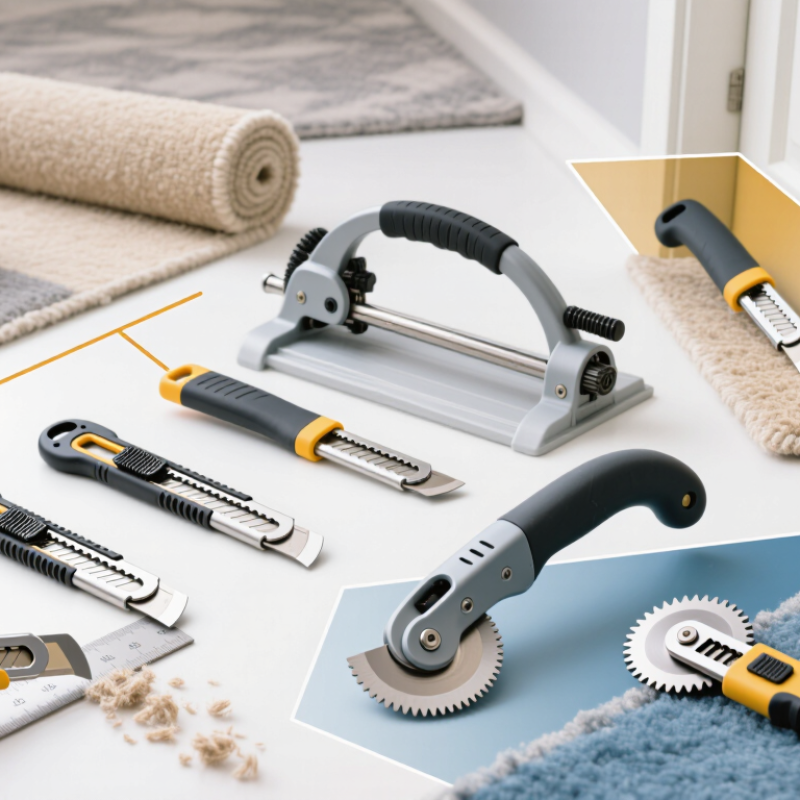
Specialty cutters solve particular problems. A loop-pile cutter can help separate rows cleanly, while a seam cutter is designed to trim adjoining edges. For stairs or tight alcoves, a compact cutter may be easier to guide than a larger powered tool. Match the blade and cutting depth to the carpet’s backing, then work on a firm, protected surface. Even experienced installers can misjudge a cut when the carpet shifts. That’s worth allowing for.

Tips: Measure twice, and leave a little excess for final trimming. Keep spare blades nearby. Cut away from your body, and secure the carpet before using a powered cutter. Don’t rush the corners.

How to Choose the Best Carpet Cutter in 2026? - Compare Manual, Electric, and Specialty Carpet Cutters

Cutter Type How It Works Best For Advantages Limitations Key Buying Checks
Retractable utility knife A replaceable segmented or trapezoid blade is extended from a handheld body and guided through the carpet backing. Occasional cuts, trimming scraps, and general flooring tasks. Widely available, compact, and useful for more than carpet. Requires repeated hand pressure; a narrow blade can wander or snag carpet fibers if the cut is poorly guided. Look for a secure blade lock, a comfortable grip, and blades that can be replaced safely.
Manual carpet knife A purpose-built handle holds a replaceable carpet blade; the blade angle and handle shape are designed for controlled carpet cutting. Straight cuts, fitting, and routine carpet installation work. Offers direct control without batteries or a power cord; blade replacement is generally straightforward. Cutting large areas can be tiring, and results depend on blade sharpness and user technique. Check blade compatibility, grip comfort, blade-change method, and whether the handle suits your preferred cutting direction.
Hook-blade carpet knife A curved hook-shaped blade is pulled through carpet, helping cut the backing while reducing the chance of cutting deeply into the pile. Trimming carpet from the back and cutting carpet near walls or edges. The hook shape can help keep the cut controlled and protect visible fibers when used correctly. Not ideal for every cut; a hook blade can still damage material or surfaces if used at the wrong angle. Choose a handle that holds the blade securely and confirm that replacement hook blades are readily available.
Electric carpet cutter A powered motor moves a cutting blade; designs may be corded or battery-powered and vary by intended material and cut. Frequent cutting, larger projects, or users who want to reduce repetitive manual effort. Can reduce hand effort and speed up repeated cuts when matched to the carpet and task. Costs more than a basic manual knife; needs power or charged batteries, maintenance, and careful handling. Verify the material and cut types supported, power source, blade availability, safety features, and ease of cleaning.
Carpet seam cutter A guided cutter is designed to make a straight cut along carpet backing, often for preparing edges that will be joined at a seam. Preparing clean, consistent carpet edges for seaming. Guides can help produce a straighter, more repeatable edge than freehand cutting. Specialized for seam preparation and may see little use outside carpet installation. Check guide adjustability, compatibility with the carpet construction, and how easily the blade can be changed.
Carpet wall trimmer A guided trimming tool cuts excess carpet along a wall or other straight boundary, often using a replaceable blade. Finishing carpet edges at walls during installation. A built-in guide can help maintain a consistent edge and reduce reliance on freehand trimming. Less versatile than a general-purpose knife and may not fit every corner or room layout. Look for an adjustable guide, comfortable handling, and a design suited to the edge conditions in your project.
Carpet row cutter A guided blade follows a line between carpet rows to separate material along the pile direction. Cutting carpet lengthwise for seams or other installation work where the construction permits a row cut. Can help keep a cut aligned with the carpet construction and limit unnecessary fiber damage. Requires identifying the carpet rows correctly; unsuitable carpet construction can make row cutting impractical. Confirm that the tool suits the carpet type and that its guide and blade can be adjusted and maintained.

Selection tip: Match the cutter to the cut, carpet construction, and frequency of use. Use a sharp, compatible blade, follow the tool instructions, and keep hands clear of the cutting path.

Evaluate Blade Design, Adjustability, and Cutting Precision

A carpet cutter should match the material and the work, not just feel sturdy in your hand. For straight trimming, a rigid blade with a sharp, stable edge can help keep the cut from wandering. A hooked blade may reduce the chance of catching the floor beneath, but it can be less suitable for detailed corners. Check how securely the blade sits, too. Any movement can make a clean cut harder to control.

Adjustability matters when carpet thickness changes. A tool with a depth setting lets you expose only enough blade to pass through the backing, rather than forcing a deeper cut. The adjustment should hold its position during use and remain easy to check. Small controls can be fiddly with gloves. I have found that a quick test on an offcut reveals more than a promising product description. Still, one test may not reflect every carpet.

Precision also depends on grip, visibility, and pressure. A broad handle can feel steadier during long cuts, while a slim nose may help around door frames. Mark a straight guide and move at a measured pace; extra force often produces a rough edge, not a faster job. Keep the blade sharp, and replace it when cuts begin to drag. That means extra upkeep. Compare the tool’s control with the carpet you actually plan to fit.

Check Safety Features, Ergonomics, and Tool Durability

How to Choose the Best Carpet Cutter in 2026?

A carpet cutter should feel controlled before it ever touches the flooring. Check that its blade retracts or locks securely when not in use. A firm blade holder helps prevent unwanted movement during a cut. Look for a handle that stays comfortable with a light, steady grip. If possible, hold the tool and test its controls before buying. Small details matter. A stiff lock can be awkward when your hands are tired.

Ergonomics become more important during long cuts. Choose a handle that fits your hand and has a surface that resists slipping. The cutter should not force your wrist into a strained angle. Durability also deserves a close look: inspect the blade mechanism, handle joints, and any replaceable parts. Metal construction can feel sturdy, but good fit and smooth operation matter just as much. I would not judge a tool by weight alone; a heavy cutter may feel reassuring at first, then tiring across a large room.

Tips: Keep the blade shallow enough to cut the carpet without scoring the floor beneath it. Use a straightedge, work on a stable surface, and change dull blades promptly. Follow the tool’s care instructions. Even a reliable cutter can slip if the carpet bunches or the grip gets dusty.

Match Cutter Performance and Cost to Your Project

How to Choose the Best Carpet Cutter in 2026?

For a small room with straight edges, a sharp utility knife and replacement blades may offer the best value. A loop-pile cutter or powered tool can make repeated cuts faster and more consistent across larger areas. Match the cutter to the carpet’s backing, pile, and cut length—not just its price. A low-cost blade that wanders at a doorway can waste material. Small jobs differ.

Compare the purchase price with blade costs, setup time, and likely rework. The U.S. Bureau of Labor Statistics reported a $48,690 median annual wage for flooring installers and tile and stone setters in May 2023. That figure is not specific to carpet cutting, but it shows why avoidable recuts matter. Review the BLS Occupational Employment and Wage Statistics data alongside your project’s labor estimate. For a one-off bedroom, a premium cutter may not pay back; for repeated commercial cuts, steadier performance may justify the cost. My estimate may still miss awkward corners.

Tips: Test the cutter on an offcut first. Check the backing, then follow the pile direction. Keep spare blades nearby. If edges fray, pause and reassess rather than forcing the cut.

Go to Top