
Blog

How to Choose 304L Stainless Steel Sheet?

Choosing a 304l Stainless Steel Sheet starts with the conditions it must handle, not just its name. This low-carbon grade is often selected for welded components because its carbon content helps reduce the risk of weld-related sensitization. It is common in food-processing equipment, tanks, enclosures, and architectural fabrication. But “stainless” does not mean maintenance-free or immune to corrosion.

Consider the operating environment first. Moisture, cleaning chemicals, salt exposure, and temperature can all affect performance. In chloride-rich settings, for example, 304L may not provide enough resistance to pitting; a materials specialist should review demanding applications. Details matter. Next, confirm the sheet’s thickness, width, length, surface finish, and flatness against the fabrication drawing. A brushed finish may suit visible panels, while a smoother finish can be easier to clean. The best choice depends on use, not appearance alone.

Ask suppliers for traceable material documentation and verify the grade against the applicable purchase specification. Check that the sheet can be formed and welded using your planned processes, and discuss any unusual forming demands before ordering. 304L and 304 are closely related, but they are not interchangeable in every specification. That can fail. I would also compare total cost, including cutting waste, finishing, and lead time, rather than choosing solely by price per sheet. Small omissions in a purchase order can cause real delays. A careful review of service conditions, dimensions, finish, and documentation makes the selection more reliable—and may reveal that another grade is a better fit.
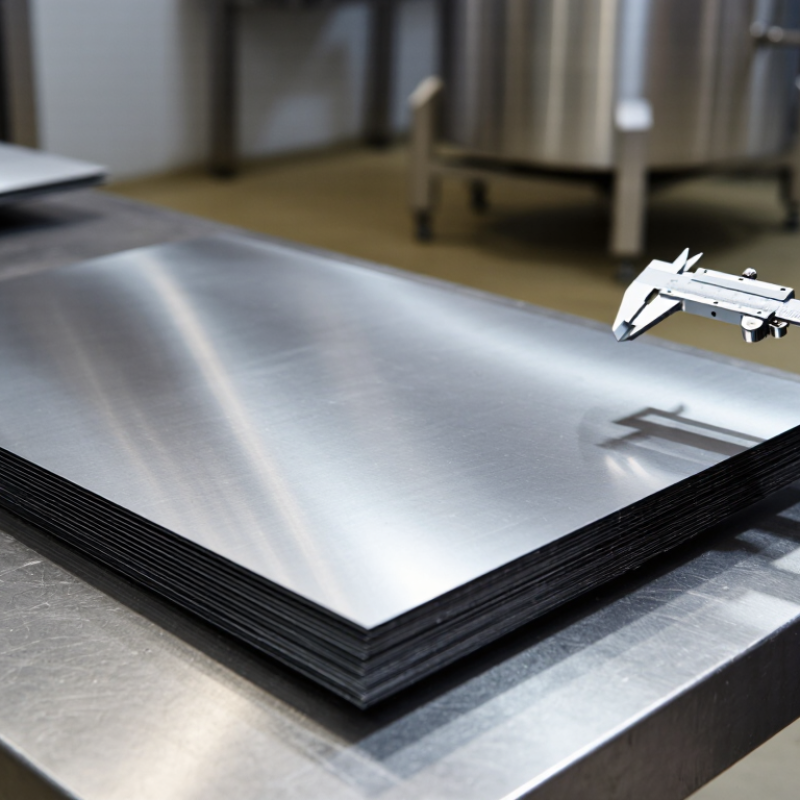
How to Choose 304L Stainless Steel Sheet?

Define the Application and Required Performance of 304L Stainless Steel Sheet

How to Choose 304L Stainless Steel Sheet?

Define the application before comparing sheet thicknesses or finishes. Will the sheet form a sink, process tank, equipment cover, or architectural panel? Record what it will contact, how it will be cleaned, and whether it faces moisture, heat, or abrasion. Small details matter. A warm indoor enclosure has different demands from a tank exposed to cleaning chemicals.

Next, translate those conditions into performance requirements. 304L’s low carbon content helps reduce sensitization risk during welding, making it useful for many fabricated components. It does not make the sheet immune to corrosion. Chloride-rich water, salt spray, and some chemical solutions can cause pitting or staining. Check the actual concentration, temperature, and exposure time. “Stainless” is not a complete specification.

Consider fabrication, too. Tight bends, welded seams, and polished surfaces may call for different thicknesses and finishes. Specify dimensions, surface condition, and any required testing or documentation when requesting material. For critical service, confirm suitability with a qualified materials engineer using the real operating conditions. I have seen finish treated as an afterthought; that can be an expensive oversight. Be specific.

How to Choose 304L Stainless Steel Sheet: Define the Application and Required Performance

Compare the specified minimum tensile and yield strengths for 304 and 304L stainless steel sheet. Values shown are typical ASTM A240/A240M requirements; confirm the applicable specification edition, product form, and thickness with your supplier.

Selection note: 304L’s lower carbon content (0.03% maximum, compared with 0.08% maximum for 304) helps reduce carbide precipitation and intergranular corrosion risk during welding. Define forming, welding, corrosion exposure, and strength requirements before choosing a sheet grade.

Check Chemical Composition and Relevant Material Standards

When choosing 304L stainless steel sheet, verify the grade by its chemical composition, not by a seller’s shorthand alone. In common ASTM specifications, UNS S30403 limits carbon to 0.03% maximum; chromium is typically 18–20%, and nickel 8–12%. These values help distinguish 304L from standard 304, but check the applicable specification for the full element limits. Check the paperwork. A mill test certificate should identify the heat number and report measured chemistry. Match that number to the sheet marking or bundle tag before accepting delivery.

Confirm that the material standard fits its intended use and product form. ASTM A240/A240M covers stainless steel plate, sheet, and strip for pressure vessels and general applications; other projects may call for a different specification. European documents may identify 304L as 1.4307 under EN 10088-2. Do not assume these standards are interchangeable in every purchase. Ask which edition and grade designation apply, and whether reported results are heat analysis or product analysis. Small details matter. Certificates can look complete yet leave uncertainty about traceability or testing. That deserves a follow-up question, even when the numbers seem right.

Select Sheet Thickness, Size, Finish, and Fabrication Tolerances

Choosing 304L stainless steel sheet starts with the part’s job, not a default gauge. Thicker sheet can resist denting and support formed parts, but it adds weight and may require more forming force. Thin sheet suits covers and light panels, though handling can leave visible distortion. Check the drawing, load, forming method, and expected service environment before ordering. 304L offers good general corrosion resistance, but it is not ideal for every chemical or chloride exposure.

Confirm sheet width and length against the finished part layout. Allow for cutting kerf, bend deductions, and edge trimming; a small mismatch can create avoidable scrap. Specify the finish by appearance and function. A smooth finish may matter on visible surfaces, while a textured finish can hide minor marks. State which face must remain clean, especially if protective film or welding is involved. Fabrication tolerances should match the process and drawing. Tighter limits can increase cost, so avoid requesting precision the part does not need. I would verify critical dimensions with the fabricator; assumptions here can be costly.

Tips: Request the material certificate and confirm thickness tolerance, surface condition, and sheet flatness before production. Keep one sample for comparison. It is easy to overlook edge condition until assembly begins.

Verify Corrosion Resistance and Suitability for Service Conditions

Choosing 304L sheet starts with the service environment, not the grade name alone. Its lower carbon content helps limit carbide precipitation during welding. That can reduce the risk of corrosion near welded areas. It does not make the sheet corrosion-proof. Keep that distinction clear.

Identify the chemicals, their concentration, operating temperature, and exposure time. Chloride-bearing water can cause pitting or crevice corrosion, particularly in warm, stagnant areas. Look closely at gasket edges, folded seams, and deposits where moisture may collect. Small details matter. A sheet that performs well in a dry indoor enclosure may not suit repeated exposure to saltwater or aggressive cleaning solutions.

Check the surface finish and fabrication history, too. Heat tint, embedded iron, or rough weld areas can affect corrosion performance. Ask for material test documentation, and compare its chemistry and mechanical properties with the project specification. If conditions are uncertain, test a representative sample under realistic cleaning and operating cycles. I have seen material selection focus heavily on alloy grade while overlooking stagnant liquid at a joint. That is an easy oversight, and a useful reason to review the complete assembly before ordering.

Compare Certifications, Traceability, and Supplier Quality

A 304L stainless steel sheet should be checked against the specification for its intended use, not selected by grade name alone. Review the mill test certificate for chemical composition, mechanical properties, thickness, and the applicable product standard. The low carbon limit matters, especially when welding is planned, but the certificate should confirm the actual heat rather than offer generic grade data. Check the details.

Traceability connects the paperwork to the sheet in front of you. Compare the heat number on the certificate with markings, labels, or bundle records, and ask how identification is preserved if sheets are cut or repacked. A certificate can look complete and still leave questions. I would not treat a neat document as proof until its numbers match the delivered material.

Supplier quality shows up in routine controls: incoming inspection, thickness measurement, surface checks, and clear handling of nonconforming material. Ask whether the supplier can provide inspection records and explain how it manages discrepancies. For project-specific requirements, confirm which certifications or inspection documents are actually needed; requirements can differ by application. A quick photo of a label helps, but it is not a substitute for traceable records. If an answer stays vague, pause and verify before ordering.

How to Choose 304L Stainless Steel Sheet? - Compare Certifications, Traceability, and Supplier Quality

Comparison dimension What to specify or verify Reliable evidence How to assess the result
Grade and product standard Confirm 304L stainless steel sheet and the applicable product specification. Common references include ASTM A240/A240M; in the European designation system, 304L is commonly identified as 1.4307 (X2CrNi18-9) under EN 10088-2. Purchase-order specification and material test certificate (MTC) identifying the grade, standard, product form, and applicable edition. Check that the certificate and order describe the same grade and product form. Do not treat “304” and “304L” as interchangeable when the low-carbon grade is required.
Inspection certificate Request an inspection certificate appropriate to the order and governing standard. EN 10204 Type 3.1 is a common mill certificate; Type 3.2 adds validation involving the purchaser’s inspector or an independently appointed inspector, as defined by the standard. A certificate that identifies the inspection type, material, test results, and responsible validation parties. Match the certificate type to the contract requirement. An ISO 9001 certificate is evidence of a quality-management system, not a substitute for a material-specific inspection certificate.
Chemical composition For ASTM 304L, typical specified limits include carbon at or below 0.030%, chromium 18.0–20.0%, and nickel 8.0–12.0%. Confirm all required elements against the current edition of the specified standard. Heat-specific chemical analysis on the MTC, linked to the material’s heat number. Verify the reported values fall within the limits for the ordered grade. A handheld X-ray fluorescence (XRF) check cannot reliably determine carbon content and therefore cannot alone confirm the “L” grade.
Mechanical properties For ASTM A240 304L, commonly specified minimums include tensile strength of 485 MPa, yield strength of 170 MPa, and elongation of 40%; applicable requirements can depend on the standard edition and product details. Test results on the MTC, with the test method and specimen information available when required. Compare reported results with the exact specification and thickness range on the order rather than relying on a generic datasheet.
Heat and lot traceability Require each sheet, bundle, or parent coil to remain linked to its original heat number and MTC through cutting, repacking, and delivery. Consistent heat or lot identification on the certificate, packaging labels, and material markings, plus records connecting cut pieces to the parent material. Reject or hold material if identifiers are missing, inconsistent, or cannot be traced back to the certificate. Define marking and traceability requirements before shipment.
Dimensions and tolerances State thickness, width, length, quantity, and any flatness requirements. ASTM A480/A480M provides general requirements, including applicable dimensional tolerances, for flat-rolled stainless products used with product specifications such as ASTM A240. Order confirmation, inspection records, and measured dimensions for the supplied lot. Check dimensions against the specified standard, tolerance class, and purchase-order requirements. Do not assume nominal thickness means every point measures exactly that value.
Surface finish and condition Specify the required finish and surface condition, such as 2B, if appropriate for the application. Identify any limits for scratches, dents, contamination, or protective film. Purchase-order finish requirement, visual inspection, and representative samples or agreed inspection criteria. Assess finish against the agreed requirement and intended use. A finish designation describes a production finish; it does not by itself guarantee a particular appearance or surface defect level.
Testing and verification Agree in advance whether additional verification is needed, such as independent chemical analysis, mechanical testing, or positive material identification (PMI). Test reports identifying the sample, method, results, and material lot; for carbon verification, use a suitable method such as optical emission spectroscopy or combustion analysis. Use PMI as a supplementary identity check, not a replacement for heat-specific certification or an appropriate carbon test when confirming 304L.
Supplier quality controls Review documented controls for incoming material, certificate review, identification preservation, nonconforming product, and record retention. Relevant quality-system documentation, example redacted traceability records, inspection procedures, and corrective-action records where appropriate. Evaluate whether the controls support the requirements of your order. Management-system certification can support confidence in processes but does not prove that a particular sheet conforms.
Order and delivery documentation Make the grade, standard, dimensions, finish, certificate type, traceability, marking, and any additional tests explicit in the purchase order. Order acknowledgement, packing list, MTC, and any agreed test or inspection reports. Before acceptance, reconcile the documents and physical identification. Resolve discrepancies before material is released for production.

Note: Values shown are commonly specified ASTM A240 304L requirements and are provided as a selection reference. Confirm the current standard edition, product thickness, and contract requirements before purchasing.

Go to Top