
Blog

How to Choose the Right Fuse Terminal Block?

Choosing a Fuse Terminal Block is not simply a matter of finding one that fits the rail. The right model must match the circuit’s voltage, current, fuse type, and conductor size. A block that looks suitable may still create poor contact or complicate maintenance. Small details matter.

Start with the equipment’s rated values and the fuse manufacturer’s specifications. Check the terminal block’s voltage and current ratings, supported wire range, and fuse dimensions. Then consider how the block will be installed. DIN-rail mounting, panel space, access for fuse replacement, and nearby components can all affect the choice. A crowded cabinet may make a compact block attractive, but access should not be sacrificed. That trade-off is easy to miss.

The operating environment deserves equal attention. Vibration, heat, dust, and moisture can influence material and mounting requirements. Review the product datasheet and installation instructions rather than relying on appearance or a generic rating. Verify that the selected fuse and block work together as intended, and confirm the wiring method before installation. Ratings are not interchangeable.

This guide explains how to compare these factors and avoid common selection mistakes. It also points out where product details can be unclear, so you know what to verify with the manufacturer. No single block suits every panel. A careful check now can prevent a frustrating replacement later.
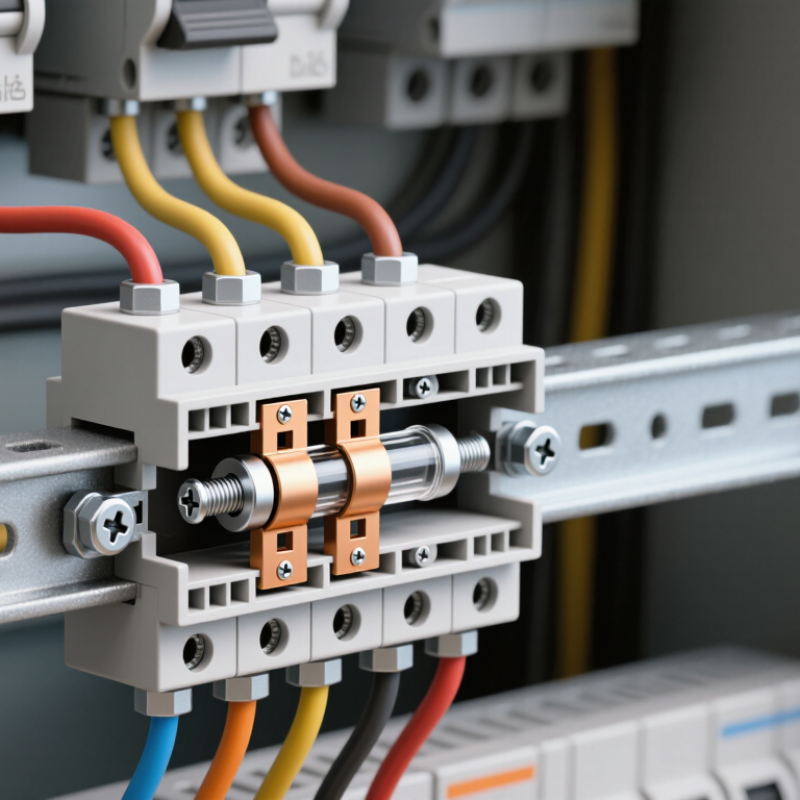
How to Choose the Right Fuse Terminal Block?

Define the Circuit Protection Needs and Application

Define the Circuit Protection Needs and Application

Before choosing a fuse terminal block, identify what the circuit must protect and how it operates. Record the system voltage, normal load current, and expected fault current. Check startup surges too: a motor may briefly draw much more current than it uses while running. The fuse must tolerate normal operation while opening quickly enough during a fault. Small details matter.

Next, match the block to the fuse type, current rating, voltage rating, and interrupting capacity specified for the circuit. Confirm that the terminal accepts the conductor size and material, and that its ratings remain suitable at the expected ambient temperature. A cabinet near a heater may need more careful derating than a cool control panel. It is easy to miss.

The application also shapes practical choices. In a vibrating machine, secure wire entry and a firm terminal connection help prevent loosening. In a humid or dusty enclosure, check the block’s environmental suitability and enclosure requirements. Consider whether technicians can safely isolate the circuit and replace a fuse without disturbing adjacent wiring. Leave enough room for fingers, tools, and clear circuit labels. If the load behavior or fault level is uncertain, verify it with measured data or the equipment documentation before finalizing the selection; guessing can lead to nuisance trips or inadequate protection.


Compare Voltage, Current, and Breaking-Capacity Ratings

How to Choose the Right Fuse Terminal Block?

Compare Voltage, Current, and Breaking-Capacity Ratings

Start with the circuit’s maximum operating voltage. The fuse voltage rating must meet or exceed it, and AC and DC ratings are not automatically interchangeable. DC arcs can be harder to extinguish. Check the terminal block’s own voltage rating too; the fuse alone does not determine safe operation. On a DIN rail, a compact block may look suitable while its printed rating tells a different story. Read the markings carefully.

Match current ratings to the actual load, conductor size, and operating temperature. A fuse should protect the circuit without opening during normal operation, but the terminal block must also carry the expected current. IEC 60947-7-3 covers fuse terminal blocks and their requirements. Check the specific product data against the installation conditions. It’s easy to miss. A warm enclosure or tightly packed terminals can affect performance, so a rating taken at face value may not tell the whole story.

Breaking capacity matters most when a fault occurs. It must be at least as high as the prospective short-circuit current at the installation point. IEC 60269-1 specifies a minimum rated breaking capacity of 6 kA for many AC fuse-links within its scope; some applications require substantially more. Do not treat that figure as a universal target. Have the available fault current verified, then compare it with the fuse’s documented rating. A small oversight here can leave the protective device unable to interrupt a fault safely.

Match the Fuse Type and Terminal Block Configuration

Match the fuse before choosing the terminal block. Check its physical style and dimensions, such as a cartridge fuse’s length and diameter or a blade fuse’s shape. A holder that looks close may still grip poorly or prevent the cover from closing. Small details matter.

Then compare the electrical ratings. The block must suit the circuit’s voltage and current, while the fuse must have an appropriate interrupting rating and response characteristic. Do not increase the fuse rating simply because it opens during normal operation; investigate the load and wiring instead. This is easy to overlook.

Consider the terminal block configuration around the fuse. A single-circuit block may fit a compact control panel, while a multi-circuit arrangement can simplify wiring for several protected branches. Check the connection style, conductor range, mounting method, and available space for wire bends and fuse replacement. If an indicator is useful, confirm that it matches the intended circuit and supply. A tidy drawing can still hide a cramped installation. Verify the block and fuse specifications together, then check the finished layout against the actual conductors and panel space.

Check Wiring, Mounting, and Environmental Requirements

When choosing a fuse terminal block, start with the circuit’s real operating conditions. Match its rated voltage and current to the system, then check the fuse size and expected fault current. Confirm the allowed wire range, conductor type, and whether ferrules are suitable. A wire that fits loosely can heat at its contact point. Small details matter.

Mounting needs the same care. Check whether the block suits a DIN rail or panel cutout, and leave room for wiring, fuse replacement, and heat dissipation. Verify terminal torque against the manufacturer’s specification; overtightening can damage conductors or the terminal. NFPA’s 2021 Electrical Fires report estimated 46,700 U.S. home fires annually involving electrical failure or malfunction during 2015–2019. That figure is not specific to terminal blocks, but it underlines why sound connections matter.

For the environment, consider temperature, vibration, dust, moisture, and nearby chemicals. IEC 60529 classifies IP54 as dust-protected and protected against water splashes; IP65 is dust-tight and protected against water jets. These ratings describe enclosures, not automatically the terminal block itself. Check the complete assembly. Even a careful selection can miss a detail: real temperatures or wire routing may differ from the design assumptions.

Verify Safety Standards and Maintenance Access

When selecting a fuse terminal block, check its markings against the standards required for the equipment and installation. Confirm the rated voltage, current, fuse size, and approved conductor range. A familiar-looking symbol is not enough; verify the documentation for the exact part and configuration. If the block will be used in a panel, check that its ratings suit the panel’s operating conditions, including temperature and available fault current. Details matter.

Maintenance access deserves equal attention. With power safely isolated, a technician should be able to identify the fuse, inspect its condition, and replace it without disturbing nearby wiring. Look at the installed layout, not only the product drawing. Can a fuse puller reach the fuse? Is there room to remove a cover or test adjacent terminals? A crowded panel can turn a simple replacement into a frustrating task.

Plan for clear labels and a practical inspection route. Keep the fuse rating visible, and leave enough space for tools and fingers. Access should never depend on touching exposed live parts; follow the equipment’s isolation procedure before servicing. I have seen neat layouts become awkward after wiring is added, so review the finished panel with maintenance staff. They may spot a problem the design review missed.

How to Choose the Right Fuse Terminal Block? - Verify Safety Standards and Maintenance Access

Selection Check What to Verify Practical Acceptance Criteria Maintenance Access Considerations
Applicable safety standards Identify the required market, installation rules, and product standards for the terminal block and fuse. Check the manufacturer’s documentation for the applicable approvals and ratings. IEC 60947-7-3 covers safety requirements for fuse terminal blocks; IEC 60269 covers low-voltage fuses. UL 1059 and UL 248 are relevant standards for terminal blocks and low-voltage fuses in many North American applications. Keep approval records and installation instructions accessible to technicians. Confirm that the approved fuse type and size can be replaced without altering the assembly.
Voltage and current ratings Compare the circuit’s operating voltage and maximum design current with the ratings of the terminal block and specified fuse. Use a block and fuse suitable for the application. Do not exceed either component’s applicable ratings; account for ambient temperature, enclosure conditions, and any manufacturer derating guidance. Make ratings and fuse identification legible after installation. Leave enough room to read markings and access the fuse holder.
Fuse compatibility and protection Verify fuse dimensions, class or type, speed characteristics where relevant, and interrupting rating. Use only fuse types specified as compatible with the terminal block. The fuse’s voltage and interrupting ratings must be suitable for the circuit’s voltage and prospective fault current. Provide a suitable fuse puller or other specified replacement tool where needed. Ensure the fuse can be removed without damaging adjacent wiring or components.
Conductor size and connection Check the permitted conductor material, cross-section or wire gauge, and connection method. Use conductors within the block’s documented range and follow the specified stripping length and terminal tightening torque. Confirm that the chosen conductor and installation method are permitted by local rules. Allow space for a torque tool and for inspecting conductor insertion and terminal condition. Avoid routing wires so they obstruct fuse access.
Short-circuit coordination Review the protective device and the short-circuit capability of the equipment or assembly. Confirm that the selected fuse and the documented short-circuit rating or coordination data are suitable for the available fault current at the installation point. Do not infer an assembly rating from the fuse rating alone. Label the protective device and record the specified replacement fuse so maintenance does not compromise the verified protection scheme.
Touch protection and spacing Assess access to live parts, clearances, creepage distances, and enclosure protection for the actual installation. Verify the requirements for the applicable product standard, voltage, pollution conditions, and mounting arrangement. Where an IP rating is specified, confirm it for the installed enclosure and configuration, not just the component in isolation. Ensure covers or barriers can be removed for service as intended and are correctly refitted afterward. Provide safe working access without exposing adjacent live parts unnecessarily.
Heat and installation environment Consider ambient temperature, enclosure ventilation, adjacent heat sources, and the expected load. Check the manufacturer’s temperature and derating data. Avoid exceeding rated operating conditions, and arrange components to prevent heat from impairing nearby terminals or wiring. Leave clearance for inspection and replacement, and ensure the block remains reachable after enclosure doors, ducts, or other equipment are installed.
Isolation and replacement procedure Determine how the circuit will be made safe before inspection or fuse replacement. Follow the equipment instructions and applicable workplace electrical-safety procedures. Do not assume that a fuse holder provides isolation unless it is specifically designed and rated for that function. Provide clear identification, a documented isolation procedure, and enough working space to remove and replace the fuse safely. Verify the circuit is de-energized using the approved procedure before service.
Inspection and service life Review inspection guidance for loose connections, discoloration, contamination, or damage. Follow the manufacturer’s maintenance instructions and the site’s inspection schedule. Replace damaged components with compatible parts and retighten connections only as instructed. Position the block so technicians can visually inspect it and reach the terminals with the required tools without disturbing unrelated wiring.

Note: Applicable standards and installation requirements vary by product, jurisdiction, and application. Verify ratings and approvals against the manufacturer’s current documentation and local electrical rules.

Go to Top