
Choosing the right Safety Lockout Box is a practical decision, not a simple purchasing task. The box must support real maintenance work, where several employees may control one hazardous energy source. A crowded workshop, wet gloves, poor lighting, and missing tags can expose weaknesses quickly.
A suitable Safety Lockout Box should match the site’s equipment, workforce, and lockout procedures. Consider its capacity, material, visibility, portability, label space, and resistance to dust or moisture. It should hold personal locks, group-lockout devices, tags, hasps, and written instructions without becoming difficult to organize. A strong design also allows workers to identify contents immediately. Seconds matter during isolation.
Safety expert James Reason wrote, “We cannot change the human condition, but we can change the conditions under which humans work.” His observation applies directly here. A well-designed lockout box cannot replace training or careful verification. It can, however, make the safe action easier to follow.
Look closely.
This guide examines how to choose a Safety Lockout Box that fits daily operations instead of merely looking compliant. It considers worker experience, maintenance routines, storage conditions, and emergency access. The best choice may not be the largest or most expensive model. Sometimes, a smaller box with clear labeling works better than an overloaded cabinet. That conclusion deserves testing, because assumptions can fail on the shop floor. Ask who will use the box, what they need, and what could be missing when equipment is already shut down.
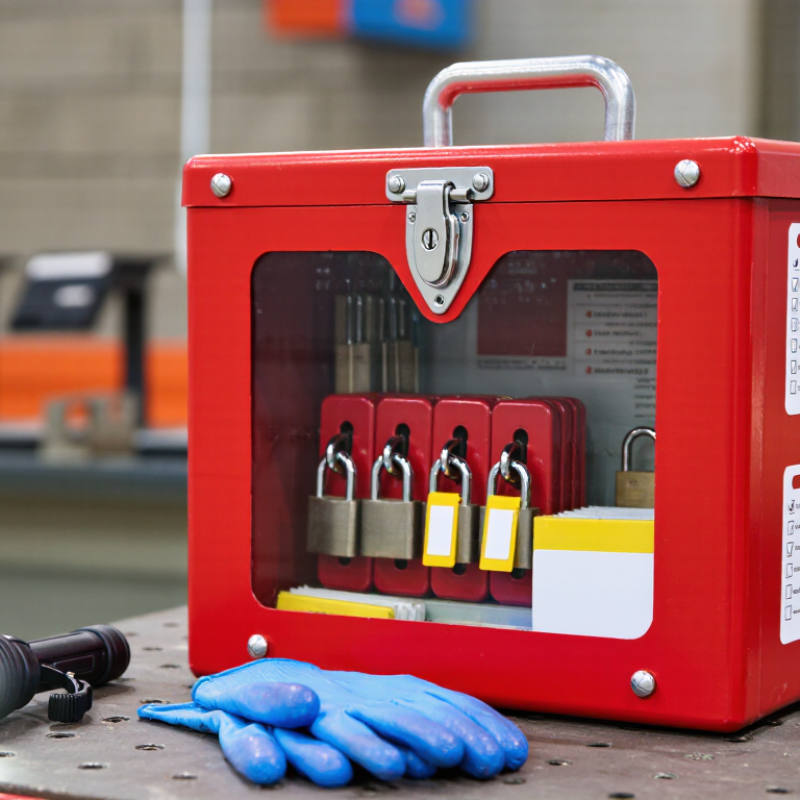
A safety lockout box secures isolation keys during equipment maintenance. It prevents one worker from restoring power while others remain exposed. The box also creates a visible control point near the work area. In practice, it supports group lockout procedures, where every authorized worker applies a personal lock. No single person controls the entire release process.
The main types serve different working conditions. A portable box suits temporary repairs across several machines. A wall-mounted box works better in a fixed maintenance room. Group lockout boxes provide several lock holes for larger crews. Some models include transparent covers, identification labels, or compartments for tags and spare locks. Choose capacity carefully. A crowded box becomes difficult to inspect.
During site inspections, I check whether workers can reach the box without crossing a hazard zone. I also look for corrosion, damaged hinges, unclear labels, and missing inventory records. A durable box should match the environment, especially where dust, moisture, or oil is common. Its size should allow keys and documents to remain organized. Oversizing is sometimes safer than forcing equipment inside. Still, an oversized box may encourage poor storage habits. The box cannot replace training, verified energy isolation, or clear responsibility. Review its use after real maintenance tasks, not only during scheduled audits. A practical choice feels simple under pressure.

How to Choose the Right Safety Lockout Box?
A reliable lockout box starts with a careful hazard assessment. Inspect electrical, mechanical, hydraulic, pneumatic, thermal, and gravity energy sources. OSHA estimates that effective energy-control procedures prevent about 120 deaths and 50,000 injuries annually. These figures show why selecting a box should follow the risk, not the price.
During field audits, one recurring mistake is choosing a box before mapping the shutdown process. A small box may fail during group maintenance. A crowded cabinet may delay access during an emergency. Check how many authorized employees need locks, tags, hasps, and keys. Also consider dust, moisture, heat, and visibility. OSHA’s 29 CFR 1910.147 requires documented procedures, employee training, and verification of isolation. The box supports that system. It does not replace it.
Tips: Count every authorized worker. Label each energy source clearly. Use a box with enough space for personal locks and identification tags. Test the process during a planned shutdown. If one worker cannot explain the isolation steps, the assessment needs revision. This is easy to overlook. NIOSH guidance also emphasizes employee involvement and verification before servicing begins. A competent person should review the arrangement after equipment changes. Lockout needs can change quietly when a new valve, control panel, or production line appears.
Assess workplace hazards by scoring likelihood and severity from 1 to 5. The resulting risk score helps determine the lockout box capacity, lock types, and level of access control required.
Risk score = likelihood × severity. Scores of 1–5 indicate low risk, 6–10 moderate risk, 11–15 high risk, and 16–25 critical risk. Before selecting a box, verify the equipment’s energy sources, the number of authorized employees, and the applicable lockout/tagout procedure.
Selecting a safety lockout box starts with size, not appearance. OSHA estimates that proper hazardous-energy control can prevent 120 fatalities and 50,000 injuries annually. The box must hold every required lock, tag, hasp, and procedure sheet without forcing the lid closed. Count the largest crew involved, then allow room for one additional worker. Small boxes are easier to carry. They also become crowded quickly.
Material should match the workplace. Powder-coated steel suits workshops with impact, dust, and frequent handling. Stainless steel performs better around moisture, cleaning chemicals, or corrosive production areas. Nonconductive polymer can reduce electrical exposure concerns, but its temperature and impact ratings need checking. Do not choose material from appearance alone. Review the manufacturer’s test data and the site’s chemical inventory.
Design affects daily compliance. A transparent lid helps supervisors verify contents without opening the box. Drainage holes can prevent trapped water outdoors. A wall-mounted model saves space, while a portable model supports maintenance teams moving between machines.
BLS reported 2.6 million nonfatal workplace injuries and illnesses in private industry during 2023, so small usability failures deserve attention. I sometimes over-specify equipment, which adds cost without improving control. A better question is practical: can the assigned team quickly identify, access, and secure every energy-isolation device? That answer may change after a real shift observation.
Choosing the right safety lockout box begins with compatibility. Check whether it fits your lockout devices, tags, keys, and group-locking hardware. Measure the box before installation, especially in crowded electrical rooms. A practical inspection should confirm clear visibility, enough storage space, and easy access while wearing gloves. Small details matter.
Security needs careful attention. Select a box with strong, corrosion-resistant construction and a secure latch. Transparent sections can help workers verify contents without opening it. The locking system should support authorized control and prevent accidental access during maintenance. Avoid relying on appearance alone. A sturdy box can still fail if its hinges, mounting points, or labels are weak. I have found that poor labeling often causes more confusion than limited storage.
Tips: Match the box with your site’s existing lockout procedure. Check that every worker can use it correctly. Review local safety requirements and recognized lockout/tagout standards before purchase. Records, inspection dates, and responsible-person details should remain readable. Test the box in realistic conditions, including dust, moisture, low light, and gloved handling. Consider future equipment, too. Choosing only for today may create compatibility problems later. When uncertain, ask a qualified safety professional to review the setup.
| Selection Area | What to Check | Recommended Performance or Design Target | Practical Verification Method | Relevant Standard or Guidance |
|---|---|---|---|---|
| Compatibility | Number of authorized users | Provide one personal lock position for every employee exposed to the hazardous energy. | Count the people who may work under the group lockout and confirm that the box has enough external lock holes or hasp capacity. | OSHA 29 CFR 1910.147 |
| Compatibility | Energy-control hardware capacity | The box should hold the required equipment, such as individual locks, tags, hasps, valve covers, breaker lockouts, and written procedures. | List the devices needed for the most complex isolation task and compare their combined size with the internal usable space. | OSHA 29 CFR 1910.147; ANSI/ASSP Z244.1 |
| Compatibility | Mounting and portability | Choose a portable box for changing work locations, or a wall-mounted cabinet when the lockout station is fixed and used frequently. | Check mounting holes, surface strength, access clearance, handle design, and the total loaded weight before installation. | Manufacturer installation instructions; site risk assessment |
| Security | Personal lock retention | Each authorized employee should be able to apply and remove a uniquely identified personal lock. The box must not allow accidental bypass of an applied lock. | Apply all available lock positions, close the box, and confirm that the contents cannot be removed until the applicable personal locks are removed. | OSHA 29 CFR 1910.147(d)(4) and (f)(3) |
| Security | Tamper resistance | Use a rigid metal or impact-resistant nonmetallic enclosure with protected hinges, a durable latch, and visible evidence of unauthorized opening. | Inspect hinge pins, latch alignment, lock-hole diameter, enclosure rigidity, and resistance to ordinary hand tools used during routine access. | Site security requirements; ANSI/ASSP Z244.1 |
| Security | Environmental protection | For outdoor or washdown locations, select corrosion-resistant construction and a cover seal suitable for the actual exposure. For indoor dry areas, standard powder-coated steel or durable polymer may be sufficient. | Confirm material, corrosion protection, temperature range, water-ingress rating where specified, and compatibility with chemicals used at the site. | ISO 14118; site environmental assessment |
| Regulatory Features | Energy-control procedure identification | Provide a clearly visible area for the machine name, isolation procedure number, authorized employees, and emergency contact information. | Check that labels remain legible after cleaning and that the procedure can be located without opening the box. | OSHA 29 CFR 1910.147(c)(4) and (c)(7) |
| Regulatory Features | Warning labels and tags | Use durable labels with clear wording such as “Do Not Operate,” employee identification, and the purpose of the lockout. | Confirm that labels are permanent, readable, resistant to the working environment, and consistent with the site’s written program. | OSHA 29 CFR 1910.147(c)(5) |
| Regulatory Features | Group lockout control | The system should support a primary authorized employee or designated coordinator who verifies isolation, while each worker controls their own personal lock. | Review the written group-lockout procedure and confirm that no employee must rely solely on another person’s lock for protection. | OSHA 29 CFR 1910.147(f)(3) |
| Regulatory Features | Training and inspection support | Include a document sleeve, checklist holder, or clearly assigned storage location for inspection records and employee training information. | Confirm that authorized, affected, and other employees receive role-appropriate training and that periodic inspections are documented. | OSHA 29 CFR 1910.147(c)(7) and (c)(6) |
| Usability | Visibility and access | A transparent or windowed cover can improve visual confirmation of contents, while a solid cover may provide better protection from light and contamination. | Check visibility under normal lighting, glove compatibility, opening direction, and whether the box can be accessed without contacting nearby hazards. | Human-factors review; site risk assessment |
| Usability | Identification and key control | Use individually keyed or uniquely identifiable personal locks. Keep spare keys controlled and establish a documented process for exceptional lock removal. | Confirm that lock numbers or names can be recorded and that the site has a written procedure for removing an absent employee’s lock. | OSHA 29 CFR 1910.147(e)(3) and (f)(3) |
A safety lockout box should support a clear, repeatable procedure. Select one with enough space for group locks, tags, keys, and written instructions. Check the box before installation. Its latch should close securely, labels should remain readable, and materials should resist the work environment. Dust, moisture, heat, and chemical exposure can affect long-term performance.
Use the box only within a documented energy-control process. Authorized employees should place personal locks on designated points before work begins. Supervisors must verify that every worker understands isolation boundaries and release procedures. Keep an equipment list beside the box, not hidden in a distant office. Record inspections, damaged parts, missing locks, and corrective actions.
Small gaps matter. A missing record can weaken an otherwise careful system.
Training should include a practical demonstration at the actual work area. Ask employees to identify energy sources, test isolation, and explain when their personal lock may be removed. Refresh training after equipment changes, incidents, or observed confusion. Short sessions often work better than crowded annual lectures.
We learned this the hard way. Our written procedure looked complete, but new employees still misunderstood who controlled the key. A brief role-play exposed the problem. Review the box regularly with operators and maintenance staff, and invite them to question steps that seem unclear. Good procedures should survive real pressure, not only paperwork.
© 2023 JEM Electronics, Inc. – United States Cable Assembly. All rights reserved.