How to Choose a Sewage Water Tank for Your Needs
Choosing a Sewage Water Tank begins with understanding what will enter it, how much arrives, and where the tank must fit. A household system may face steady daily flow, while a workshop or remote property can experience sharp peaks. Toilets, sinks, laundry, and cleaning processes also create different wastewater conditions. A tank that looks large enough on paper may still struggle during busy periods. Measure expected daily use, note peak inflow, and leave sizing decisions to a qualified wastewater professional when the system is complex.
Small details matter. Check the tank’s material against the wastewater, soil, groundwater, and installation environment. Review manufacturer specifications for capacity, structural limits, inlet and outlet placement, and compatible pumps or alarms. A narrow access route can complicate delivery; a buried tank may need careful attention to soil conditions and service access. Plan for inspection and maintenance before choosing a location. Access matters. Even careful estimates can be wrong, so confirm assumptions with site measurements and reliable product data rather than choosing by price alone. Local requirements and installation practices vary; verify what applies to your project with the relevant authorities and a qualified installer. No tank is perfect. The right choice balances capacity, durability, access, and upkeep—and suits the real conditions on site.
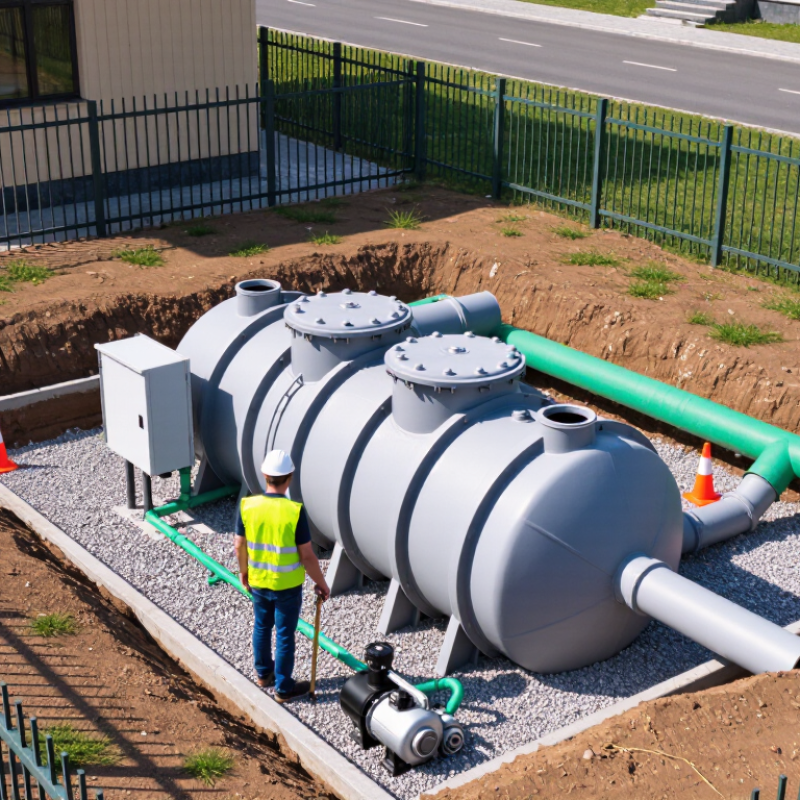
Identify Your Sewage Storage and Treatment Requirements
Choosing a sewage water tank starts with defining its job: temporary storage, primary settling, or feeding a treatment unit. These are different duties. Storage-only systems depend on timely emptying; treatment systems also need suitable retention, ventilation, and inspection access. UN-Water’s 2024 Progress on Wastewater Treatment report estimates that 42% of household wastewater worldwide was not safely treated in 2022. Containment alone is not treatment.
Estimate average and peak inflow from occupants, visitors, laundry, and kitchen use. A home with frequent guests may need more capacity than its usual headcount suggests. The U.S. Environmental Protection Agency recommends septic-system inspections every one to three years and pumping typically every three to five years; actual schedules vary with use and solids. Those figures are useful reference points, not a sizing formula. Measure site conditions, too: groundwater level, soil drainage, flood exposure, and access for an emptying vehicle all affect a workable design.
Match the tank’s capacity and outlet arrangement to the intended treatment process and discharge quality. Ask a qualified wastewater professional to verify flow assumptions and maintenance access before purchase. A larger tank is not automatically safer; poor placement can complicate servicing or allow groundwater intrusion. One detail is easy to overlook: future household changes. I would still check that assumption twice. A growing family, added laundry, or a new outbuilding can alter daily flow more than expected.
Calculate the Tank Capacity Your Property Needs
A sewage holding tank should be sized around the wastewater your property actually produces, not just the number of bedrooms. Start with the usual number of occupants and estimate daily wastewater per person. Recent water bills can help, though irrigation and leaks may distort the figure. For a preliminary estimate, multiply daily wastewater by the number of days between pump-outs. Check the assumptions with a qualified wastewater professional.
For example, four residents using an estimated 150 litres each per day produce about 600 litres daily. If the tank must hold three days of flow, that is 1,800 litres before any safety allowance. The 150-litre figure is only an example; household habits and local design guidance can change it. Consider guests, laundry, long showers, and periods of unusually high use. Peak days matter.
Leave room for practical uncertainty. A tank filled close to its limit can mean more frequent pumping, while an oversized tank may cost more than necessary. Keep access for inspection and pump-out in mind, too. Small details matter. Record actual occupancy and water use for a few weeks if possible, then compare that record with the installer’s calculations. It is easy to underestimate a busy weekend.
Compare Tank Materials, Designs, and Durability
A sewage water tank must suit its contents, installation site, and expected service life. Reinforced concrete handles burial loads well when properly designed and installed, but it is heavy and may crack if the base shifts. Polyethylene resists corrosion and is easy to handle, yet groundwater can lift an empty tank unless anchoring and backfill meet the installation requirements. Fiberglass is also corrosion-resistant and relatively light, though impact damage or uneven bedding can compromise its structure. Steel can be strong, but coatings need regular attention because wastewater and damp soil promote corrosion. No material is maintenance-free.
Small details matter. Compare rated burial depth, groundwater conditions, access risers, and inlet and outlet positions—not just tank price. Compartmented designs can help settle solids, while accessible openings make inspection and pumping more practical. Above-ground and buried tanks also face different stresses, including sunlight, soil pressure, and vehicle loads. Ask an experienced installer to check site conditions against the tank’s specifications. A detail that seems minor, such as poor drainage around the base, can shorten service life. There is no perfect pick; the right balance depends on the site, budget, and maintenance plan.
Check Site Conditions and Local Installation Rules
Before choosing a sewage water tank, inspect the site after rain as well as in dry weather. Standing water can signal a high groundwater level, which may affect tank stability and installation. Small details matter. Note the available footprint, distance from buildings and wells, and whether a delivery vehicle can reach the excavation area. A narrow gate or low branch can complicate installation.
Ask a qualified installer to assess soil type, ground slope, frost depth, and the planned pipe route. Clay may drain slowly, while loose soil can require extra support. Check where pipes enter the tank; an awkward height difference can cause avoidable plumbing work. Measure twice. Site conditions are easy to underestimate, and a drawing may not show buried services or seasonal water changes.
Local installation rules can affect tank size, placement, access covers, ventilation, and inspection requirements. Confirm current requirements with the relevant local authority before ordering equipment or digging. Keep written guidance and site measurements for the installer. Plans change. Even a suitable tank may not fit the approved location, so verify capacity and installation details together rather than treating them as separate decisions.
Evaluate Maintenance Needs and Long-Term Costs
A sewage water tank’s purchase price is only part of its cost. Check how easily a technician can reach the inspection opening, pump connection, and inlet pipe. A narrow access route or buried fittings may add labor during routine servicing. Compare tank materials for resistance to corrosion and wastewater exposure, and confirm that replacement parts are readily available. A cheap tank can become expensive.
The U.S. EPA’s 2022 Clean Watersheds Needs Survey estimated $630.1 billion in wastewater and stormwater infrastructure needs over 20 years. That is a system-wide estimate, not a tank price, but it shows why long-term upkeep deserves attention.
For household septic systems, EPA guidance generally recommends inspection at least every three years and pumping every three to five years, depending on use and tank condition. Include service visits, pumping, repairs, and eventual replacement in your cost estimate. Even a careful budget can miss awkward access or an unexpected pump failure.
Tips: Ask installers to itemize routine maintenance and likely repair costs. If the tank serves a septic system, keep inspection and pumping records. Small detail. Compare quotes using the same service assumptions, not just the same capacity.