How to Choose the Best Mica Heater?
Choosing a Mica Heater is not simply a matter of picking the highest wattage. The right unit must match the space, heat demand, installation method, and available electrical supply. A heater intended for a compact enclosure may not suit a drafty workshop. Fit matters.
The energy context is significant. The U.S. Energy Information Administration’s 2020 Residential Energy Consumption Survey reports that space heating accounted for about 42% of household site energy use. The International Energy Agency also reports that building operations consume roughly 30% of global final energy. These figures do not predict the performance of any individual heater, but they show why sensible sizing and controls deserve attention.
When comparing models, check rated power, voltage, dimensions, mounting requirements, temperature controls, and overheat protection. Look for clear technical documents and safety certifications appropriate to the product and its intended market. For a practical check, measure the installation area and confirm that the heater’s stated operating limits suit the surrounding materials and airflow. A well-specified unit should have traceable performance information, not just attractive claims.
There is no universal best choice. A higher output can be unnecessary, while a compact model may struggle in a poorly insulated space. That trade-off is easy to miss. This guide will explain how to compare heater specifications, match output to the application, and assess build quality and supplier support. The goal is a careful choice, not a perfect-sounding one.
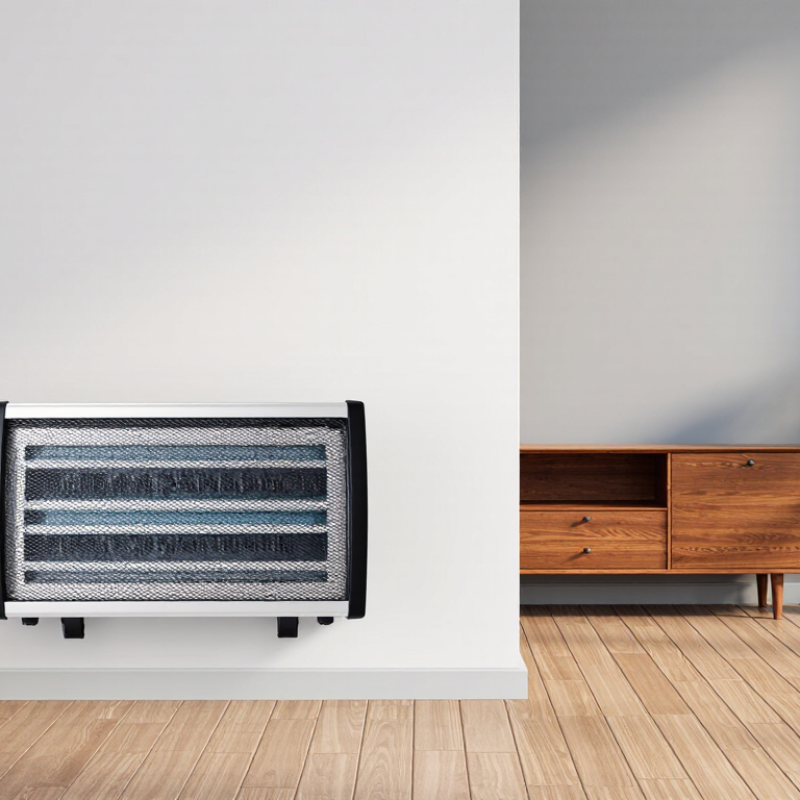
Identify Your Heating Needs and Intended Use
Before choosing a mica heater, picture the space it must warm. A compact bedroom with a closed door needs less output than a drafty living area with high ceilings. Measure the room and check the heater’s stated coverage and wattage rather than judging by its size. Insulation, window leaks, and local winter temperatures all affect comfort. A heater may feel adequate beside a desk but struggle across a long room. That matters.
Think about how you will use it each day. For brief, close-range warmth, a portable unit with a stable base and simple controls may be practical. For longer periods, look for an adjustable thermostat, overheat protection, and a timer if you need scheduled operation. Check the cord length and place the heater on a level, open surface, away from curtains, bedding, and furniture. Not always obvious. A room’s layout can matter as much as its floor area. If you plan to use the heater in a damp space, confirm that its instructions explicitly permit that location; do not assume ordinary models are suitable. The coverage estimate is only a guide, and real rooms rarely match ideal test conditions. A little skepticism helps.
Compare Heater Types, Sizes, and Heating Capacity
A mica heater uses thin mineral sheets to warm nearby objects and circulate heat through the room. Some models emphasize radiant warmth, while others rely more on convection; check the product specifications rather than assuming all mica heaters feel the same. A compact unit may suit a desk area or small bedroom. Larger rooms usually need more output, but heater size alone does not tell the whole story.
Heating capacity is commonly listed in watts. As a rough starting point, compare the wattage with your room’s floor area, ceiling height, insulation, and exposure to drafts. A cold room with large windows may need more capacity than a sheltered room of equal size. Don’t expect a small heater to warm an open-plan space evenly. That assumption is easy to make. I’d also check thermostat range, heat settings, and whether the unit has tip-over and overheat protection. These details affect everyday use, not just the label.
Tips: Measure the room before shopping, then compare the stated coverage area and wattage. Place the heater on a stable, open surface, away from curtains and furniture. Check the manual for clearance requirements. A little extra capacity can help in a drafty room, but more power is not automatically better; it may raise energy use without fixing poor placement.
Evaluate Safety Features and Temperature Controls
When choosing a mica heater, check how it responds if it tips over or becomes too hot. A tip-over switch should cut power when the unit is knocked onto its side. Overheat protection adds another layer, especially if airflow is blocked by a curtain or a nearby chair. Look for clear instructions on keeping the heater away from bedding and other combustible materials. Check the power cord, plug, and casing for damage before use, and follow the clearance distances in the manual. Small details matter. A safety feature is useful only if it works as intended and is maintained.
Temperature controls affect both comfort and safe operation. A thermostat lets you choose a target temperature and cycles the heater as the room warms, rather than leaving it at full output continuously. If possible, test whether the dial or buttons are easy to adjust without touching a hot grille. A visible setting or indicator helps when the room is dim. Some controls are less precise than their markings suggest; room drafts and heater placement can change the reading. Keep the unit on a level, stable surface, and avoid using an extension cord unless the manual specifically permits it. In daily use, even a good thermostat may need small adjustments.
Check Energy Efficiency, Build Quality, and Maintenance Needs
A mica heater can warm a room quickly, but quick heat does not automatically mean low energy use. Check its wattage and thermostat controls before comparing models. A 1,500-watt heater running at full power for one hour uses 1.5 kilowatt-hours; a thermostat may reduce use by cycling off as the room warms. Your room size, insulation, and drafts matter too. A heater may struggle beside a leaky window. I would not judge one by warm-up speed alone; that is an easy detail to overvalue.
Build quality shows in small, tangible details. Look for a stable base, a firmly attached guard, a sturdy power cord, and controls that respond smoothly. Check the manual for overheat and tip-over protection, and confirm the unit is intended for your room and usage. No heater is maintenance-free. Let it cool, unplug it, and wipe dust from the exterior and air openings with a dry cloth. Never pour water into the unit. If the cord, plug, or casing looks damaged, stop using it and seek qualified service. It is tempting to skip these checks. Don’t.
Match Your Budget to Warranty and After-Sales Support
A mica heater’s price is only one part of its cost. Compare the warranty with how often and where you plan to use the heater. A unit used every evening in a chilly home may deserve stronger support than one used occasionally in a spare room. Check the warranty period, what parts it covers, and whether labor or shipping is excluded. The small print matters.
Look for clear instructions on filing a claim and a reachable service team. If a control stops working during winter, a useful response might include troubleshooting steps, a repair option, or replacement parts. Keep the receipt and note the model details after purchase. It takes a minute. Also ask whether support continues after the initial warranty ends. A low-cost heater can become less economical if a simple repair is difficult to arrange.
Set a realistic budget that leaves room for dependable service, not just extra features. Compare the total price, coverage, and likely repair costs side by side. A longer warranty is not automatically better if exclusions are broad or the claim process is unclear. I may be tempted by the cheapest option, especially when the difference looks small; that is not always wise. Read the terms before paying, and choose the balance you can live with.
How to Choose the Best Mica Heater: Match Your Budget to Warranty and After-Sales Support
Compare shortlisted heaters using the same 1–5 scale: 1 = weak or unclear, 5 = strong and clearly documented. The scores below are illustrative, not product or market data; replace them with ratings based on each seller’s written warranty, support terms, and quoted price.
A low price is only one part of value. Check warranty duration and exclusions, who handles repairs, how to contact support, and whether replacement parts are available before choosing.