
Blog

How to Choose the Right Safety Padlock in 2026?

Choosing the right Safety Padlock in 2026 starts with the equipment and task, not the color. A lock used on an outdoor valve faces different demands from one assigned to an electrical isolation point. Identify where it will be used, who needs access, and what the lock must secure. These details help narrow the choices before comparing products.

Check the body material, shackle size, and resistance to moisture, dust, or chemicals. A nylon body can help reduce electrical conductivity concerns, while a steel shackle may suit some demanding environments. Neither feature alone proves a lock is appropriate for every application. Verify the manufacturer’s specifications and match them to your site’s procedures.

Look closely at the shackle diameter and clearance. A lock that nearly fits may not pass through a crowded hasp. Too small, and it may leave unwanted movement. Consider key control, too. Decide whether workers need individually keyed locks, keyed-alike sets, or a managed master-key system. Clear labels also matter when several locks hang together on a busy panel.

Think about use with gloves, cold hands, and limited light. A key that turns smoothly during a desk test might feel awkward beside a machine. Small details count. No checklist catches every awkward fit. Test a sample at the actual attachment point before ordering a full set, and review your choice when equipment or work practices change. That extra check can feel slow. It is often worth doing. Safety depends on the complete isolation procedure, not the padlock alone.
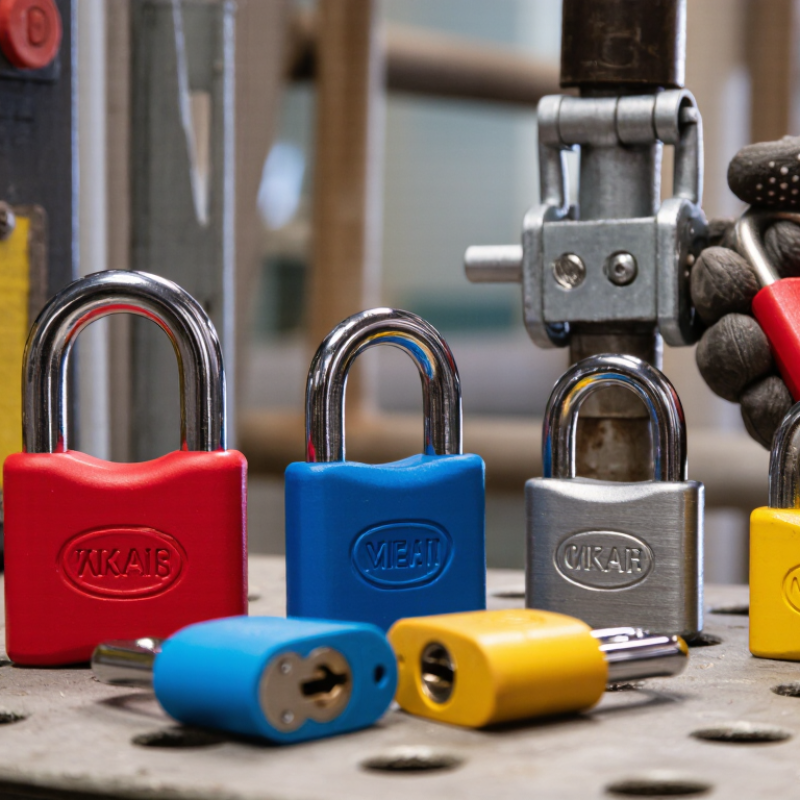
How to Choose the Right Safety Padlock in 2026?

What a Safety Padlock Is and Where It Is Used

A safety padlock is a compact, individually assigned lock used to prevent isolated equipment from being restarted during servicing. It forms part of a lockout/tagout process, not a complete safety system by itself. A worker attaches it to an energy-isolating point, such as a switch handle or valve hasp, and keeps the key. Some models retain the key while unlocked; others differ, so check the design. That matters. A colored body or label can identify ownership, but colors alone may confuse teams. A clear site convention helps.

These locks are used in factories, workshops, utility rooms, and maintenance areas where machinery, electrical circuits, or fluid lines need controlled isolation. The right choice depends on the equipment and the site’s documented procedure. A short shackle may fit a crowded breaker panel, while a longer one may reach a valve hasp. Fit matters too. Consider gloves, moisture, dust, and chemical exposure when choosing materials. A padlock does not prove that energy is absent; workers must follow approved isolation and verification steps. Small clearance differences are easy to miss, so check the fit at the actual isolation point.

How to Match the Lock to the Hazard and Work Environment

How to Choose the Right Safety Padlock in 2026?

A safety padlock should fit the hazard, not just the hasp. Identify the energy source and isolation point before choosing its size or material. For electrical equipment, a nonconductive body may suit the site’s risk assessment. A long shackle can help reach awkward isolation points, but extra clearance may invite tampering. Fit matters.

Then consider the work environment. A lock used beside a washdown area faces different conditions from one stored in a dry maintenance room. Check the manufacturer’s specifications for moisture, corrosion, chemicals, dust, and temperature. A bright color can improve visibility, but it does not prove the lock is suitable. On a noisy floor, clear identification matters.

Think about how people will use and manage the lock. If several workers isolate one machine, confirm that the lock works with the site’s group-lockout process and hasps. Choose a keying plan that supports individual control; shared keys can create confusion. Test the lock with gloves on and at the actual isolation point. Small details get missed. A checklist helps, but it may not capture a cramped cabinet or a slippery glove. Recheck the choice when equipment or conditions change.

Which Materials, Shackle Types, and Keying Options to Compare

When choosing a safety padlock in 2026, match its body material to the work area, not just the price. A nonconductive polymer body can suit electrical maintenance, while aluminum keeps weight low for daily carry. Stainless steel resists rust around washdown stations, but the complete lock still needs checking for chemical exposure and temperature limits. Small details matter. A cracked label or stiff key can slow a shift change.

Shackle choice depends on the locking point. A short steel shackle may fit a compact valve hasp, while a longer one can reach around larger equipment. Stainless shackles help in damp settings; nonconductive shackles may be appropriate where metal contact is a concern. Check the opening diameter and usable clearance with the actual hasp. Catalog measurements can feel different in a crowded cabinet. I have seen teams overlook that.

Keying affects both access and control. Keyed-different locks give each worker an individual key, while keyed-alike sets reduce the number of keys for one assigned user. Master-key systems can support supervisors, but they also require careful key custody and clear procedures. Decide how lost keys, replacements, and lock removal will be handled before ordering. The convenient option is not always the safest one. Keep the key plan aligned with your site’s written lockout procedures.

How to Choose the Right Safety Padlock in 2026? — Which Materials, Shackle Types, and Keying Options to Compare

Decision factor Option Key characteristics Advantages Limitations and checks Often suitable for
Body material Nonconductive thermoplastic or nylon Lightweight polymer body; some lockout models also use a nonconductive polymer shackle. Can help reduce electrical-conductivity concerns and resist many common chemicals. Impact, temperature, UV, and chemical resistance vary by formulation. Confirm the product’s stated ratings; material alone does not establish electrical safety. Electrical lockout applications when the padlock is specifically designed and rated for the intended environment.
Body material Aluminum Metal body with relatively low weight; commonly anodized or otherwise finished. Light to carry and generally more rigid than a polymer body. Conductive. Surface finishes can wear, and resistance to corrosion or chemicals depends on the alloy and finish. General industrial lockout where electrical conductivity is not a concern and a lightweight metal body is preferred.
Body material Brass Metal body often used in conventional padlocks; brass is not electrically insulating. Can offer useful corrosion resistance in some environments. Conductive; performance varies with alloy and exposure. Check compatibility with site chemicals and conditions. General-purpose use where the padlock’s construction and environmental ratings meet site requirements.
Shackle material Hardened steel Rigid metal shackle, commonly selected for resistance to cutting and forced attack. Typically offers greater resistance to cutting than softer shackle materials of similar size. Conductive and may corrode if its protection is damaged or the environment is corrosive. Does not make a padlock electrically safe. Locations where physical tampering resistance is a priority and electrical hazards are not present at the lock point.
Shackle material Stainless steel Metal shackle available in different stainless grades and finishes. Often chosen for improved corrosion resistance compared with unprotected carbon steel. Conductive. Corrosion performance depends on grade, finish, and exposure; it should not be assumed to be corrosion-proof. Wet or corrosive settings when the specified grade is appropriate for the exposure.
Shackle material Aluminum Lightweight metal shackle, generally softer than hardened steel. Reduces carrying weight and may be less damaging to some surfaces than harder shackles. Conductive and generally less resistant to cutting than hardened steel. Check strength and corrosion suitability for the task. Applications where low weight is useful and the required level of physical security is modest.
Shackle type Standard-height shackle Conventional shackle clearance for many lockout points and hasps. Compact and suitable for many common isolation devices. Measure the attachment point; insufficient clearance can prevent proper installation. Compact lockout points with adequate clearance.
Shackle type Long or extended shackle Provides additional vertical clearance compared with a standard-height shackle. Can reach through larger hasps or around wider attachment points. A longer shackle may provide more leverage for attack. Use only the clearance needed and verify that it fits securely. Large hasps, valves, or isolation points that cannot accept a standard-height shackle.
Shackle type Nonconductive shackle Made from an insulating material, commonly specified for lockout applications involving electrical hazards. Can reduce the risk of creating a conductive path through the shackle when properly designed and used. May be less resistant to cutting or impact than a hardened metal shackle. Verify the product’s electrical and mechanical ratings and site procedures. Electrical lockout points where a suitable, specifically rated nonconductive design is required.
Keying option Keyed different Each padlock in the group has a unique key; one key opens one assigned lock. Supports individual ownership and reduces the chance that one worker’s key opens another worker’s lock. Requires key control and a plan for lost keys. Confirm that spare keys are managed securely. Personal lockout programs in which each authorized worker controls their own key.
Keying option Keyed alike A defined group of padlocks can be opened by the same key. Convenient when one authorized person needs to operate several locks. Shared-key access reduces individual key separation. Limit the group and control key distribution carefully. Equipment sets assigned to one person or a controlled maintenance function.
Keying option Master keyed Individual locks have separate operating keys; an authorized master key can open a defined group. Can support controlled supervisory or emergency access across multiple locks. The master key creates broader access and must be tightly controlled. Follow site procedures and applicable lockout requirements. Managed systems that require an authorized access hierarchy and documented key custody.
Key feature Key-retaining when unlocked The key cannot be removed while the padlock is unlocked. Helps reduce the chance of a lock being left unlocked without its key. Check the operating sequence and confirm it suits the site’s lockout procedure. Lockout programs seeking a visible, practical reminder to relock before removing the key.

Selection note: Compare shackle diameter and clearance, body and shackle ratings, environmental compatibility, and key-control procedures against the actual lockout point and site requirements. A material description alone is not a safety certification.

How to Check Compliance, Compatibility, and Required Features

How to Choose the Right Safety Padlock in 2026?
How to Check Compliance, Compatibility, and Required Features

A suitable safety padlock should match your workplace lockout procedures, not just look sturdy. Check applicable standards and site requirements before ordering. Ask for current product documentation, including material details and test information. Requirements can vary by industry and location, so confirm them with your safety team. Paperwork matters.

Next, compare the lock with the equipment it must secure. Measure the hasp opening and check the shackle diameter, length, and clearance. A lock that almost fits can still leave a machine unsecured. Check the fit. Consider where it will be used: damp rooms, outdoor cabinets, or areas exposed to oils may call for different materials and corrosion resistance. Verify that labels remain readable and that the lock’s keying plan supports your site’s procedures.

Required features depend on the task. A nonconductive body may be appropriate near electrical equipment, while a durable, clearly identifiable lock can help workers distinguish personal devices. Confirm whether locks must be keyed differently or alike, and make sure spare-key control is documented. A checklist helps, but it can miss awkward access points or gloves that make small keys hard to handle. Test a sample on the actual equipment, with the people who will use it. Then review the choice when procedures or machinery change.

How to Choose the Right Safety Padlock in 2026

Check compliance, compatibility, and required features before selecting a lockout padlock.

OSHA’s lockout/tagout standard requires lockout devices to be standardized, durable, substantial, and identifiable. Confirm that the padlock also fits the energy-isolating device and your workplace’s lockout procedure. The chart shows required OSHA device attributes—not survey results or product ratings. Source: OSHA 29 CFR 1910.147(c)(5)

How to Select, Test, and Maintain the Right Padlock

How to Choose the Right Safety Padlock in 2026?

Choose a padlock for the actual task, not just its color. Check that its shackle fits the isolation point and that its body suits the environment, including moisture, dust, or temperature changes. For lockout procedures, use a clearly identifiable, individually assigned lock with controlled keys. OSHA’s Control of Hazardous Energy (Lockout/Tagout) guidance estimates that effective lockout/tagout practices prevent about 120 deaths and 50,000 injuries each year. The figure is a reminder: a padlock works only as part of a complete energy-control procedure.

Test the lock before relying on it. Check for cracks, a bent shackle, corrosion, and a key that sticks. Confirm the lock closes fully and cannot be removed without its key. Then verify the equipment’s isolation using the site’s approved procedure; the padlock alone does not confirm that hazardous energy is controlled. A quick tug is not enough. Keep the check practical, and record defects rather than hoping they will not matter.

Maintain locks with routine inspections and clean, dry storage. Follow the manufacturer’s care instructions, and replace damaged or unreliable locks instead of improvising repairs. Keep spare keys controlled, and make sure workers understand who owns each lock. A tidy color system helps, but it can still fail when people share locks or skip checks. That deserves a second look.

Go to Top