What Is an LED Garden Light and How Does It Work?
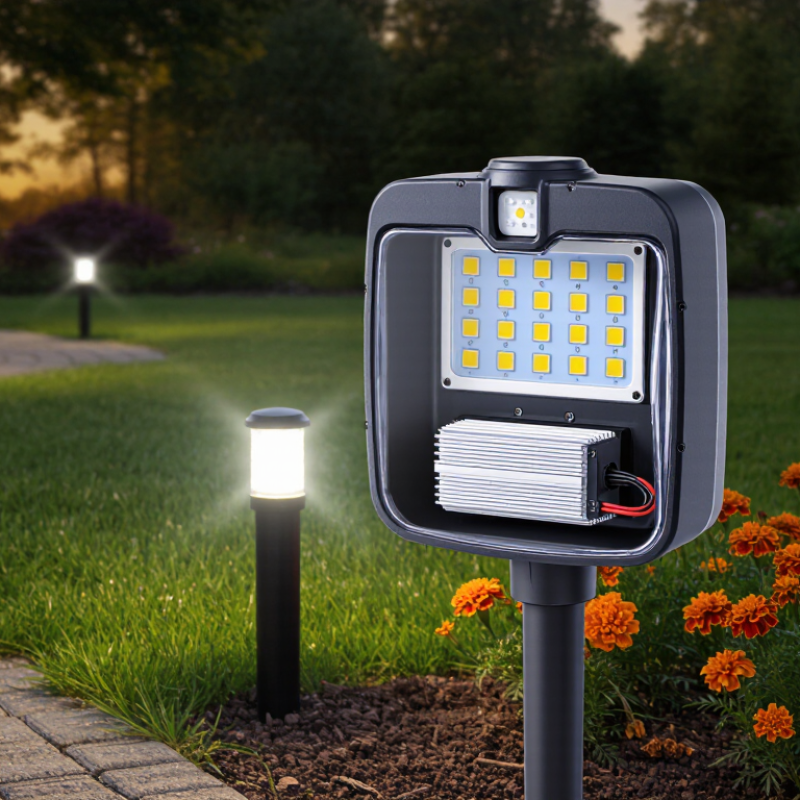
A Led Garden Light turns electrical energy into visible light using semiconductor chips, rather than a heated filament. Its basic parts are simple: an LED board, a driver, a housing, and often a photocell or motion sensor. The driver regulates incoming power. The housing helps protect components from rain and dust. Small details matter.
The U.S. Department of Energy’s LED Basics guidance reports that residential LEDs use at least 75% less energy and can last up to 25 times longer than incandescent lighting. Those comparisons describe LEDs broadly, not every garden fixture. Actual performance depends on chip quality, operating temperature, optics, and installation. A shaded pathway, for example, needs different light distribution from a flower bed.
Light affects more than visibility. Lighting researcher Dr. Mariana Figueiro has described light as “the most important synchronizer of the human circadian system.” Her research concerns human light exposure, not garden-fixture design, but it offers a useful reminder: brightness and timing matter. A sensor can switch a light on at dusk, while a poorly aimed beam may still shine into a window. Not magic.
In practice, the LED chip emits light when current passes through it, and the driver keeps that current within a suitable range. A heat sink carries excess heat away from the chip. This is easy to overlook. Heat can shorten component life, even when the lamp appears cool to the touch. To understand what a Led Garden Light can—and cannot—do, it helps to examine its components, power use, light distribution, and controls together. A promising specification is not a guarantee; real performance depends on the fixture and the site.
What Defines an LED Garden Light and Its Core Components?
An LED garden light is an outdoor fixture that uses light-emitting diodes to illuminate paths, planting beds, steps, or seating areas. The term describes the light source, not one particular shape or power system. A compact stake light may spread a soft pool across soil, while a wall-mounted fixture can direct a clearer beam onto a walkway. Its defining parts work together to produce light, guide it, and protect the electrical components from outdoor conditions.
The LED chip generates light when electricity passes through it. A driver regulates the current in wired models, helping the light operate steadily. A lens or reflector shapes the beam, and the housing supports the fixture while shielding its internal parts. Seals around joints can help resist moisture, but they do not make every fixture suitable for every location. Solar models also include a panel, battery, and control circuit. I would not assume that a solar light will stay bright all night; shade and short winter days can affect charging.
Tips: Check the fixture’s stated outdoor rating and place it where water will not collect around its base. Match beam direction to the task: broad, low-level light often works better for a path than a harsh beam aimed at eye level.
How LED Junctions Convert Electrical Energy into Visible Light
What Is an LED Garden Light and How Does It Work?
Inside an LED garden light, a tiny semiconductor junction turns electrical energy into visible light. The junction has two regions with different electrical properties. When a driver sends current through it in the correct direction, electrons meet “holes,” or spaces where electrons are missing. Their recombination releases energy as photons. That is the light you see.
The semiconductor’s materials help determine the photons’ color. In many white garden lights, a blue LED shines through a phosphor coating, which changes part of its output into broader wavelengths. The result appears white, though its color can look cool or warm. A driver regulates current because LEDs need controlled power, not simply a direct connection to a garden circuit. Small changes matter.
Not all electrical energy becomes visible light. Some becomes heat, so the light’s housing must help carry heat away from the junction. Dirt, blocked airflow, or a poorly fitted fixture can raise temperatures and shorten useful life. A clear lens and reflector then guide light onto a path, flower bed, or wall. It is tempting to call LEDs perfectly efficient, but that is not quite right: brightness, beam direction, and heat management all affect what reaches the garden. The physics is elegant. The fixture still has limits.
How Drivers Regulate Current and Protect LEDs from Voltage Changes
An LED garden light needs controlled current, not merely a steady voltage. Its driver converts incoming power and limits the current flowing through the LED chips. If voltage rises, the driver adjusts its output instead of letting excess current overheat the chips. Many drivers also smooth rapid fluctuations, helping prevent visible flicker.
A constant-current driver is common in outdoor fixtures. It monitors output current and corrects it as components warm or supply conditions shift. That matters on a long garden cable, where voltage can drop between the power source and the light. The U.S. Department of Energy’s 2022 Energy Savings Forecast estimates LED lighting could save 569 terawatt-hours of electricity in 2035. That scale makes dependable controls important, though the forecast is not a test of individual drivers.
Drivers have limits. A basic driver may tolerate normal input variation but offer little protection from a sharp surge, such as one caused by nearby lightning. Surge protection may require separate circuitry. Heat and moisture can also shorten driver life, even when the LED chips remain bright. Check the fixture’s rated input range and outdoor protection details. A driver is not magic. I have seen “weather-resistant” treated as a guarantee, but that label alone says little about voltage protection.
How Optics and Controls Shape Light Output and Energy Use
Optics and controls decide whether an LED garden light illuminates a path or spills light into nearby windows. A focused lens can send a defined beam across stepping stones, while a diffuser softens light around a seating area. Narrow beams may leave dark gaps between fixtures. Wider beams can waste light on fences or foliage. Small details matter.
LEDs use less power, but fixture design still shapes real-world performance. The U.S. Department of Energy’s Energy Saver guidance says LEDs use at least 75% less energy and last up to 25 times longer than incandescent lighting. That comparison is not a guarantee for every garden installation. Lens choice, dirt, mounting height, and aiming all affect useful light. A diagram alone cannot predict every reflection from wet leaves. Photocells switch lights on at dusk; timers limit operating hours, while motion sensors can reduce needless runtime.
Tips: Aim the beam at the walking surface, not eye level. Try the light after dark before fixing its position permanently. Check for glare from seated eye height, too. A modest output with good direction can feel brighter than a powerful fixture aimed poorly.
What Is an LED Garden Light and How Does It Work? — How Optics and Controls Shape Light Output and Energy Use Representative garden-light scenarios showing how LED power, optics, and control settings affect light distribution and estimated electricity use. | Garden-Light Application | LED Input Power | Example Light Output | Optics and Beam | Control Strategy | Estimated Annual Energy | How the Design Shapes Use |
| Pathway light | 6 W | 480 lm
80 lm/W | Broad, downward distribution; shielded to reduce glare and light spill | Dusk-to-dawn photocell; assumed 8 operating hours per night | 17.5 kWh/year | A wide distribution can illuminate a walking area with fewer dark gaps. The photocell turns the light on when it is dark and off in daylight. |
| Low-level step or border light | 4 W | 320 lm
80 lm/W | Wide, low-angle output aimed across steps or garden edges | Timer; assumed 8 operating hours per night | 11.7 kWh/year | Lower output can suit close-range guidance. Careful aiming helps put light on the walking surface rather than into nearby windows. |
| Motion-activated garden spotlight | 10 W | 900 lm
90 lm/W | Narrow beam, approximately 30°; useful for highlighting a tree or feature | Motion control; example assumes 2 hours at full power and 6 hours at 0.3 W standby per night | 7.3 kWh/year | A focused beam directs light toward a selected feature. Motion control reduces full-power operating time; actual energy use depends on activity and standby consumption. |
| Garden area light | 12 W | 1,080 lm
90 lm/W | Wide, downward asymmetric distribution for a patio or planted area | Scheduled dimming; example assumes 4 hours at full power and 6 hours at 40% output nightly | 28.0 kWh/year | Dimming lowers power use when full brightness is not needed. The estimate assumes power falls in proportion to the dimming level; real drivers may differ. |
| How to read the estimates: Annual energy is calculated from the stated power and schedule over 365 nights. For example, 6 W × 8 hours × 365 ÷ 1,000 = 17.5 kWh/year. Lumens describe total light output; optics determine where that light goes. Values are illustrative design examples, not universal product specifications. Actual output, efficacy, standby power, and energy use vary by fixture, driver, settings, and operating conditions. |
How IEC 60529 IP65 Ratings Protect Lights from Dust and Water Jets
What Is an LED Garden Light and How Does It Work?
An LED garden light uses a semiconductor to turn electrical energy into visible light, with less heat than many older lamp types. In outdoor settings, its enclosure matters as much as its brightness. Rain, airborne grit, and spray from cleaning can reach seams, connectors, and cable entries. Dust is relentless.
An IP65 rating under IEC 60529 indicates two specific protections: the enclosure is dust-tight, and it resists water jets from a nozzle. The “6” refers to dust protection; the “5” refers to water-jet testing. Jets are not submersion. IP65 does not certify a light for pools, flooding, or prolonged immersion, and it cannot guarantee performance if seals are damaged or installation is poor. A pinched gasket may be easy to overlook.
Tips: Check that covers and cable glands are firmly seated before installation. After seasonal cleaning, inspect for cracked seals, loose fittings, or moisture inside the housing. Avoid directing a pressure washer at close range, even when the light is rated IP65; testing conditions do not cover every real-world angle or wear pattern.