China Top 10 Fitted Baseball Cap Manufacturers
A fitted cap can look simple on a shelf. Its quality becomes clear in the details: the crown’s shape, the stitching around the panels, and the way the brim holds its curve. Fitted Baseball Caps have no adjustable closure, so accurate sizing and consistent production matter. Even a small measurement error can change the feel.
“Fit is not a finishing touch; it is part of the design,” says headwear product specialist Daniel Wu. For this introduction, that line captures what buyers should examine when comparing manufacturers. A reliable supplier should explain its size range, materials, construction options, and quality checks in plain terms. Ask how samples are measured, how color and embroidery are reviewed, and what happens when production differs from the approved sample. Details matter.
China’s manufacturing landscape includes factories with different strengths, from streamlined bulk production to more customized development. This guide to China’s top 10 fitted baseball cap manufacturers will help readers compare those capabilities without treating every supplier as interchangeable. It will look at product range, customization, communication, production experience, and evidence of quality control. Those signals can guide a shortlist, but they do not replace sample testing or direct discussions with a factory. A polished catalog is useful. A well-made sample is better. Some comparisons may still leave questions; that is a reason to verify, not guess.
What Defines a Fitted Baseball Cap Manufacturer in China?
What Defines a Fitted Baseball Cap Manufacturer in China?
A fitted baseball cap manufacturer turns size specifications into a consistent, comfortable cap. Unlike adjustable styles, fitted caps rely on accurate head measurements and a fixed opening. Small details matter. Crown depth, panel shape, and brim curve all affect how the cap sits. Experienced production teams use patterns and samples to check these details before full-scale manufacturing.
A reliable factory should explain how it develops samples, selects materials, and checks finished products. For example, fabric behavior can change after sewing or finishing, so teams need to assess shrinkage and seam stability. Fit is measurable. Manufacturers can compare cap openings against agreed size charts and inspect stitching, embroidery placement, and sweatband attachment. Clear inspection records make it easier to identify inconsistencies across production batches.
Ask how the factory handles sample revisions and maintains the approved specifications during production. A single sample is not enough; measurements should also be checked on caps from the production run. There are trade-offs. A firmer fabric may help a crown hold its shape, but it can feel less flexible. Even careful processes can miss variation, so practical feedback from wear testing remains useful.
How Fitted Baseball Caps Are Designed and Manufactured
China Top 10 Fitted Baseball Cap Manufacturers
How Fitted Baseball Caps Are Designed and Manufactured
A fitted baseball cap begins with measurements, not decoration. Designers define head sizes, crown height, panel shape, and brim curve before cutting fabric. Even a small sizing error can make the cap feel tight at the temples. Small details matter.
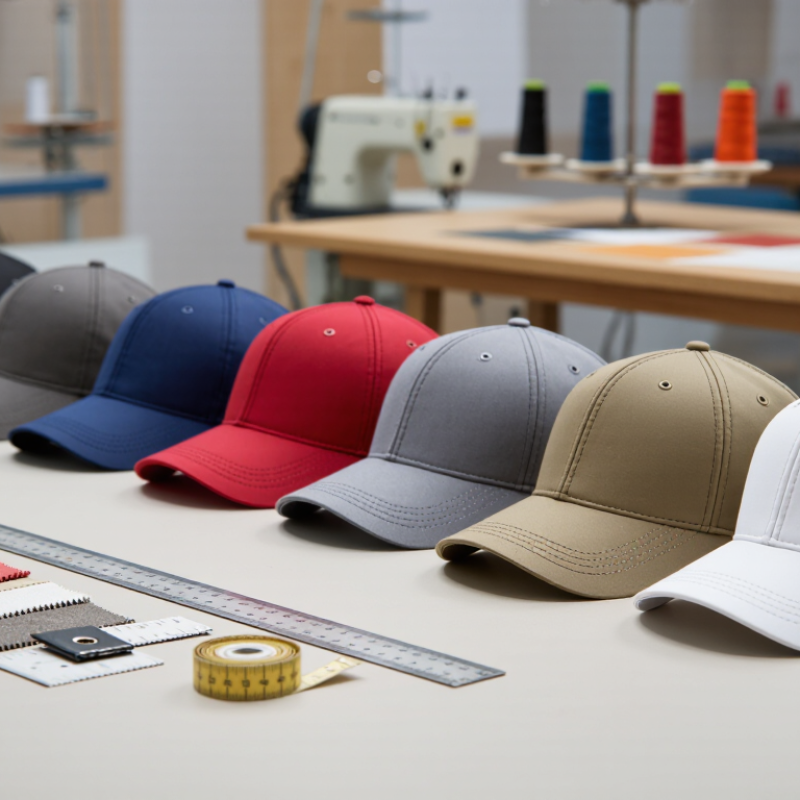
Manufacturers usually build the crown from shaped fabric panels, then stitch them together around a top button. A stiffener may be added to the front panels to help the crown hold its form. The brim is layered, shaped, and attached with neat rows of stitching. Inside, a sweatband covers the seam and improves comfort. Materials change the result: cotton feels familiar, while some performance fabrics dry faster.
Patterns are tested on sample caps before larger production runs begin. A sample can look balanced on a table yet sit too high on a real head. That is why fit checks across several sizes are useful. Not every sample fits. Workers inspect seams, brim symmetry, measurements, and loose threads during production. Clear measurement records and repeatable quality checks help buyers compare batches and reduce avoidable variation.
Fitted Baseball Cap Sizing: Typical Head Circumference
A fitted cap is made to match a head measurement rather than adjust with a strap. These common U.S. size-guide conversions show the nominal circumference for each size; exact fit can vary by manufacturer.
Measure around the widest part of the head, just above the ears, and compare the result with the specific manufacturer’s size guide.
Criteria for Selecting Leading Chinese Cap Manufacturers
A reliable fitted-cap manufacturer should prove control over fit, construction, and repeatability—not just show attractive samples. Grand View Research estimated the global headwear market at USD 26.49 billion in 2022, with projected annual growth of 6.3% from 2023 to 2030. This broad market estimate signals competition, but it does not verify any factory’s claims. Ask for recent production records, sample approval procedures, and inspection results. Check crown-panel alignment, embroidery placement, bill curvature, and sweatband comfort on several sizes. Small details matter.
Assess whether the manufacturer can document fabric composition, colorfastness, seam strength, and dimensional stability. Request test reports with dates, methods, and sample identification; vague certificates are difficult to verify. Review defect records and ask how rejected units are corrected. A factory audit is useful, but it cannot catch every problem. That limitation deserves attention. Compare lead times against actual capacity, and confirm who manages subcontracted processes before placing a large order.
Tips
Send a measurement sheet and an approved reference sample. Ask for a pre-production sample, then compare its fit and stitching with bulk goods. Keep written records; memory is unreliable.
Profiles of China's Top 10 Fitted Baseball Cap Manufacturers
Profiles of China’s top ten fitted baseball cap manufacturers are most useful when they explain how each factory approaches fit, materials, and production consistency. Some suppliers focus on structured crowns, while others offer softer panels or performance fabrics. Details matter. A reliable profile should describe available size grading, sweatband construction, visor shaping, and sample-development options.
The ten profiles can also distinguish production strengths: embroidery work, woven labels, moisture-managing textiles, small trial runs, or larger repeat orders. These capabilities should be confirmed with current specifications rather than assumed from a catalog. Ask for a size set and inspect the crown depth, seam alignment, and stitching around the visor. Fit is personal. A cap that feels secure on one head may press at the temples on another.
Clear communication is another practical measure. A capable manufacturer should explain fabric choices, tolerances, lead times, and how changes affect cost or delivery. Request photos of finished samples under natural light, not only polished product images. One detail is easy to miss: a neatly sewn cap can still fit unevenly across sizes. Comparing samples and written measurements helps buyers assess each supplier with fewer assumptions.
How to Compare Manufacturers for Quality and Customization
When comparing China’s top 10 fitted baseball cap manufacturers, look beyond catalog photos. Request a physical sample and check whether the crown holds its shape, the panels meet evenly, and the stitching stays consistent around the brim. Small details matter. Measure the inner circumference and compare it with the size chart; a small variation can change how a fitted cap feels. Ask what materials are used for the buckram, sweatband, and brim, then confirm those details in the written specification.
Customization is easier to assess with a clear brief. Share artwork, thread colors, placement measurements, and reference photos, then ask how each factory checks color and embroidery alignment. Ask for evidence. A sample review should include close-up images and notes on any revisions, not just a general promise of “high quality.” Confirm sample fees, production lead times, minimum order quantities, and inspection steps before comparing quotes. A lower price may reflect different materials or fewer checks, but it is worth asking rather than guessing.
Keep a simple scorecard for fit, construction, communication, and customization options. One missed measurement can make a good-looking cap uncomfortable. A polished sample can still hide uneven bulk production, so ask how finished units are checked and whether inspection records are available. Comparisons can feel tedious. That is often where useful differences show up.