What Are the Top 10 Insulated Wire Terminals?
Choosing the right connection begins with the terminal, not the tool. Insulated Wire Terminals protect conductors while creating reliable electrical and mechanical joints. In a busy control cabinet, a loose crimp can cause heat, voltage loss, or unexpected downtime. Small details matter.
This guide examines the top 10 Insulated Wire Terminals used in practical wiring applications. It compares ring terminals, fork terminals, butt connectors, spade terminals, pin terminals, and related designs. Each option is assessed through wire compatibility, insulation quality, crimp performance, vibration resistance, and installation convenience. Color coding can help identify common wire ranges, but it should never replace a gauge check. That mistake is surprisingly common.
The evaluation also considers terminal materials, barrel construction, strain relief, and protection against moisture. Professional installers often inspect the crimp profile, conductor placement, and insulation support before energizing a circuit. Appropriate tools matter just as much. A poorly adjusted crimper can damage the terminal or leave the wire loose inside the barrel. Standards and manufacturer instructions provide useful guidance, including relevant UL or IEC requirements, but product specifications still deserve careful review.
No ranking fits every project. A marine connection needs different protection from a dry indoor control panel. Some terminals look durable yet perform poorly under repeated movement. This guide recognizes those limitations and explains where each design works best. The goal is practical selection, safer installation, and fewer failures hidden behind neat-looking insulation.
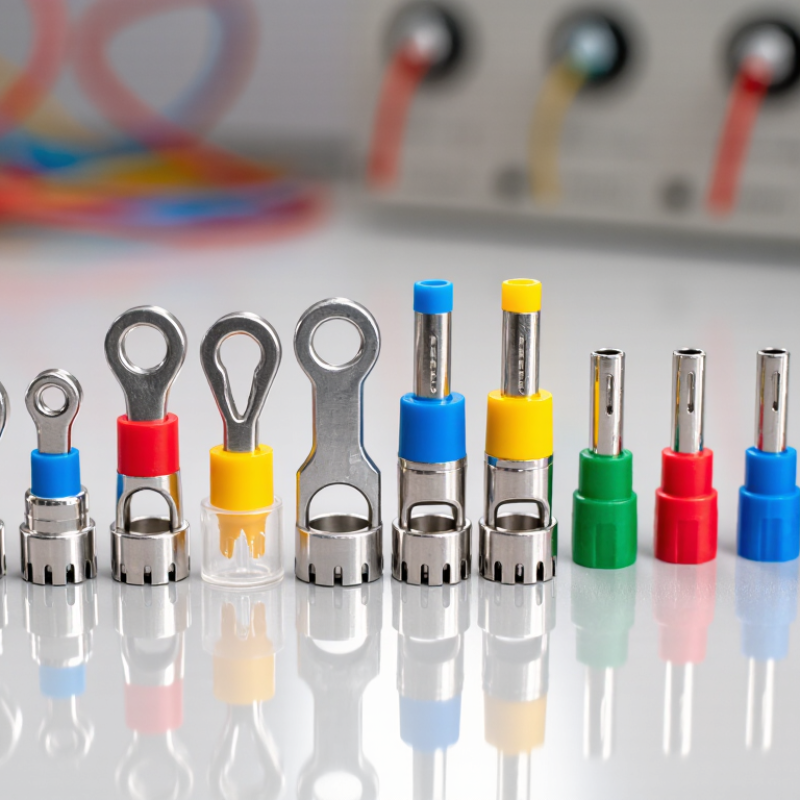
Definition and Purpose of Insulated Wire Terminals
What Are the Top 10 Insulated Wire Terminals?
Insulated wire terminals are electrical connectors with a protective sleeve around their metal contact area. They join a wire to another wire, terminal block, switch, or equipment stud. The insulation helps reduce accidental contact, short circuits, and damage from nearby conductors. Common forms include ring, fork, pin, butt, bullet, spade, and disconnect terminals. Each shape serves a different installation need.
Their purpose is simple: create a stable electrical and mechanical connection. A correct terminal matches the wire size, conductor material, and expected current. The insulation must also tolerate the working temperature and surrounding conditions.
In practical work, I check the stripped length before crimping. Too much exposed copper can touch adjacent metal. Too little copper may produce a weak connection. The crimp should hold firmly without cutting the conductor strands. A light pull test often reveals problems immediately.
Small details matter. Poorly matched terminals can heat up under load. Vibration may loosen an unsuitable connection. Moisture can also enter through damaged insulation.
I have learned that a neat appearance does not prove reliability. A terminal may look secure but fail when stressed. This is where careful inspection, correct tools, and documented wire specifications become important. Even experienced installers sometimes need to reconsider a rushed crimp.
How Insulated Wire Terminals Are Classified
Insulated wire terminals are commonly classified by their connection shape, wire entry, and crimping method. The top ten types include ring, fork, hook, pin, blade, male spade, female spade, bullet, butt splice, and parallel splice terminals. Ring terminals suit bolts and resist accidental release. Fork and hook terminals allow faster installation. Pin terminals fit narrow clamp openings, while blade and spade types support quick, flat connections. Bullet terminals provide a simple plug-and-socket connection. Butt and parallel splices join wires end-to-end or side-by-side.
Insulation creates another useful classification. Vinyl insulation is flexible and economical for ordinary indoor wiring. Nylon insulation usually offers better temperature resistance and mechanical strength. Heat-shrink terminals add sealing after heating, helping protect a crimp from moisture and vibration. Terminals can also be grouped by wire range, stud size, and crimp barrel design. A terminal may look suitable but still fail if its barrel does not match the conductor.
Tips: Check the wire gauge and stud diameter before crimping. Use a calibrated crimp tool, not ordinary pliers. The conductor should fill the barrel without forcing it. Give the finished terminal a firm pull test. Watch for loose strands. Even experienced installers sometimes choose insulation color too quickly; color codes can vary by terminal system. Inspect the crimp closely under bright light, because a neat surface does not always mean a reliable electrical connection.
Selection Criteria for Different Wiring Applications
What Are the Top 10 Insulated Wire Terminals?
Selection Criteria for Different Wiring Applications
The top ten insulated terminals include ring, fork, pin, butt-splice, bullet, quick-disconnect, flag, parallel-splice, closed-end, and wire-end terminals. Selection should begin with conductor size and material. Copper and aluminum need compatible contact surfaces. UL 486A-486B provides requirements for wire connectors and terminals, while IEC 61210 addresses low-voltage quick-connect terminations.
Application changes the choice. Ring terminals resist accidental release under vibration, making them suitable for control panels and vehicles. Fork terminals save time during maintenance. Butt-splice terminals join two wires, but crimp quality matters more than appearance. Pin and wire-end terminals fit crowded screw-clamp blocks. Quick-disconnect and flag terminals work well where repeated servicing is expected. Bullet connectors suit removable harnesses. Parallel-splice terminals handle branch connections. Closed-end terminals suit compact, insulated joints.
Check current rating, voltage rating, insulation temperature, wire range, pull-out strength, and environmental exposure. A terminal rated for dry interiors may fail near moisture, salt, or engine heat. NFPA’s Home Structure Fires report found electrical distribution and lighting equipment involved in 52% of home fires involving electrical failure or malfunction during 2016–2020. That figure deserves attention. Loose crimps remain easy to underestimate. Use the specified crimp profile and verify the connection with a pull test. I still find “universal” terminals convenient, but that label can hide important limits.
What Are the Top 10 Insulated Wire Terminals?
Selection criteria vary by wiring application. The chart compares common insulated terminal types using four practical criteria: mechanical retention, vibration suitability, serviceability, and environmental protection. Scores range from 1 (lower suitability) to 5 (higher suitability) for properly crimped low-voltage wiring.
Ring and fork terminals are commonly selected for stud connections, butt splices for in-line repairs, and quick-disconnect terminals where frequent service is required. Environmental protection depends on insulation design, sealing, crimp quality, and the surrounding enclosure. Always verify conductor size, current rating, temperature rating, stud dimensions, and applicable electrical standards before installation.