
Choosing a reliable Bulkhead Usb Connector supplier in 2026 requires more than comparing unit prices. A connector may look identical in a catalog, yet fail under vibration, moisture, or repeated cable movement. This introduction examines suppliers through measurable engineering and purchasing criteria.
Jeff Ravencraft, USB-IF President and CEO, has stated, “Interoperability is the foundation of the USB ecosystem.” That principle matters here. A dependable supplier should provide verified USB specifications, stable pin layouts, controlled impedance, and traceable test records. Buyers should also check panel thickness, sealing performance, contact plating, shell material, and operating temperature. Small details matter.
Look for evidence.
The strongest suppliers explain how their Bulkhead Usb Connector performs in real installations. Their documentation should show insertion cycles, IP ratings, salt-spray results, shielding methods, and production tolerances. Samples should fit the panel cleanly, without loose threads or uneven gaskets. Lead times, minimum order quantities, customization support, and after-sales response also deserve attention.
However, supplier rankings are never perfectly permanent. Factory changes, raw-material costs, and certification updates can alter the market quickly. Some suppliers publish impressive specifications but provide limited field evidence. That weakness should not be ignored. This 2026 overview therefore compares technical capability, manufacturing consistency, quality controls, application experience, and commercial reliability. It aims to help engineers, distributors, and OEM buyers make a more defensible shortlist. Performance comes first, but practical evidence must support every claim.
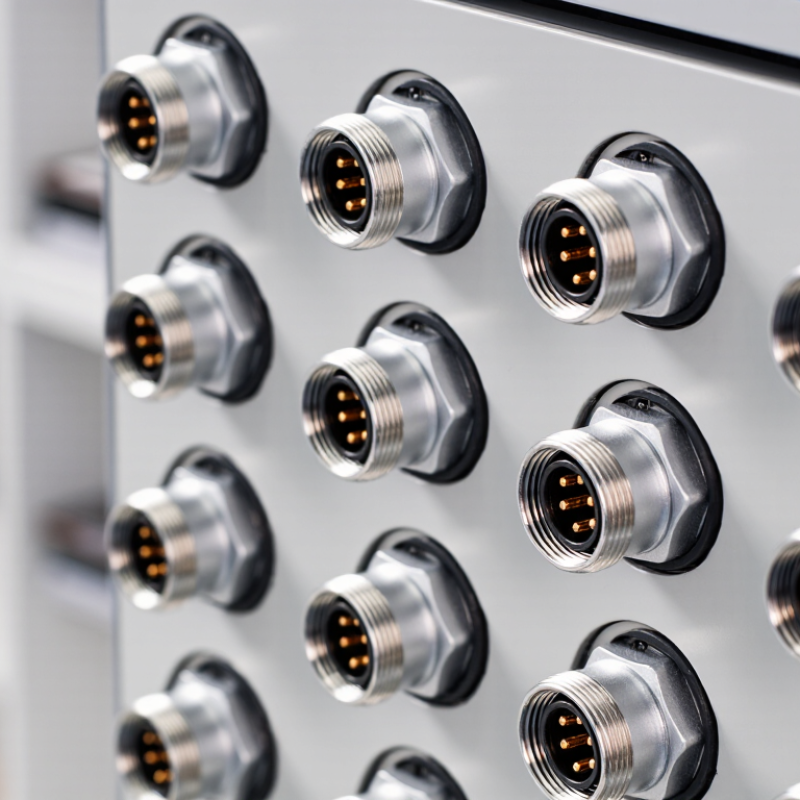
A bulkhead USB connector is a panel-mounted interface that lets a USB cable pass through an enclosure wall. Its front socket remains accessible, while the rear connection sits inside the equipment. The housing usually includes a flange, threaded body, locking nuts, or mounting screws. This structure suits control cabinets, marine instruments, industrial computers, and outdoor charging panels.
Performance depends on more than the USB label. USB Implementers Forum specifications define USB 3.2 Gen 2x2 signaling up to 20 Gbps, while USB Power Delivery 3.1 supports power levels up to 240 W. A bulkhead design must preserve those capabilities through shielding, contact alignment, and short internal wiring. I have seen high-speed links become unstable after installation. The connector was rated correctly, but the cable routing was not.
Professional connector market reports continue to track demand from industrial automation, vehicles, and communication equipment. Reports from MarketsandMarkets and Grand View Research identify miniaturization, higher data rates, and sealed connectivity as major industry trends. Supplier evaluation should include panel thickness, cutout tolerance, mating cycles, IP rating under IEC 60529, operating temperature, and EMC test evidence. IP ratings are not automatic. A gasket may compress unevenly. That detail is easy to miss. Suppliers should provide drawings, test records, sample units, and clear support for the required USB version.

2026 Top Bulkhead USB Connector Suppliers?
Choosing a bulkhead USB connector starts with the interface, not the supplier’s catalog. Confirm whether the design needs USB 2.0, USB 3.x, or USB-C power delivery. Check rated current, voltage, data speed, and mating cycles. A connector rated for 5 A may still need thermal testing inside a sealed enclosure. Numbers alone can mislead.
The mounting specification deserves equal attention. Measure panel thickness, cutout size, thread type, and rear clearance before ordering samples. IP ratings should match the real installation, including cable movement and water exposure. Look for corrosion-resistant contacts, secure shielding, and operating temperatures suited to the equipment. In field assemblies, strain relief often matters more than appearance.
Reliable suppliers should provide dimensional drawings, material details, tolerance data, and verification reports. Ask for production traceability and sample inspection records. I usually test fit, signal integrity, sealing, and repeated insertion before approving a part. Small errors appear quickly. A connector may fit perfectly but fail after vibration or temperature cycling. I have seen attractive housings hide weak cable retention. That is easy to overlook. Compare samples from several qualified suppliers, and question any specification that lacks a clear test method.
2026 Top Bulkhead USB Connector Suppliers?
How to Evaluate Bulkhead USB Connector Suppliers
When evaluating bulkhead USB connector suppliers in 2026, begin with the product’s actual working environment. A connector mounted on a control panel may face vibration, dust, moisture, and repeated cable movement. I examine housing material, sealing structure, contact plating, and cable retention before comparing prices. Request dimensional drawings, tolerance data, and samples that match your panel thickness.
Start with verified performance evidence. Ask for test reports covering insertion cycles, insulation resistance, contact resistance, and temperature exposure. Confirm the USB specification, data speed, power capacity, and shielding design. An IP rating should match the supplier’s test conditions, not just appear in a catalog. Small details matter.
Review the supplier’s manufacturing controls and traceability. A reliable source should explain inspection points, batch identification, corrective actions, and packaging protection. Ask how they manage design changes. Samples may pass while later batches drift. This is easy to overlook.
Commercial reliability also needs measurement. Compare minimum order quantities, sample timing, production lead times, replacement policies, and communication speed. Ask for a pilot order before committing to large volumes. No supplier is perfect. I still value a supplier that admits a limitation and proposes a test plan. During inspection, check connector alignment, thread quality, gasket compression, and terminal consistency under real assembly conditions.
2026 Top Bulkhead USB Connector Suppliers
The strongest bulkhead USB connector suppliers in 2026 will offer more than catalog pricing. They should provide clear drawings, stable materials, and traceable production records. Experienced suppliers usually explain contact plating, shell construction, sealing methods, and cable compatibility without vague claims.
Look for suppliers with practical testing evidence. Useful records include mating-cycle tests, salt-spray results, insulation checks, and water-ingress testing. An IP rating matters only when the installation method matches the test conditions. Ask whether the connector supports USB 2.0, USB 3.x, or USB-C power requirements. Small details matter.
Request samples before approving volume orders. Inspect thread quality, panel alignment, gasket compression, and solder or termination consistency. Suppliers serving industrial equipment should discuss vibration, temperature changes, and field replacement procedures. Custom options may include mounting length, cap design, cable angle, and overmolding.
I once treated low unit cost as a strong supplier signal. That was a mistake. Poor documentation created more engineering work later. A reliable supplier should answer technical questions quickly and admit product limits. Be cautious when test reports lack dates, sample quantities, or laboratory details. Real experience is rarely perfectly polished. A connector can look excellent on a bench and still fail after repeated outdoor exposure. Supplier audits, pilot batches, and measured inspection criteria remain valuable purchasing safeguards.
| Supplier Category | Common USB Interface | Typical Data Rate | Typical Mounting Format | Typical Protection Level | Typical Operating Temperature | Common Materials | Best-Fit Applications |
|---|---|---|---|---|---|---|---|
| Industrial bulkhead specialists | USB Type-A, USB Type-B, and USB Type-C | 480 Mbps to 10 Gbps, depending on configuration | Panel-mount, threaded, flange, or screw-lock designs | IP65 to IP67 when correctly sealed and installed | Commonly −40°C to +85°C | Nickel-plated brass, stainless steel, thermoplastic housings, copper-alloy contacts | Factory automation, control cabinets, instrumentation, and outdoor equipment |
| Ruggedized connector suppliers | USB 2.0 and USB 3.x Type-A or Type-C | Up to 5 Gbps or 10 Gbps for supported USB 3.x assemblies | Circular bulkhead, panel flange, and locking receptacle formats | IP67 or higher on selected sealed assemblies | Often −40°C to +85°C; verify the final assembly rating | Stainless steel or plated metal shells, elastomer seals, gold-plated contact areas | Transportation, marine systems, defense equipment, and mobile machinery |
| USB Type-C focused suppliers | USB Type-C receptacles with USB 2.0, USB 3.2, or USB Power Delivery support | 480 Mbps, 5 Gbps, or 10 Gbps; higher rates require compatible system designs | Front-panel, rear-panel, flange, and cable-mount bulkhead formats | Usually IP-rated only when supplied with a compatible sealing system | Commonly −30°C to +85°C or −40°C to +85°C | LCP or other high-temperature thermoplastics, copper-alloy terminals, plated shells | Charging ports, embedded computers, medical devices, and compact electronics |
| Cable-assembly suppliers | Pre-terminated USB 2.0, USB 3.2, and Type-C cable assemblies | Up to 480 Mbps, 5 Gbps, or 10 Gbps according to cable construction | Bulkhead receptacle with overmolded or detachable cable | Commonly IP65 to IP67 for sealed overmolded designs | Typically −20°C to +80°C; industrial versions may provide wider ranges | PVC, TPE, TPU, or silicone jackets with copper conductors and metal shells | Retrofit projects, test equipment, kiosks, and production-line wiring |
| Custom engineering suppliers | Type-A, Type-B, Type-C, Mini-USB, or Micro-USB according to project requirements | Specified by the selected USB generation and complete interconnect system | Custom flange, panel thickness, cable exit, keying, and locking features | Defined by enclosure, gasket, interface, and installation design | Project-specific; many industrial designs target −40°C to +85°C | Customer-selected metal, thermoplastic, gasket, plating, and strain-relief materials | Low-volume equipment, specialized instruments, and application-specific assemblies |
| High-volume standard-part suppliers | USB 2.0 Type-A or Type-B; selected USB 3.x formats | Typically 480 Mbps or 5 Gbps | Standard PCB-mount or panel-mount receptacles | Generally not sealed unless specifically designed as a ruggedized part | Commonly 0°C to +70°C or −40°C to +85°C | Stamped copper-alloy contacts, thermoplastic insulators, plated steel or copper-alloy shells | Consumer electronics, office equipment, networking devices, and general industrial products |
Bulkhead USB connectors are moving from simple panel accessories to critical interface components. Grand View Research’s 2024 connector market analysis projects roughly 6% annual growth through 2030, driven by industrial automation, vehicles, and connected equipment. These applications demand more than fast data transfer.
In factory cabinets, a sealed USB connector supports maintenance laptops without opening the enclosure. Marine control panels need corrosion resistance and reliable sealing. Outdoor charging stations face rain, dust, vibration, and repeated plugging. USB Power Delivery 3.1 supports up to 240 W, according to the USB Implementers Forum, so contact design and thermal control deserve careful review.
A high-quality bulkhead connector should match its claimed IP rating under IEC 60529. IP67 may protect against temporary immersion, but it does not prove long-term salt exposure resistance. That distinction is often missed. Housing materials should resist impact, while flame-retardant plastics may meet UL 94 V-0 requirements. Electrical safety may also require evaluation against IEC 62368-1, depending on the equipment.
Buyers should verify insertion cycles, contact resistance, shielding performance, and cable retention. A clean laboratory test is useful. Field conditions are less polite. Dust enters, seals age, and users pull cables sideways. USB-IF compliance can improve interoperability, but it cannot replace mechanical testing. Specifications should include temperature range, vibration results, plating thickness, and sealing method. Without those details, a low price may hide higher maintenance costs.
© 2023 JEM Electronics, Inc. – United States Cable Assembly. All rights reserved.