
Blog

China Top PV Accessories Suppliers for Global Buyers?

China has become a major sourcing hub for photovoltaic components, serving installers, distributors, and project developers worldwide. This guide explores China’s top Pv Accessories suppliers and their practical value for global buyers.

The product range includes solar connectors, extension cables, branch connectors, fuses, isolators, mounting clamps, and monitoring devices. Each item affects system safety, installation speed, and long-term performance. A reliable supplier should provide clear datasheets, traceable materials, stable production, and responsive technical support. Certifications matter, but documents alone cannot prove consistent quality. Buyers should review test reports, factory processes, sample performance, and customer references.

Small details often reveal larger risks. For example, a connector may fit physically but fail under heat, moisture, or repeated outdoor exposure. Cable markings should remain readable after installation. Packaging should protect terminals from dust and impact during international transport. These points are easy to overlook.

Experience helps.

This article compares supplier capabilities, product coverage, quality controls, export experience, and communication standards. It also considers customization, minimum order quantities, lead times, warranty terms, and after-sales support. Those factors can influence total project cost more than the initial quotation.

No supplier is perfect. Even experienced manufacturers may face delays, material changes, or communication gaps. Buyers should ask precise questions and record every technical requirement before placing an order. Independent inspection can add confidence, especially for large projects. Standards and import rules also vary by market, so local compliance must be verified carefully.

The goal is not to promote the cheapest option. It is to help global buyers identify dependable partners with evidence, practical experience, and suitable photovoltaic accessories for real operating conditions.
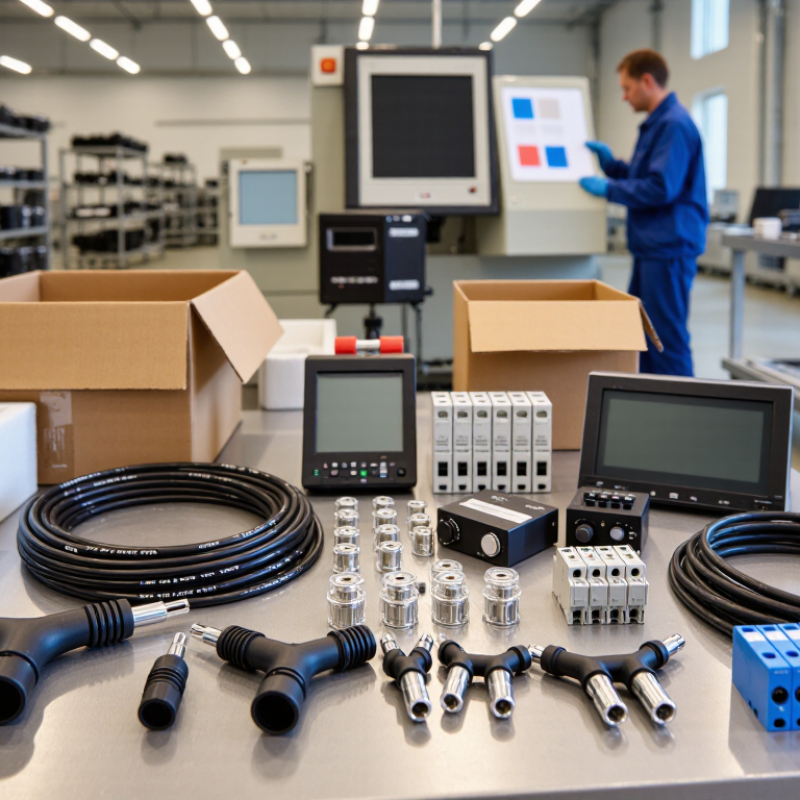
China Top PV Accessories Suppliers for Global Buyers?

Global PV Accessories Market: IRENA Reports 1,865 GW Solar Capacity in 2024

China Top PV Accessories Suppliers for Global Buyers?

Global PV Accessories Market: IRENA Reports 1,865 GW Solar Capacity in 2024

The global solar market reached 1,865 GW of installed capacity in 2024, according to IRENA’s Renewable Capacity Statistics 2025. Solar added about 451.9 GW during the year. This expansion increases demand for mounting rails, cable connectors, junction boxes, fuses, monitoring devices, and grounding components. Accessories now influence installation speed, system safety, and long-term maintenance costs.

Chinese suppliers serve buyers across utility, commercial, and residential projects. Experienced procurement teams should examine aluminum alloy grades, connector temperature ratings, ingress protection, and documented mechanical loads. IEC test reports, traceable production records, and batch inspection results provide stronger evidence than attractive catalog images. Ask for samples. Test them under heat, moisture, and repeated connection cycles.

The IEA PVPS Trends report also shows continued growth in annual photovoltaic deployment, although market data can differ by reporting method. That difference matters. A supplier may quote factory capacity, while a buyer needs verified shipment capacity and stable quality. Small details become expensive later: a poorly crimped connector can create heat at the cable joint, while weak clamps may loosen under wind vibration. Some quotations look competitive but exclude testing, packaging, or replacement parts. That is easy to miss. Global buyers should compare technical files, delivery history, warranty terms, and compliance evidence before selecting China-based PV accessory suppliers. No checklist is perfect; field conditions still expose assumptions.


PV Accessory Categories: Mounting Systems, Inverters, Cables, Connectors, and Storage

China remains a major sourcing base for global photovoltaic accessories. The IEA PVPS Trends 2024 report estimated over 440 GW of new solar capacity in 2023. Cumulative global capacity exceeded 1.6 TW. This scale increases demand for compatible, traceable components.

Mounting systems need accurate load calculations, corrosion-resistant materials, and clear installation tolerances. Roof geometry matters. Inverters should match voltage ranges, grid requirements, monitoring protocols, and local certification rules. Cable selection requires correct conductor size, insulation quality, temperature ratings, and ultraviolet resistance. A cable that looks robust may still fail under heat. Connectors need consistent dimensions and secure locking force. Small mismatches can create hot spots or maintenance risks.

Energy storage is expanding with solar deployment. The IEA Renewables 2024 report projects strong growth in battery storage through 2030, driven by grid flexibility needs. Buyers should examine cell chemistry, thermal management, usable capacity, cycle-life testing, and emergency controls. Independent test reports are valuable. So are factory audits. Yet, paperwork is not enough. Sampling incoming batches, checking torque values, and comparing serial records can reveal gaps. A perfect bill of materials is rarely real. Suppliers should disclose manufacturing changes, warranty limits, spare-part plans, and response times. Clear evidence builds more trust than polished product claims.

China Top PV Accessories Suppliers for Global Buyers? - PV Accessory Categories: Mounting Systems, Inverters, Cables, Connectors, and Storage

PV Accessory Category Common Product Types Typical Technical Parameters Relevant Standards and Compliance Key Buyer Evaluation Points Typical Applications
Mounting Systems Rooftop rails and clamps
Ground-mount structures
Carport systems
Fixed-tilt and tracker-compatible components
Aluminum alloy, galvanized steel, or coated steel construction
Module compatibility commonly supports framed panels around 30–50 mm thick
Design loads must be calculated for local wind, snow, seismic, and corrosion conditions
EN 1090 for structural steel or aluminum fabrication where applicable
ASCE 7 or Eurocode-based structural design
IEC 61215 and IEC 61730 module mounting compatibility requirements
Load calculations and engineering drawings
Material grade and corrosion protection
Roof penetration and waterproofing method
Earthing continuity and installation tolerances
Availability of replacement hardware
Residential and commercial rooftops
Utility-scale solar farms
Agricultural and industrial buildings
Parking areas and solar carports
Solar Inverters Single-phase string inverters
Three-phase string inverters
Hybrid battery inverters
Central inverters for large plants
Residential units commonly range from approximately 1–10 kW
Commercial string units commonly range from approximately 10–350 kW
Maximum DC input voltage commonly 600–1,500 V, depending on model
Conversion efficiency often exceeds 97% for modern units
IEC 62109 safety requirements
IEC 62116 anti-islanding testing
IEC 61727 grid-interface requirements
IEC 61000 electromagnetic compatibility requirements
Local grid-code certification
MPPT voltage range and number of trackers
Maximum DC/AC ratio and overload capability
IP rating and operating-temperature range
Remote monitoring protocol and communication interfaces
Grid approval, warranty terms, and service support
Residential rooftop systems
Commercial and industrial rooftops
Distributed generation projects
Utility-scale photovoltaic plants
Solar Cables H1Z2Z2-K photovoltaic cable
Single-core DC cable
AC output cable
Battery and communication cables
Common conductor sizes: 2.5, 4, 6, and 10 mm²
Typical PV DC voltage ratings: 1,000 or 1,500 V DC
Copper or tinned-copper conductors
UV-resistant, halogen-free, flexible insulation and sheath
EN 50618
IEC 62930
IEC 60332 flame-retardance requirements where specified
TÜV or equivalent third-party testing may be required by the project
Conductor cross-section and allowable current
Voltage drop over the complete cable route
Temperature rating and bending radius
Resistance to UV, ozone, moisture, and mechanical stress
Traceable test reports and consistent cable markings
Module-to-module connections
PV string circuits
Combiner boxes and inverter connections
Battery storage and balance-of-system wiring
PV Connectors DC plug-and-socket connectors
Branch connectors
Inline fuse connectors
Panel-mount and extension connectors
Common ratings include up to 1,000 or 1,500 V DC
Current ratings commonly range from approximately 20–50 A, depending on design
Outdoor products commonly use IP67 or IP68 protection
Contact resistance should be low and stable after mating
IEC 62852 photovoltaic connector standard
IEC 60529 ingress-protection classification
IEC 62930 and EN 50618 cable compatibility
National electrical installation requirements
Electrical and mechanical compatibility
Correct crimp-tool and contact specification
Sealing performance and locking mechanism
Resistance to thermal cycling and UV exposure
Avoid mixing unverified mating parts from different systems
PV module leads
String extensions
Combiner and junction boxes
Rooftop, ground-mount, and floating PV installations
Energy Storage Residential battery packs
Commercial battery cabinets
Containerized battery energy-storage systems
Battery management systems and power-conversion units
Lithium iron phosphate chemistry is widely used for stationary storage
Residential systems commonly range from approximately 5–30 kWh
Commercial and utility systems are commonly specified from hundreds of kWh to multi-MWh
Usable energy, power rating, depth of discharge, and cycle life must be stated separately
IEC 62619 industrial lithium-battery safety
IEC 63056 where applicable to secondary lithium cells and batteries
UL 1973 and UL 9540A may be required for North American projects
Local fire, grid-interconnection, and transportation regulations
Cell traceability and battery-management protections
Thermal runaway mitigation and fire-safety design
Round-trip efficiency and usable capacity
Warranty throughput, operating temperature, and degradation limits
System integration, commissioning, and after-sales support
Home backup and self-consumption
Peak shaving and demand management
Renewable-energy time shifting
Microgrids and utility-scale grid services
Buyer Note: Technical values are common market ranges and should be verified against the project location, grid code, system voltage, environmental conditions, fire-safety rules, and the supplier’s current datasheets and test reports.

China’s Supplier Landscape: Comparing Capacity, Export Reach, and Product Specialization

China Top PV Accessories Suppliers for Global Buyers?

China’s supplier landscape is broad, but capacity alone does not prove reliability. The IEA PVPS Trends 2024 report recorded 216.9 GW of new solar capacity in China during 2023. This huge domestic market supports mature production for mounting systems, cables, connectors, junction boxes, and monitoring hardware. IEA also reported that China held more than 80% of global solar manufacturing capacity. That scale can reduce lead times and improve tooling access. It can also create uneven quality between factories.

Export reach varies sharply by product category. UN Comtrade data shows China remains a major exporter of photovoltaic modules and electrical components. However, accessories often follow different logistics routes. Aluminum rails may ship efficiently by container, while bulky steel structures need regional fabrication. Cable and connector suppliers usually compete through testing records, compatibility, and stable batch performance. Buyers should request IEC test reports, factory audit evidence, production capacity by month, and recent shipment references. A polished catalogue is not enough.

Tips: Compare annual capacity with verified orders, not website claims. Check samples from two production batches. Confirm corrosion ratings for coastal projects. Ask whether certificates cover the exact model and factory. I have seen procurement plans focus heavily on unit price, then underestimate packaging damage and replacement delays. That is a useful warning. Lowest cost can become higher project cost. Sources: IEA PVPS Trends 2024; UN Comtrade photovoltaic trade data.

Supplier Qualification: IEC Standards, ISO 9001, Testing, Traceability, and Warranty Data

China remains a major sourcing base for photovoltaic accessories, while global installations keep raising qualification standards. The IEA PVPS Trends 2024 report recorded more than 1.6 terawatts of cumulative photovoltaic capacity worldwide by the end of 2023. That scale makes supplier verification essential, not optional.

Start with applicable IEC requirements. Connectors should align with IEC 62852, cables with IEC 62930, and module-related components with relevant IEC 61215 or IEC 61730 testing. Ask for current test reports, sample identification, laboratory scope, and revision dates. ISO 9001 certification helps assess process control, but it does not prove product performance. An accredited laboratory matters more than a framed certificate.

Inspect traceability in practice. A reliable supplier should link each shipment to a production date, material batch, operator record, and final inspection result. Request test data for thermal cycling, insulation resistance, salt mist, UV exposure, and mechanical loading where relevant. Keep the records.

Warranty review needs equal attention. Check coverage periods, exclusions, response deadlines, and evidence requirements. Compare claimed failure rates with shipment history, complaint records, and replacement data. The IEA PVPS 2024 report highlights rapid market expansion, but growth can also pressure quality systems. Paperwork can still lie. A factory visit, witnessed testing, and random third-party sampling may reveal gaps that audits miss. Even experienced buyers sometimes trust certificates too quickly.

Global Buyer Due Diligence: MOQ, Lead Times, Incoterms, Pricing, and After-Sales Support

Buying PV accessories from overseas suppliers requires more than comparing catalog prices. During supplier checks, I request the MOQ for each item, not just the total order quantity. A cable connector may require 500 pieces, while mounting hardware may require 50 sets. This difference affects storage, cash flow, and project scheduling. I also ask for production lead times in writing, including inspection and packaging days.

Small details matter. A reliable quotation should state currency, payment terms, packaging, and Incoterms such as FOB, CIF, or DDP. The cheapest offer can become expensive after freight, customs handling, insurance, and destination charges. I compare landed costs using the same shipment weight and port. Prices need checking twice.

Technical due diligence should include material specifications, load data, test reports, and traceable batch information. I prefer suppliers that explain how they handle dimensional tolerances and failed inspections. Photos are useful, but sample testing is stronger evidence. For after-sales support, I ask about response times, spare parts, replacement procedures, and written warranty limits. A shared support email is not enough.

My first supplier comparison was too neat. It ignored delays caused by holiday closures and port congestion. That mistake changed my process. Now I add a realistic buffer and request weekly updates before shipment. I also keep inspection records, although smaller buyers may find this difficult. Clear records protect decisions when quality or delivery problems appear.

China PV Accessories Supplier Due Diligence Benchmark

Indicative 2024–2025 sourcing benchmarks for global buyers. Values are anonymized industry reference points rather than company-specific data.

MOQ: Common export-order quantities vary by product complexity, packaging, and customization requirements.
Lead time: Standard products commonly ship faster than customized assemblies or products requiring certification review.
Commercial terms: FOB and CIF are frequently used for containerized orders; EXW may reduce supplier logistics responsibility.
Pricing: Final pricing depends on materials, certifications, order volume, packaging, freight, and payment terms.
After-sales: A response within 24 hours is a practical buyer benchmark for quality claims and technical support.
Go to Top