China Top Steel Chisel Manufacturer for Global Buyers?
China Top steel chisel Manufacturer for Global Buyers? The question deserves evidence, not a polished catalogue.
The World Steel Association’s World Steel in Figures 2025 reports that China produced approximately 1.005 billion tonnes of crude steel in 2024. That scale supports broad access to alloy steel, forging facilities, heat-treatment equipment, and export infrastructure. However, national output does not automatically prove tool quality. A reliable Steel Chisel manufacturer must connect industrial capacity with repeatable production controls.
For buyers, practical evaluation starts with the steel grade, hardness range, impact resistance, and working temperature. It should continue with forging accuracy, edge geometry, surface finishing, and batch traceability. A chisel striking a stubborn brick joint needs a stable head, a secure handle, and predictable deformation behavior. Small flaws become visible quickly on a construction site.
Reports from the U.S. Geological Survey, including Mineral Commodity Summaries 2025, also highlight steel’s dependence on iron ore, energy, and recycling systems. These factors influence cost stability and supply planning. Serious suppliers should therefore provide inspection records, material certificates, sample testing, and clear packaging details. Independent laboratory verification is even better.
No factory is perfect. A strong supplier admits process limits and explains corrective actions. That honesty matters more than impressive photographs. Global buyers should compare manufacturing experience, quality evidence, production capacity, customization support, and after-sales communication. This guide examines how China-based Steel Chisel manufacturers can meet those expectations, while recognizing that price alone is an unreliable measure of professional performance.
What Defines a Top Steel Chisel Manufacturer in China?
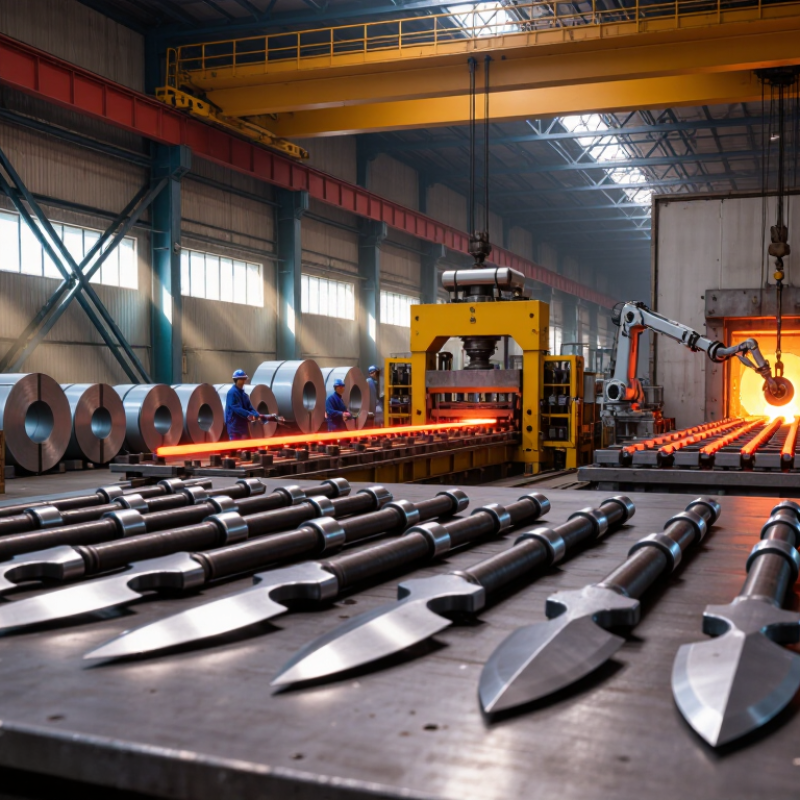
A top steel chisel manufacturer in China is defined by more than production capacity. It must control steel selection, forging, heat treatment, and final inspection. Experienced manufacturers understand how chisels behave under repeated impact, not just how they look in a catalog.
Reliable suppliers can explain their steel grades, hardness range, edge design, and dimensional tolerances. They should provide inspection records, material traceability, and clear production samples. Practical experience matters here. A chisel that survives a controlled test may still fail during cold-weather demolition or continuous workshop use. No factory is perfect. Honest suppliers admit these limits and improve their process. That is more trustworthy than promising everything.
Tips: Request samples before placing a large order. Test the edge, striking head, surface finish, and resistance to mushrooming. Ask how often hardness is checked and whether inspections cover every batch. Review packaging carefully; damaged edges can result from poor protection, not poor steel. Communication also reveals professionalism. Clear drawings, responsive answers, and realistic delivery dates usually indicate stronger manufacturing control. Price deserves attention, but the lowest quote may reflect thinner materials, weaker testing, or inconsistent heat treatment. A top manufacturer should offer evidence, not vague assurances.
Steel Grades, Heat Treatment, and 48–60 HRC Hardness Standards
China Top Steel Chisel Manufacturer for Global Buyers?
Selecting a steel chisel requires more than checking a hardness number. AISI S7, 4140, and 42CrMo4 offer different balances of toughness, wear resistance, and impact strength. The World Steel Association reported about 1.9 billion tonnes of crude steel production in 2024. Yet global volume does not guarantee consistent tool steel quality.
Heat treatment controls the chisel’s working life. Proper austenitizing, quenching, and tempering can produce a stable 48–60 HRC range. ASTM E18 defines Rockwell hardness testing practices, while ISO 6508-1 supports comparable HRC measurements across laboratories. A reliable manufacturer should test both the cutting edge and the core. Surface readings alone may hide decarburization or uneven tempering.
Harder is not always better. A 60 HRC edge may resist wear, but it can chip under heavy impact. Around 48–54 HRC often suits striking chisels, while 55–60 HRC may fit controlled cutting applications. ASM Handbook guidance also emphasizes toughness after tempering. In factory audits, ask for heat-treatment charts, batch certificates, and test-point locations. Small omissions matter. Even experienced suppliers can miss distortion after quenching, especially on long chisels.
China Top Steel Chisel Manufacturer for Global Buyers?
Typical working hardness ranges for common chisel steels are shown below. Actual specifications vary by tool geometry, service conditions, section size, and the heat-treatment process.
Heat-treatment guidance: Chisel blanks are commonly austenitized, quenched, and tempered to balance edge retention with impact resistance. A practical working range of approximately 48–60 HRC is often selected: lower hardness improves toughness, while higher hardness improves wear resistance but can increase brittleness.
Manufacturing Quality: ISO 9001, ASTM A681, and ISO 6892-1 Testing
China Top Steel Chisel Manufacturer for Global Buyers?
Manufacturing quality begins with controlled material selection, not attractive packaging. A reliable steel chisel manufacturer should operate an ISO 9001 quality management system. This framework supports documented procedures, supplier control, inspections, and corrective actions. ASTM A681 helps define requirements for tool steels used in demanding applications. Buyers should check the selected grade, chemical composition, and heat-treatment records. Small differences in carbon or alloy content can change hardness and toughness.
ISO 6892-1 testing measures tensile properties at room temperature. Results can include tensile strength, yield strength, and elongation. These figures help confirm whether the steel responds as expected under load. In practical production, inspectors should also examine edge geometry, surface finish, hardness, and handle fit. Traceable batch numbers matter. They connect each chisel to material certificates and test records.
Tips: Ask for recent inspection reports, standard references, and sample measurements. Confirm whether testing covers the actual production batch. Do not accept a certificate without traceability. No system is perfect. Even a qualified factory may find inconsistent hardness after heat treatment. Honest reporting, root-cause analysis, and repeated verification reveal more than polished claims. A supplier that explains limitations clearly often deserves closer technical evaluation.
Global Buyer Evaluation: Capacity, MOQ, Lead Time, and Export Compliance
China’s steel chisel manufacturers should be evaluated beyond product photos and quoted prices. Global buyers need evidence of capacity, quality control, and export reliability. A serious factory can explain monthly output, equipment limits, and peak-season planning. Ask for recent production records, inspection reports, and material certificates. These details reveal more than broad claims about “large capacity.”
MOQ affects both cost and flexibility. A lower MOQ may suit distributors testing a new market, while larger orders can improve unit pricing. Confirm whether the MOQ applies per size, finish, or shipment. Lead time should include sampling, production, inspection, and dispatch. For example, a clear schedule might show seven days for samples and three weeks for production. Delays still happen. A supplier that reports risks early is often more reliable than one promising impossible speed.
Tips: Request a written quotation with dimensions, steel grade, hardness range, packaging, and delivery terms. Check export documents, commercial invoices, packing lists, certificates of origin, and correct customs classification for your destination. Compliance requirements differ by country, so verify them with your customs adviser. Do not rely on a single certificate or an old inspection file. In my experience, small inconsistencies in carton marks or product descriptions can create avoidable delays. Leave time for correction. That is not wasteful; it is practical risk control.
Chisel Selection by Application, Impact Energy, and Service Life Data
Choosing a steel chisel starts with the application, not the lowest quoted price. Concrete breaking, trenching, scaling, and rock splitting demand different tip profiles. A moil point penetrates hard material, while a flat chisel spreads force across wider surfaces. The carrier’s hydraulic impact energy must also match the tool diameter. An oversized chisel may reduce striking efficiency and increase vibration.
Impact energy data should be reviewed in joules, blows per minute, and recommended operating pressure. These figures reveal whether the chisel can work steadily without overheating or mushrooming. Service life should include operating hours, tip wear, shaft deformation, and the number of usable regrinds. A credible supplier should provide test conditions, material grades, and failure records. Results without test details are weak evidence. Real work is less predictable.
Tips: Check the chisel after every shift. Look for cracks near the shoulder, uneven tip wear, and polished contact marks. Keep the tool aligned with the work surface. Avoid prying sideways, even when production pressure rises. Record hours and wear measurements in a simple maintenance log. This small habit improves replacement planning. It also exposes poor assumptions. A chisel that lasts 80 hours in medium concrete may last far less in abrasive granite. Temperature, operator technique, lubrication, and carrier condition can change the result. Choose from comparable field data, then verify performance on your own site.