
Choosing a supplier for an Automatic Water Spray Retort Steam system involves more than comparing prices or polished brochures. The equipment must match the product, package, batch size, and production workflow. A retort designed for cans may not suit flexible pouches without careful review. Small details matter.
This guide explores how to assess Chinese suppliers using practical, verifiable criteria. These include vessel capacity, spray coverage, temperature control, process records, construction materials, and after-sales support. Ask for technical drawings, relevant customer references, and clear details about installation and operator training. Where possible, inspect a working machine or request a live demonstration. Photos alone tell little.
Reliable performance depends on both machine design and process development. Buyers should confirm how the supplier supports testing, calibration, and product-specific thermal validation. A qualified process authority may be needed to establish suitable processing conditions. Supplier claims should not replace independent review. That point is easy to overlook.
The following overview considers manufacturers and their capabilities without treating a “top” ranking as proof of quality. Specifications, service coverage, and project experience can change, so verify current information directly with each company. Ask difficult questions before signing. A supplier’s answer—and the evidence behind it—can reveal more than a low quotation.
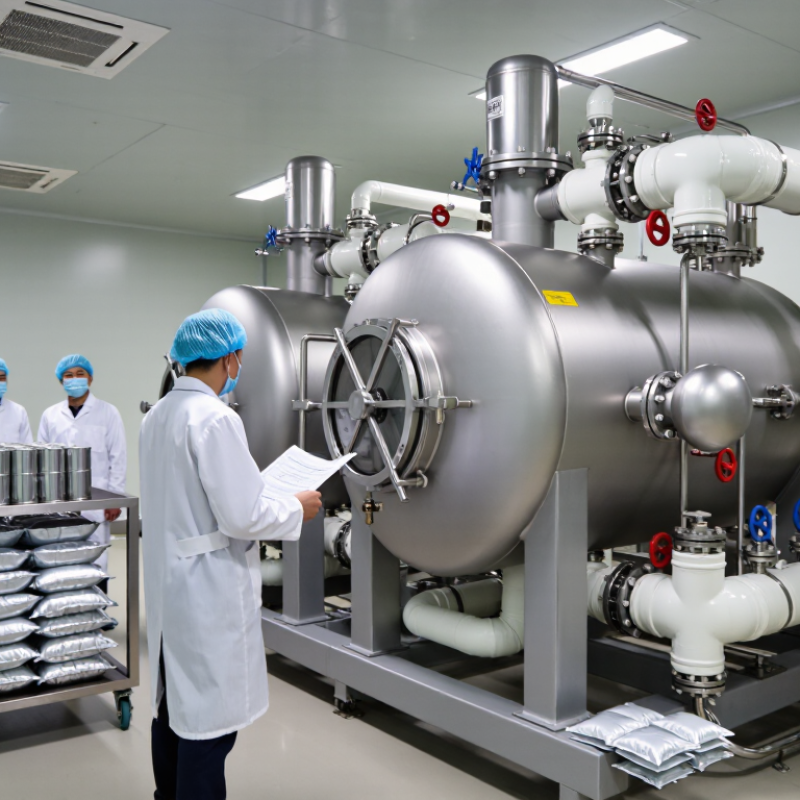
An automatic water spray retort is a sealed pressure vessel used to heat packaged foods under controlled conditions. Baskets of cans, jars, or pouches are loaded inside. A pump circulates hot water through spray nozzles, distributing heat across the packages. In many systems, steam heats the circulating water through a heat exchanger. The retort’s controls manage temperature, pressure, and processing time according to a defined process.
During heating, the spray wets package surfaces while sensors track conditions inside the vessel. Once the target temperature is reached, the system holds it for the required time. Cooling follows, often with water, while controlled pressure helps protect flexible packages from swelling or damage. Small details matter. Basket arrangement, nozzle condition, and sensor calibration can affect heat distribution. Automation supports repeatable operation, but it cannot correct poor loading or an unsuitable process setting. Operators still need to verify records and inspect equipment. It is worth remembering that a smooth control screen does not prove every package received the same treatment.

In many water spray retorts, steam supplies heat through a heat exchanger, warming the circulating process water. Heated water then sprays over containers, helping transfer energy across their surfaces. The spray pattern and water flow matter: uneven coverage can create temperature differences between packages. Steam does not replace careful process control.
As the retort reaches its target temperature, sensors and controls help maintain the scheduled conditions. Pressure is also managed to protect containers, especially flexible pouches, but it is not simply a result of adding steam. During cooling, water temperature changes in a controlled way. A few degrees can affect process performance. Operators should check sensor calibration, circulation, and the validated schedule for the specific product and container. One detail is easy to overlook: a clean-looking nozzle may still have reduced flow.
Tips: Confirm that spray coverage is even before production. Keep records of temperature and pressure, and investigate unusual readings rather than dismissing them. Process settings should be established and reviewed by qualified specialists; a general example is not a safe substitute for product-specific validation.
Chinese suppliers commonly offer several automatic water-spray retort configurations. A standard horizontal batch model sprays heated water over stationary pouches, cans, or trays, then recirculates it through a pump and heat exchanger. This layout suits mixed package sizes and controlled heating. Rotary models gently turn containers during processing, helping heat move through thicker products. Some suppliers also offer overpressure designs for flexible pouches and trays, where controlled air pressure helps limit package swelling or deformation. Not every product needs rotation; the correct choice depends on viscosity, package shape, fill weight, and the validated thermal process.
A water-spray system can include programmable temperature, pressure, and cooling steps, plus recorded process curves. Ask suppliers to demonstrate spray coverage and temperature uniformity with your actual load pattern. The FAO’s 2019 State of Food and Agriculture report estimated that 13.8% of food was lost globally between harvest and retail. That figure does not measure retort performance, but it underscores why dependable preservation equipment matters. In practice, stable heating and repeatable records matter more than a long feature list.
Tips: Request a test run using your real package and product. Check drainability, sensor calibration, and batch-to-batch records. One detail is easy to miss: crowded baskets can obstruct spray flow. A supplier’s sample cycle is useful, but it cannot replace process validation by a qualified specialist.
| Retort configuration | How it works | Common package formats | Typical applications and considerations |
|---|---|---|---|
| Horizontal static water spray retort | Packages remain stationary in a horizontal vessel while heated water is circulated and sprayed over the load. Automatic systems typically control heating, circulation, pressure, holding, and cooling stages. | Cans, glass jars, retort pouches, and trays, subject to the retort basket and loading arrangement. | A common batch configuration for heat processing packaged foods. Suitable for products that should not be agitated during processing; load pattern and spray coverage need to be validated. |
| Horizontal rotary water spray retort | A rotating mechanism moves the product or baskets during the cycle while heated water is sprayed through the vessel. Rotation speed and operating mode depend on the product and package. | Generally rigid containers such as cans and suitable jars; package and closure specifications must be checked before selection. | May be considered when controlled movement can improve heat transfer or product handling. Rotation can affect product texture and package integrity, so the process must be tested for the specific product. |
| Vertical static water spray retort | Packages are loaded into baskets in a vertical vessel. In a spray configuration, heated water is distributed over the load; the circulation and spray arrangement varies by machine design. | Baskets of cans, jars, or other packages compatible with the vessel and loading system. | Can suit facilities that prefer vertical loading or have limited floor space. Confirm that the proposed unit is specifically a water spray model, since vertical retorts may also use other heating methods. |
| Pilot or small-batch water spray retort | A smaller batch system uses a recirculating water spray process and programmable controls. Its vessel layout may be horizontal or vertical. | Small production lots, sample packs, and packaging used for product development or process trials. | Useful for development and validation work. Confirm that the equipment, instrumentation, and load arrangement are appropriate for the intended study or production use. |
Configurations and features vary by manufacturer. Before purchasing, confirm package compatibility, vessel capacity, heating and cooling method, pressure-control requirements, instrumentation, and process-validation support. Thermal processes for low-acid packaged foods should be established and validated by qualified process authorities.
A capable retort supplier should explain how its automatic water spray system controls temperature, pressure, and circulation during each process stage. Ask for test records showing temperature distribution across the chamber, not just a polished equipment brochure. Spray coverage matters: uneven flow can leave baskets heating differently. Look for clear details on vessel materials, weld inspection, control-system functions, and production traceability. Specific evidence is more useful than broad promises.
Tips: Request a sample process report and a factory acceptance test plan. Check whether sensors can be calibrated and whether alarms identify faults clearly. Ask how spare parts and technician support are handled after installation. Small details count.
Strong suppliers also discuss your product, container size, loading pattern, and target process before recommending a configuration. They should explain what their data can—and cannot—prove. Visit the production site if practical, and observe assembly, documentation, and a test run. A supplier may have impressive equipment but weak follow-up; that distinction is easy to overlook. Compare written specifications and service commitments side by side, then clarify any vague points before ordering.
Choosing a supplier for an automatic water-spray retort starts with the product and package, not the catalogue. Share container dimensions, loading patterns, target output, and the required heating and cooling stages. Ask how the retort manages temperature uniformity, pressure, and water circulation across a full load. Request cycle records from a test run using containers like yours. Ask for evidence.
A capable supplier should explain the control system in plain language and provide sample process data, equipment drawings, and a clear list of included components. Check whether the chamber, piping, and spray nozzles suit your operating conditions. During a factory visit, inspect welds, door seals, sensor placement, and how easily operators can clean the system. Small details matter. A hard-to-reach nozzle may become a maintenance headache.
After-sales support deserves equal attention. Ask about installation, operator training, spare-parts availability, response times, and remote troubleshooting. Speak with existing users who process similar products, and ask what required adjustment after commissioning. Compare quotations line by line, including utilities, testing, and service scope. Still, a polished brochure proves little. Supplier selection can feel uncertain; test the claims against actual records, site observations, and a written acceptance plan.
© 2023 JEM Electronics, Inc. – United States Cable Assembly. All rights reserved.