
Blog

Who Are the Top Core Drilling Rig Manufacturers in China?

A Core Drilling Rig must match the ground, the project, and the crew using it. In China, manufacturers offer equipment for mineral exploration, geological surveys, and construction work. Their products can differ in drilling depth, torque, mobility, and setup requirements. A machine that performs well on a stable site may be less suitable on steep, remote terrain.

This guide examines how to identify leading Chinese manufacturers without treating “top” as a fixed ranking. It considers product range, technical specifications, manufacturing capability, quality documentation, and after-sales support. Practical details matter. Can the rig handle the intended hole diameter? Are replacement parts available? How clearly does the supplier explain operating limits? These questions can reveal more than a polished product photo.

We also consider evidence buyers can check, such as published specifications, factory information, service arrangements, and customer references where available. Claims should be verified directly with each supplier, since configurations and support can change. A brochure is only a starting point. The article will introduce notable companies and explain what sets them apart, while noting where public information is limited. No single manufacturer suits every operation. Comparing the rig, the ground conditions, and the support plan is a more reliable way to build a shortlist.
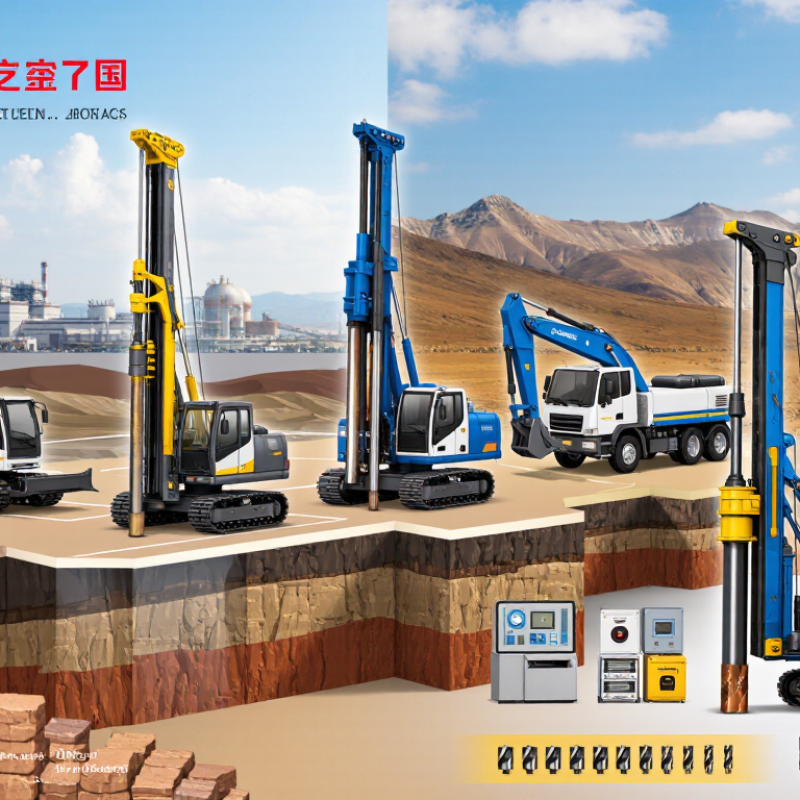
Who Are the Top Core Drilling Rig Manufacturers in China?

What Core Drilling Rigs Are and Where They Are Used

A core drilling rig is a machine that cuts a narrow, cylindrical sample from rock or concrete. Its hollow drill bit leaves a solid core inside the barrel. Geologists can examine the sample’s layers, fractures, and mineral content. The rig may be mounted on a truck, skid, or compact frame, depending on access and terrain. It is not simply a larger standard drill. Core recovery and sample quality matter.

These rigs are used in mineral exploration, geological surveys, construction investigations, and some infrastructure projects. On a mine site, crews may drill deep into bedrock to understand what lies below the surface. Before a bridge foundation is built, drilling can reveal weak layers or groundwater. Results depend on more than the machine: bit choice, drilling speed, water flow, and operator judgment all affect recovery. Conditions change quickly. A plan that works in dry rock may fail in fractured, wet ground.

Tips: Match the rig’s capacity to the expected depth and rock conditions. Check sample recovery, core diameter, and site access before choosing equipment. Keep drilling records, including depth and changes in rock. Small details help. Even experienced crews may need to adjust their approach when the core breaks or the ground behaves unexpectedly.


Core Drilling Rigs: Standard Wireline Core Diameters

Core drilling rigs recover cylindrical rock samples for mineral exploration, geological mapping, and geotechnical investigation. The chart compares common wireline core sizes by nominal core diameter; the appropriate size depends on the project and ground conditions.

How China’s Core Drilling Rig Industry Is Structured

China’s core drilling rig industry is made up of several layers, not one uniform group of factories. Some manufacturers design complete rigs, matching the mast, rotary head, and hydraulic system to different drilling conditions. Others focus on components or assemble equipment from specialist suppliers. The picture is uneven. A factory with strong machining capacity may still rely on outside partners for pumps, controls, or drilling tools.

Regional manufacturing networks help connect these capabilities. Steel fabricators, motor suppliers, hydraulic specialists, and equipment assemblers can work within the same supply chain. This arrangement may shorten sourcing times, but it also makes quality control important. A small mismatch in a hose fitting or control setting can cause delays once a rig reaches a job site. Details matter.

Manufacturers also differ in how much engineering and after-sales support they provide. Some offer application guidance, operator training, and spare-parts planning; others concentrate more narrowly on production. Buyers can compare documented load ratings, test procedures, component specifications, and service response times. Ask for evidence. Public information is sometimes incomplete, and product descriptions do not always reveal how a rig performs in the field. Even careful comparisons leave room for uncertainty, especially when site geology and operating practices vary.

Which Manufacturers Are Recognized as Leaders in China

In China, leading core drilling rig manufacturers are best recognized through field performance, not advertising claims. Reliable suppliers design rigs for varied geology, from soft sediment to fractured rock. Their machines should maintain steady feed pressure and spindle speed during long drilling shifts. Core recovery matters. A clean sample tube can help geologists assess a deposit more accurately.

Experienced manufacturers also offer practical configuration choices, such as crawler or truck-mounted rigs, different mast capacities, and compatible drilling tools. Buyers can examine verified project records, equipment testing, operator feedback, and the availability of spare parts. Service response matters when a worn seal or damaged hose stops work at a remote site. Field evidence matters.

A manufacturer’s technical documentation should clearly state drilling capacity, power requirements, and operating limits. These details help teams compare equipment against actual site conditions rather than headline figures. Recognition can vary by application, and a company strong in mineral exploration may not suit every geotechnical project. That distinction is easy to overlook. There is no single ranking that fits every buyer; dependable support and consistent sample quality are stronger signals of leadership.

Profiles of Notable Chinese Core Drilling Rig Manufacturers

Chinese core drilling rig manufacturers are not a single, uniform group. Some specialize in compact rigs for geotechnical surveys, where transport size and quick setup matter. Others build heavier equipment for deeper mineral exploration, with longer mast sections and stronger feed systems. The differences show in practical details. Check how easily crews can reach controls, change core barrels, and service pumps in the field. Small design choices matter.

A useful manufacturer profile should describe more than rated depth. It should explain the rig’s intended ground conditions, available power options, and compatibility with common drilling tools. Ask for operating manuals, parts lists, and service procedures before comparing quotations. Look closely. If possible, review a test run and inspect welds, hose routing, and control response. These checks offer better evidence than brochure claims alone. I would avoid treating any ranking as definitive: product fit depends on the site, crew experience, and maintenance access. Some published specifications also need clarification, so confirm how testing conditions affect the stated capacity.

How to Compare Manufacturers and Choose a Supplier

Compare core drilling rig manufacturers against the conditions at your site, not just headline depth. Record the expected hole diameter, target depth, rock hardness, water supply, and daily operating hours. Then check whether the rig’s torque, rotation speed, feed force, and mast travel suit that work. A high depth rating can be misleading if it assumes a narrow hole or ideal ground.

Ask for a configuration sheet and a recent factory test record. Confirm which engine, pump, and control components are included, and whether the quoted price covers tooling, commissioning, and operator training. Small details matter. Look at weld quality around the mast base, hose routing, access to filters, and how quickly common wear parts can be replaced. Request references from buyers drilling in similar geology, and ask what failed or needed adjustment during the first months. That answer may be more useful than a polished brochure. Compare warranty terms, response times, and spare-parts availability in writing. I would not choose on price alone; still, service promises need checking, because a supplier’s response can vary by region and workload.

Who Are the Top Core Drilling Rig Manufacturers in China? - How to Compare Manufacturers and Choose a Supplier

A practical comparison framework: evaluate individual suppliers against your project requirements rather than relying on an unverified ranking. Request model-specific documents and references before making a decision.

Comparison dimension What to compare Evidence to request How to assess it
Drilling application Suitability for mineral exploration, geotechnical investigation, or another specified core-drilling task. A written configuration proposal based on the project’s geology, access conditions, and target hole design. Confirm that the proposed rig and tooling match the intended work; a rig’s suitability depends on the complete setup, not its product category alone.
Depth and capacity claims Rated drilling depth, rod and core-barrel configuration, and the conditions behind any quoted capacity. A model-specific technical datasheet and a clear explanation of the stated drilling configuration. Do not compare depth figures in isolation: achievable depth varies with ground conditions, hole diameter, tooling, and rig configuration.
Core recovery system Compatibility with the required core-barrel system, including wireline options where appropriate. Tooling specifications, compatible component details, and operating instructions for the proposed system. Check that the full tooling package is compatible with the rig and the intended drilling method.
Power and site requirements Power source, required utilities, operating footprint, and transport or setup constraints. Utility requirements, installation instructions, operating and transport details, and a proposed site layout if needed. Verify that the equipment can be supplied, transported, and operated under the conditions at the project site.
Safety and documentation Safety provisions, operating procedures, maintenance instructions, and documentation for the destination market. Manuals, applicable conformity documents, and a list of included safety features for the exact model and configuration. Check that documents match the supplied equipment and the regulations applicable to the destination and intended use.
Manufacturing and quality control Production controls, inspection procedures, component traceability, and configuration consistency. Quality-system documentation, inspection records or plans, and a factory or production-process review where practical. Treat management-system certification as supporting evidence, not a substitute for verifying the specific product’s performance and build quality.
Parts and after-sales support Spare-parts availability, troubleshooting support, warranty terms, and service coverage for the destination. Written warranty conditions, recommended spare-parts list, support contact process, and stated service arrangements. Compare the clarity and practicality of the support commitment, including response process and parts delivery arrangements.
Relevant project experience Experience with comparable drilling applications, operating conditions, and equipment configurations. Customer references, project examples, or installation records that can be independently checked where possible. Give more weight to verifiable experience relevant to your project than to broad, unsupported claims.
Total cost and delivery Equipment scope, tooling, packing, shipping terms, commissioning, training, and ongoing operating costs. An itemized quotation with delivery schedule, included and excluded items, payment terms, and applicable warranty coverage. Compare like-for-like quotations; a lower equipment price may exclude tooling, support, or other project costs.

Selection tip: Shortlist suppliers that can document a suitable configuration, provide verifiable technical and service information, and clearly define the scope of supply. Request comparable quotations from more than one supplier.

Article Source:

Go to Top