
Blog

Top FPGA Chip Manufacturers and Suppliers Worldwide

The global FPGA market supports telecommunications, aerospace, automotive, medical equipment, and industrial automation. At its center, the Fpga Chip offers programmable logic, parallel processing, and adaptable hardware performance. Unlike fixed-function processors, it can be reconfigured after deployment, helping engineers respond to changing design requirements.

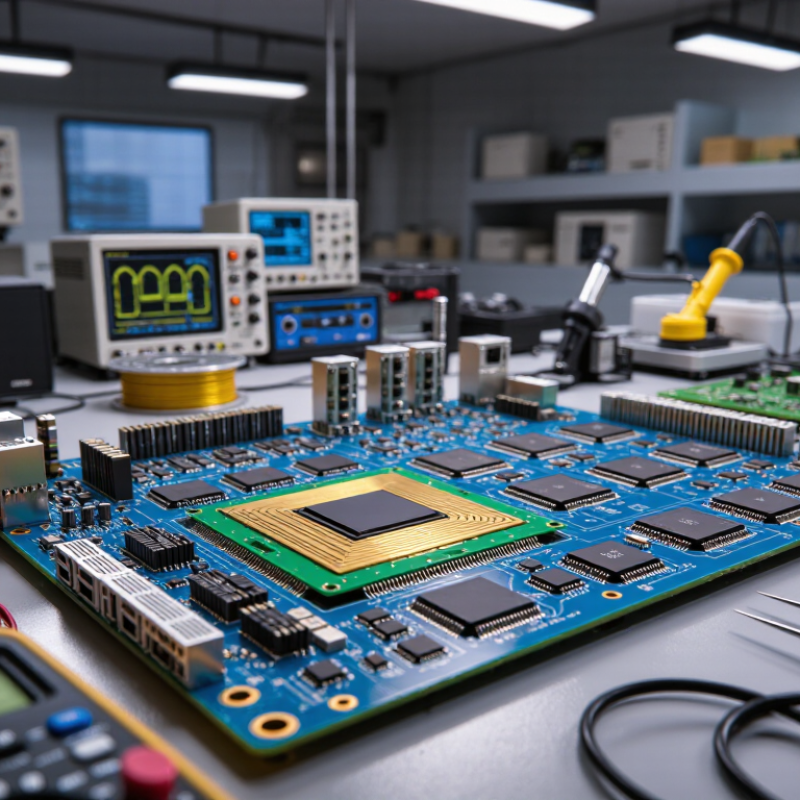
This guide examines leading FPGA chip manufacturers and suppliers worldwide. It considers product families, logic density, memory resources, high-speed transceivers, power consumption, and development-tool support. These details matter on a real laboratory bench. A designer may compare a compact device for edge control with a larger model supporting several PCIe lanes and multiple Ethernet interfaces.

Company reputation also requires careful evaluation. Established vendors often provide verified documentation, reference designs, evaluation boards, and long-term product programs. However, brand recognition alone cannot guarantee the best choice. Engineers should review current datasheets, thermal specifications, software compatibility, package availability, and regional supply conditions before purchasing. Availability can change quickly.

That is easy to overlook.

The discussion also separates chip manufacturers from distributors, design partners, and contract suppliers. This distinction helps readers understand who develops silicon, who stocks components, and who provides technical integration. Information is based on public technical materials, industry experience, and practical selection criteria. Some comparisons remain imperfect because pricing, inventory, and product roadmaps change frequently. Readers should verify critical specifications directly with manufacturers or authorized channels. A thoughtful decision balances performance, reliability, lifecycle support, engineering effort, and total system cost.
Top FPGA Chip Manufacturers and Suppliers Worldwide

Global FPGA Industry Overview and Market Structure

The global FPGA industry is built around a small group of architecture developers, specialized design houses, semiconductor foundries, and regional suppliers. These participants rarely operate alone. They depend on wafer fabrication, advanced packaging, testing, software tools, and long-term distribution agreements. Market power often comes from the complete ecosystem, not only from the chip.

Demand is divided across telecommunications, industrial automation, aerospace, automotive systems, data processing, and research equipment. Each sector values different features. A network operator may prioritize high-speed interfaces, while a factory integrator may need predictable supply and extended product support. Procurement teams also compare development tools, technical documentation, energy use, and lifecycle guarantees. Price matters, but engineering migration costs can matter more.

The supply chain remains uneven. High-end devices require advanced manufacturing capacity, while smaller devices often serve stable, cost-sensitive applications. Regional distributors reduce delivery friction, yet they can add inventory risk and price variation. In project reviews, software compatibility frequently receives less attention than hardware specifications. That is a mistake. A technically strong device may still fail commercially if engineers cannot deploy it efficiently.

Market forecasts should be read carefully. They often assume stable demand, reliable logistics, and continuous manufacturing access. Those assumptions can weaken during capacity shortages or sudden technology changes. The industry is also less transparent than it appears; private supply agreements and regional data gaps complicate comparisons. A practical evaluation should examine the whole chain, from design tools to field support, rather than ranking suppliers by revenue alone.


Leading FPGA Chip Manufacturers by Product Focus

Leading FPGA chip manufacturers increasingly differentiate themselves by product focus rather than broad market visibility. MarketsandMarkets projects the FPGA market to grow from about USD 9.7 billion in 2023 to USD 15.5 billion by 2028, with a 9.9% CAGR. This growth reflects demand for adaptable computing in communications, automotive systems, industrial control, and artificial intelligence.

High-performance suppliers target data centers and networking equipment. Their devices emphasize large logic capacity, embedded memory, high-speed SerDes, and integrated DSP blocks. In practical testing, engineers should measure latency under sustained workloads, not only peak throughput. Thermal behavior matters too. A dense accelerator card can lose efficiency when airflow is limited. Small details decide reliability.

Other manufacturers focus on low-power, automotive, industrial, or security-sensitive applications. These products often prioritize long availability, deterministic operation, functional safety support, and extensive temperature ratings. According to the 2024 Embedded Market Study from an industry research group, energy efficiency and product longevity remain major purchasing factors for embedded designers. Radiation-tolerant devices serve specialized aerospace projects, while compact FPGA families support portable instruments and edge equipment.

Tool support is part of the product. Poor development flows can erase hardware advantages. This point is easy to underestimate. Suppliers with mature verification tools, reference designs, and responsive technical support reduce integration risk. Still, published specifications are not enough. Buyers should validate timing closure, power estimates, supply continuity, and real workload performance before selecting a device. Market reports provide direction, but laboratory evidence should make the final decision.

Top FPGA Chip Manufacturers and Suppliers Worldwide - Leading FPGA Chip Manufacturers by Product Focus

Global FPGA product-focus overview based on established FPGA architecture types, market applications, configuration methods, and commonly supported system requirements. Company and brand names are intentionally excluded.

Product Focus Core FPGA Architecture Typical Logic Capacity Primary Technical Strengths Common Applications Configuration Characteristics Common Interface and Integration Requirements Typical Lifecycle Priority
High-Performance FPGA SRAM-based programmable logic with extensive programmable routing, DSP resources, and embedded memory From hundreds of thousands to several million logic elements in high-end device classes High parallel processing Large memory resources High-speed signal processing Data-center acceleration, wired communications, high-performance computing, advanced imaging, and scientific instrumentation Configuration is normally loaded from external nonvolatile memory during power-up; partial reconfiguration may be supported on selected architectures PCI Express, Ethernet, high-speed serial transceivers, DDR memory, optical modules, and custom ASIC or processor interfaces Performance, bandwidth, thermal management, and long-term software-tool support
Low-Power and Edge FPGA SRAM-based or flash-based programmable logic optimized for reduced static and dynamic power Typically ranges from several thousand to hundreds of thousands of logic elements Low energy consumption Compact packages Real-time processing Industrial sensors, portable equipment, robotics, automotive subsystems, smart cameras, and edge artificial-intelligence systems May use external configuration memory or integrated nonvolatile configuration, depending on device architecture Low-voltage I/O, MIPI, SPI, I²C, LVDS, camera interfaces, embedded processors, and sensor networks Power efficiency, thermal simplicity, small form factor, and rapid system integration
Mixed-Signal FPGA Programmable digital logic combined with analog-to-digital converters, digital-to-analog converters, or analog monitoring functions Usually ranges from low to medium logic density, with capacity determined by the integrated analog resources Digital and analog integration Deterministic control Reduced component count Motor control, power conversion, test and measurement, industrial automation, medical instrumentation, and sensor conditioning Configuration behavior depends on whether the digital fabric is SRAM-based, flash-based, or another nonvolatile architecture Analog inputs, precision reference signals, PWM, SPI, I²C, GPIO, and industrial control buses Signal integrity, conversion accuracy, operating temperature, and functional safety requirements
Embedded-Processor FPGA FPGA fabric integrated with one or more hard processor cores or supported by soft processor implementations Medium to very high logic density, depending on processor complexity and programmable-logic resources Hardware-software co-design Flexible acceleration Integrated memory controllers Embedded vision, industrial gateways, telecommunications, autonomous systems, defense electronics, and custom control platforms Typically requires FPGA fabric configuration at startup; processor boot storage may be separate or integrated into the system design DDR memory, PCI Express, Ethernet, USB, storage interfaces, real-time operating systems, and Linux-capable processor subsystems Development ecosystem, debug capability, software support, security, and hardware-software partitioning
Application-Specific FPGA Programmable logic optimized for a defined application area, such as networking, video, storage, or artificial intelligence Varies widely; logic capacity is usually paired with application-specific DSP, memory, or I/O resources Application optimization Accelerated workloads Specialized I/O Network processing, video transcoding, machine learning inference, storage acceleration, radar, and real-time analytics Usually uses SRAM configuration; security features can include encrypted bitstreams and authenticated configuration High-speed networking, HBM or DDR memory, video standards, storage protocols, and accelerator software frameworks Workload efficiency, bandwidth, toolchain maturity, security, and application-specific reference designs
Radiation-Tolerant and Space FPGA Radiation-tolerant SRAM, flash, or antifuse programmable architectures designed for harsh environments Generally ranges from tens of thousands to several million logic elements, depending on mission and radiation requirements Radiation tolerance Fault mitigation Deterministic operation Satellites, launch vehicles, spacecraft instruments, high-altitude systems, and specialized defense electronics Antifuse and selected flash architectures provide nonvolatile configuration; SRAM-based designs may use configuration scrubbing or redundancy Space-qualified memories, sensor interfaces, high-reliability serial links, redundant power systems, and custom payload electronics Qualification data, radiation performance, documentation, traceability, extended availability, and mission reliability
Automotive FPGA SRAM-based or flash-based programmable logic qualified for automotive temperature, reliability, and safety conditions From small control-oriented devices to high-density devices for advanced driver-assistance and vehicle networking systems Automotive temperature range Real-time control Functional safety support Advanced driver-assistance systems, camera aggregation, in-vehicle networking, battery management, and automotive displays Configuration may be loaded at startup or retained through nonvolatile technology; secure boot and authenticated configuration are important considerations Automotive Ethernet, CAN, LIN, MIPI, SerDes, DDR memory, camera interfaces, and safety monitoring channels Product longevity, qualification, functional safety, cybersecurity, temperature range, and supply continuity
Industrial and Long-Life FPGA Programmable logic designed for industrial control, communications, instrumentation, and equipment modernization From small CPLD-like logic densities to high-density FPGA devices for complex control and data acquisition Long operating life Industrial temperature range Deterministic latency Factory automation, programmable logic controllers, motor drives, energy systems, medical equipment, and test instrumentation Both SRAM and nonvolatile configuration technologies are used; configuration redundancy may be applied in high-availability systems Industrial Ethernet, RS-485, fieldbus interfaces, ADCs, DACs, LVDS, SPI, I²C, and real-time control networks Extended product availability, industrial qualification, reliability, maintainability, and replacement compatibility
Security-Focused FPGA Programmable logic with hardware security features integrated into the configuration, boot, and key-management process Available across small, medium, and high-density FPGA classes Secure boot Bitstream protection Hardware root of trust Critical infrastructure, defense systems, secure communications, financial equipment, industrial control, and connected devices May support encrypted configuration, authentication, anti-tamper functions, key storage, and configuration-lock mechanisms Trusted processors, secure memory, tamper sensors, protected debug ports, network encryption engines, and secure update systems Security certification, key lifecycle management, vulnerability response, secure manufacturing, and controlled updates
Scope: The table presents factual, non-company-specific FPGA product categories and commonly associated technical characteristics. Actual specifications, availability, qualification status, and supported interfaces vary by individual device family and production revision.

Major FPGA Suppliers and Their Distribution Networks

Top FPGA Chip Manufacturers and Suppliers Worldwide

Major FPGA suppliers rely on layered distribution networks to serve different markets. Manufacturers typically ship through authorized distributors, regional warehouses, and specialist electronics suppliers. This structure helps customers access verified components without contacting the factory directly.

In practical sourcing, regional inventory matters as much as the quoted price. A nearby warehouse can reduce customs delays and shorten delivery by several days. Specialist distributors may also provide technical support, lifecycle notices, and documentation checks. These services are valuable when engineers compare package types, speed grades, memory options, and operating temperatures.

Traceability remains essential. Reliable suppliers should provide part numbers, date codes, certificates, and clear storage records. They should also explain whether stock is factory-sealed, previously allocated, or surplus. A low price can mislead. I have seen purchasing teams overlook freight, inspection, and minimum-order costs. The cheapest offer was not always the most practical choice.

Strong distribution networks often combine local sales teams with global logistics systems. This arrangement supports prototype orders and larger production schedules. However, availability changes quickly during demand spikes. Buyers should confirm stock in writing and request realistic lead-time estimates. No network is perfect. Even experienced teams sometimes plan too tightly. A small buffer can protect a project from an unexpected allocation or transport delay.

How FPGA Technologies Differ Across Manufacturers

Top FPGA Chip Manufacturers and Suppliers Worldwide

How FPGA Technologies Differ Across Manufacturers

FPGA technologies can look similar on a product page, yet their internal choices create different design experiences. The logic fabric may use six-input or smaller lookup tables, changing how efficiently complex functions fit. Some devices prioritize dense programmable logic, while others emphasize embedded memory, signal-processing blocks, or high-speed transceivers.

Power behavior also varies. A device with higher capacity may consume more static power before the design performs useful work. Voltage rails, package options, thermal limits, and configuration methods deserve careful checking. In practical board development, these details affect cooling, startup time, and prototype stability. Small differences become visible.

Toolchains are another major dividing line. One supplier may provide strong timing analysis and mature debugging tools, while another offers faster synthesis for selected architectures. Documentation quality matters just as much. Clear pin tables and accurate timing models reduce costly redesigns. Still, no toolchain is perfect. Engineers should verify critical results with independent simulation and hardware measurements.

Security features differ as well. Some families support encrypted configuration, authenticated boot, or physical tamper monitoring. Others focus on flexible reconfiguration and lower entry cost. A reliable selection process compares measured latency, power under real workloads, available development tools, and long-term supply plans. Datasheets are essential, but they are not the whole truth. Prototype testing can expose assumptions that simulations quietly miss.

Key Factors for Comparing FPGA Chips and Suppliers

Top FPGA Chip Manufacturers and Suppliers Worldwide

Comparing FPGA chips requires more than counting logic cells. In board bring-up, I check timing margin, memory capacity, DSP blocks, I/O standards, and power draw. A larger device is not automatically better. It may increase heat, board size, and configuration time. Examine the package carefully. A compact package can simplify routing, while dense pin assignments may create difficult signal paths.

Supplier evaluation needs equal attention. Request verified datasheets, lifecycle statements, thermal models, and production samples. Reliable suppliers explain revision changes and provide responsive engineering support. Their development tools should offer stable synthesis, timing analysis, and debugging features. Documentation matters during a midnight failure. So does access to evaluation boards and reference designs. I have seen attractive specifications lose value when software support was incomplete.

Tips: Build a comparison table using your real workload, not headline specifications. Test one representative design with actual clocks, memory traffic, and temperature changes. Check distributor stock, minimum order quantities, lead times, and long-term availability. Keep evidence from sample testing. It prevents optimistic decisions. Also question your own assumptions; early estimates can be wrong. A cheaper chip may demand more engineering hours, while an advanced device may exceed the project’s practical needs.

Go to Top