
A home charger turns an EV into a car that starts each morning with a useful reserve. For many drivers, charging happens overnight, beside a garage wall or in a driveway. The right Home Car Charging Station can make that routine simpler, but headline charging speed is only part of the decision. Cable reach, connector compatibility, installation needs, app reliability, and household electrical capacity matter too.
The International Energy Agency’s Global EV Outlook 2024 reports that publicly accessible chargers grew by about 40% worldwide in 2023, surpassing four million. That growth highlights a wider charging build-out, while home charging remains central for drivers with dependable parking and suitable electrical access. IEA Executive Director Fatih Birol described electric cars as “the key technology to decarbonise road transport.” The charger at home is one practical part of making that transition work.
This guide compares ten home charging stations for 2026, focusing on everyday use rather than impressive-sounding specifications alone. A longer cable can prevent awkward parking. A scheduled charging feature may help match charging to a household’s routine. Yet no single model suits every home. Installation costs, local electricity rates, and vehicle compatibility can change the value of a purchase. Some details are easy to overlook. A polished app cannot fix an inconvenient cable, and the fastest unit may be unnecessary for a driver who parks all night. These rankings offer a starting point, not a substitute for checking your vehicle and electrical setup.
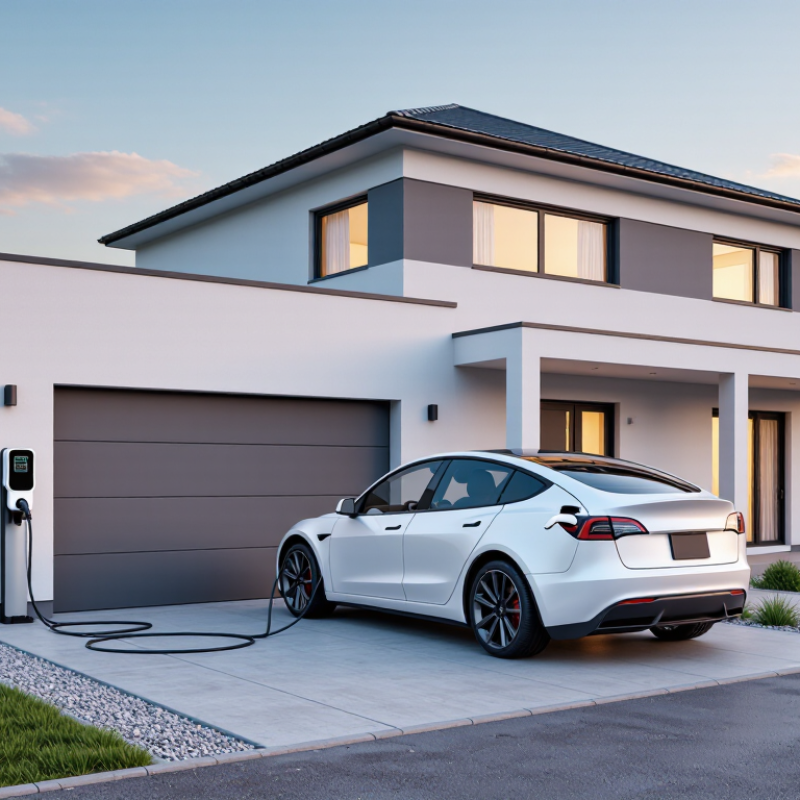
A home car charging station is a controlled connection between household power and an electric vehicle. Most residential units deliver AC electricity; the car’s onboard charger converts it into the DC power stored in the battery. The station manages the connection and helps prevent unsafe charging if a fault occurs. It does not simply push power into the car.
A brief electronic handshake happens when the cable is connected. The vehicle and station confirm that charging can begin and agree on a safe current level. That handshake matters. Inside the station, switching components control the flow, while grounding and protective devices help detect problems. Many homes use a dedicated circuit, sized for the station’s output. A qualified electrician can check the panel, wiring, and installation location before setup.
Charging speed depends on more than the station’s advertised rating. The vehicle’s onboard charger, the home circuit, and other household loads can all limit power. Some stations can reduce charging current when a home is using more electricity, or schedule charging for later. Useful, but not magic. A charging screen may show an estimate, not an exact finish time, because temperature and battery condition also affect charging. It is easy to focus on the plug and overlook the wiring behind it; that part deserves careful attention.

Home charging stations mainly differ by power level and installation style. A Level 1 charger uses a regular household outlet, but adds range slowly. Level 2 equipment needs a suitable higher-voltage circuit and usually charges faster. Details vary by region. Hardwired units connect directly to the electrical system; plug-in models use a matching outlet. Neither is automatically right for every home. Your vehicle’s onboard charger sets its maximum AC charging rate, so a powerful station cannot make every car charge faster.
Vehicle compatibility depends on the charging connector, supported charging rate, and available space for installation. Compare the charger plug with your car’s port, and check the owner’s manual for supported equipment or adapter guidance. Many plug-in hybrids accept AC charging but have smaller batteries and may need less charging power than a fully electric car. A charger’s amperage also needs to suit the home circuit. This part is easy to overlook, honestly.
Tips: Check the car manual and electrical panel before buying. Ask a qualified electrician to assess circuit capacity and installation needs. Compatibility charts help, but they may miss vehicle-year differences.
Choosing among home charging stations in 2026 starts with fit, not headline speed. Check your vehicle’s AC charging limit and the charger’s supported output; extra capacity may not shorten charging if the car cannot use it. Compare circuit requirements with your electrical panel, especially in older homes. A licensed electrician can assess capacity and installation options before purchase. Small details matter.
Cable reach affects daily convenience. Measure from the parking position to the charge port, allowing slack without stretching across a walkway. Compare plug-in and hardwired installation, outdoor protection, cable flexibility in cold weather, and connector compatibility. Safety certification and clear fault protection deserve more weight than flashy app features. Warranty terms and replacement-part access also matter.
Smart functions can shift charging times or coordinate with household loads, but they rely on Wi-Fi and useful controls. Check whether schedules work at the charger itself or only through an app. Review software support and data collection. Load management may help when the panel has limited spare capacity, though setup can add cost. Compare the full installation price, not just the unit; estimates may change after an electrician inspects the wiring. That uncertainty is frustrating, but worth planning for.
A useful 2026 home charging station is not simply the one with the highest power rating. The U.S. Department of Energy’s Alternative Fuels Data Center reports that Level 2 charging typically adds about 10–20 miles of range per hour, compared with roughly 2–5 miles for Level 1. Actual results depend on the vehicle and electrical setup. That difference matters when a car returns late and needs to be ready by morning. A top-ten comparison should weigh charging speed alongside connector compatibility, cable reach, scheduling controls, and clear energy-use data.
Installation deserves equal attention. A high-powered unit may require an electrical panel upgrade, adding cost before charging even begins. The International Energy Agency’s Global EV Outlook 2024 reported more than four million public charging points worldwide in 2023, but home charging remains valuable for drivers with reliable parking access. Check whether the station supports load management, especially if the home also runs electric heating or cooking. A ranked list can make the choice seem tidier than it is. It cannot inspect your panel, measure a cold driveway, or predict every household’s routine. Compare warranty terms and weather protection, then confirm installation needs with a qualified electrician.
| Rank | Charger configuration | Maximum output | Typical branch circuit | Installation and connector | Best suited for | Key consideration |
|---|---|---|---|---|---|---|
| 1 | 48 A smart hardwired Level 2 | 11.5 kW at 240 V | 60 A | Hardwired; J1772 or NACS version | Most drivers wanting fast overnight charging and app-based scheduling | The vehicle must support the delivered AC charging rate; installation requires a suitable circuit. |
| 2 | 40 A plug-in Level 2 | 9.6 kW at 240 V | 50 A with a compatible NEMA 14-50 receptacle | Plug-in; connector varies by version | Homes with an existing, correctly installed 14-50 outlet | Have the receptacle and circuit checked for continuous EV charging loads before use. |
| 3 | 40 A hardwired Level 2 | 9.6 kW at 240 V | 50 A | Hardwired; J1772 or NACS version | Daily charging where a plug-free installation is preferred | Requires professional installation and a compatible vehicle inlet or adapter. |
| 4 | 32 A plug-in Level 2 | 7.7 kW at 240 V | 40 A with a suitably rated receptacle and circuit | Plug-in; connector varies by version | Moderate daily mileage and homes seeking a lower-power setup | Confirm that the outlet, wiring, and breaker are rated for the EVSE’s specified current. |
| 5 | 32 A hardwired Level 2 | 7.7 kW at 240 V | 40 A | Hardwired; J1772 or NACS version | Garages with limited electrical capacity or modest charging needs | Charging speed is also limited by the vehicle’s onboard AC charger. |
| 6 | 24 A plug-in Level 2 | 5.8 kW at 240 V | 30 A with a compatible receptacle and circuit | Plug-in; connector varies by version | Lower-cost installations and vehicles that are parked for long periods | Check the EVSE’s required outlet type; plug configurations are not interchangeable. |
| 7 | Dual-port load-sharing Level 2 | Up to 11.5 kW combined at 240 V (48 A total) | Typically 60 A, subject to the listed system design | Usually hardwired; two vehicle connectors | Households charging two plug-in vehicles at the same time | Available current is shared between vehicles unless the system and circuit allow otherwise. |
| 8 | Load-managed hardwired Level 2 | Up to 11.5 kW at 240 V (48 A) | Depends on the approved energy-management system | Hardwired; connector varies by version | Homes where panel capacity is constrained and managed charging is permitted | Load management must be properly designed, installed, and approved for the local code. |
| 9 | Outdoor-rated hardwired Level 2 | Commonly up to 11.5 kW at 240 V (48 A) | Typically 60 A at the 48 A setting | Hardwired; enclosure rating and connector depend on the unit | Driveways and exterior walls without a covered garage | Verify the listed weather and temperature ratings and follow the installation instructions. |
| 10 | Portable 16 A Level 2 EVSE | 3.8 kW at 240 V | 20 A with a compatible 240 V supply | Portable; plug and vehicle connector vary by version | Occasional charging or drivers needing a portable backup option | Use only approved outlets and adapters; do not use household extension cords. |
Notes: This brand-neutral comparison ranks common home EVSE configurations, not specific products. Output figures are calculated from rated current × 240 V; actual charging speed depends on the vehicle, supply voltage, settings, and installation. For continuous loads, circuits are commonly sized at 125% of the EVSE’s maximum current; local electrical codes and equipment instructions apply. Confirm connector compatibility (J1772 or NACS) and consult a qualified electrician before installation.
A home charger is only useful when its circuit, location, and daily routine fit together. Before buying, ask a licensed electrician to check your panel capacity, wiring, and the distance to your parking space. A long cable draped across a walkway becomes a trip hazard quickly. The U.S. Department of Energy’s Alternative Fuels Data Center reports that Level 2 charging can add roughly 10–20 miles of range per hour, depending on the vehicle and equipment. That is usually enough for overnight charging, but actual results vary.
Installation costs depend on wiring distance, panel work, and local requirements, so get an itemized quote before choosing equipment. For a rough energy-cost check, the U.S. Energy Information Administration reported an average residential electricity price of 16.48 cents per kilowatt-hour in 2024. A 60-kWh refill would cost about $9.89 at that rate, before charging losses and local fees. Your bill may differ substantially. I would still leave room in the budget for an unexpected panel upgrade; it is easy to overlook.
Tips: Choose a spot where the cable reaches without stretching. Keep connectors clean and check the cable for wear. Avoid running it under rugs or through doorways. Set charging times only after checking your utility’s rate plan, and review costs after the first month. Small details matter.
Compare illustrative charging outputs at common Level 2 current settings. Higher output can add range faster, but your vehicle and home electrical installation determine what is usable.
Values are theoretical power calculated at 240 volts (voltage × current), rounded to one decimal place; actual charging may be lower. The vehicle’s onboard charger, station settings, and electrical supply can limit power. EV charging is a continuous load, so circuit sizing and installation should follow the equipment instructions and local electrical codes.
© 2023 JEM Electronics, Inc. – United States Cable Assembly. All rights reserved.