What Are the Top Orthopedic Spine Implant Types in 2026?
Low back pain affects hundreds of millions of people, creating a substantial need for effective spinal care. The World Health Organization’s 2023 fact sheet, drawing on Global Burden of Disease estimates, reported 619 million cases worldwide in 2020. It projected that this number could reach 843 million by 2050. That scale matters.
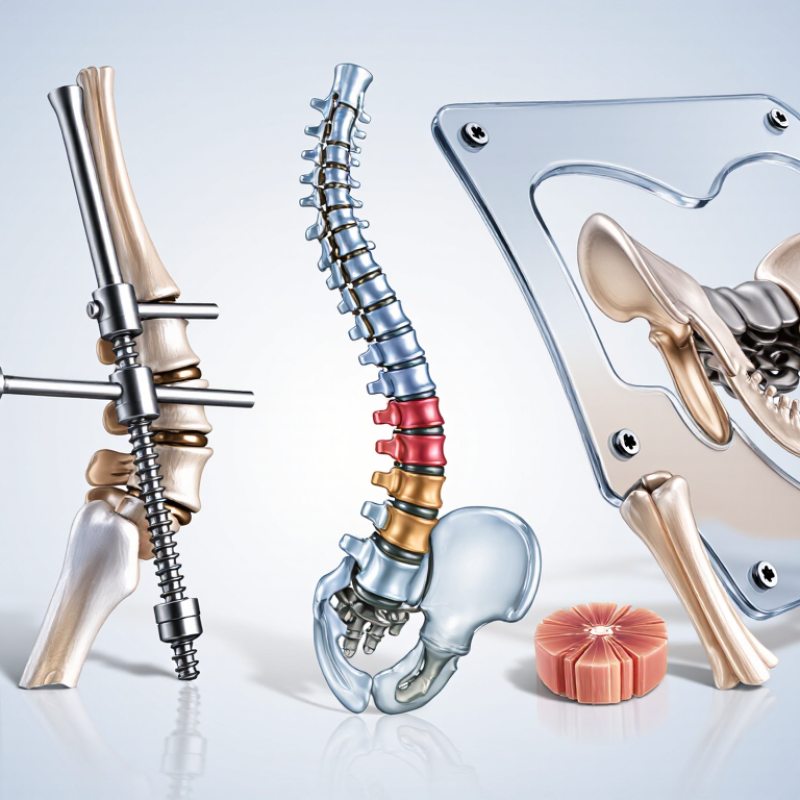
Orthopedic Spine Implants support different surgical goals, from stabilizing vertebrae to preserving motion. Common types include pedicle screw-and-rod systems, interbody cages, cervical plates, and artificial discs. Some procedures use expandable cages or specialized fixation devices. Each design addresses particular anatomy and surgical approaches; none is right for every patient.
The details matter. Interbody cages, for example, may be placed through anterior, lateral, or posterior approaches. Their materials, shapes, and fixation features vary. The U.S. Food and Drug Administration’s device resources describe how implants are regulated, but regulatory clearance alone does not establish that one device is best for every case. Clinical decisions also depend on diagnosis, bone quality, prior surgery, and surgeon judgment.
Evidence deserves careful reading. Studies may examine different patients, techniques, and follow-up periods, making direct comparisons difficult. A newer implant is not automatically a better one. This guide reviews the leading orthopedic spine implant types in 2026, what each is designed to do, and where evidence or trade-offs remain uncertain. It is an overview, not a substitute for individualized medical advice.
How Orthopedic Spine Implants Are Classified
Orthopedic spine implants are commonly classified by their purpose, location, and method of support. These categories help explain how devices work, but they do not determine which option is right for an individual patient. That depends on the diagnosis, anatomy, bone quality, and surgical plan.
Fixation implants, such as screws, rods, and plates, stabilize selected spinal segments. Interbody cages sit between vertebrae after a disc is removed and may support fusion. Artificial discs are designed to preserve motion at certain levels. For more extensive reconstruction, vertebral body replacement devices can help restore support after a damaged vertebra is removed. The labels overlap. Some procedures combine several implant types.
Implants can also be grouped by spinal region, such as cervical, thoracic, or lumbar, and by placement route, including anterior or posterior approaches. Materials and design features offer another classification, though a material alone does not predict an outcome. Small details matter: a screw’s path, a cage’s footprint, or the number of levels treated can change the mechanical demands. Classification is useful, but not perfectly tidy. Patients should ask their care team what each device is intended to do, what alternatives exist, and what uncertainties remain.
Which Implants Stabilize the Spine?
What Are the Top Orthopedic Spine Implant Types in 2026?
Which Implants Stabilize the Spine?
Spinal implants hold bones steady while healing or support a motion-preserving treatment. Pedicle screws connect to rods and limit movement across unstable vertebrae. Interbody cages sit between vertebrae, restore disc height, and provide space for bone fusion. In the neck, plates and screws can stabilize the front of the spine. Artificial discs aim to maintain movement in selected patients. The right choice depends on the spinal level, diagnosis, bone quality, and surgical plan.
Implants are not interchangeable. AHRQ-supported national research reported that U.S. spinal fusion procedures increased from 174,223 in 1998 to 413,171 in 2008 (Rajaee et al., Spine, 2012). That rise reflects growing use, not proof that fusion suits every patient. A surgeon weighs imaging, symptoms, and health history before recommending hardware. Small details matter: a cage’s position or a screw’s path can affect stability. The best fit is not always obvious.
Tips: Ask what each implant is meant to stabilize, and whether it limits motion or preserves it. Request a plain-language explanation of alternatives, expected recovery, and risks. Bring your imaging. A second opinion can help when the trade-offs remain unclear.
Which Devices Support Fusion and Replace Spinal Structures?
Interbody cages sit between vertebrae after a damaged disc is removed. They help maintain disc height while bone grows across the space. Materials include titanium and PEEK, a medical-grade polymer. Surgeons may add bone graft inside or around the cage. Pedicle screws and rods stabilize the segment during healing; cervical plates can provide similar support in the neck. Fit matters.
AHRQ’s HCUP national inpatient data reported roughly 70% growth in spinal-fusion stays between 2004 and 2014. That trend shows the procedure’s scale, not that one implant works best for everyone. The device choice depends on anatomy, bone quality, diagnosis, and the surgical plan. Comparisons can miss those details.
Some implants replace structures rather than support fusion. Artificial discs aim to preserve motion at selected cervical or lumbar levels, while vertebral-body replacement cages occupy space after damaged vertebral bone is removed. These devices serve different purposes. An artificial disc is not a fusion cage, and neither is right for every case. That distinction is easy to overlook. Long-term evidence and patient-specific trade-offs deserve careful review.
How Motion-Preserving Implants Differ from Fusion Devices
Orthopedic spine implants generally follow two different goals: preserve movement or create stability through fusion. Motion-preserving devices, such as artificial discs, replace a damaged disc while allowing some movement between vertebrae. A patient may bend and turn more naturally afterward, though the result is not the same as a healthy, untouched spine. Not a perfect reset.
Fusion devices take another route. Screws, rods, and cages hold vertebrae in position while bone grows across the treated segment. That segment is intended to stop moving. Fusion may suit some patterns of instability or degeneration, but it changes how forces travel through the spine. Whether nearby levels face extra strain varies, and research does not support a simple answer for every patient.
The distinction sounds tidy; real cases are messier. Disc replacement may be unsuitable when joints at the back of the spine are badly worn, or when bone quality is poor. Fusion also has trade-offs, including a longer period of restricted activity while bone heals. Surgeons weigh symptoms, scans, spinal alignment, and a person’s health—not just the implant type. Ask what movement is realistically expected, and what limitations remain. Decisions should be made with a qualified spine specialist who can explain the options for the individual case.
What Factors Shape Spine Implant Selection in 2026?
Spine implant selection in 2026 should begin with the diagnosis, not a product catalog. Surgeons weigh spinal level, bone quality, instability, deformity, prior surgery, and the patient’s daily demands. A screw-and-rod construct may suit some unstable segments; a cage may help restore disc height and support fusion. Motion-preserving devices fit only selected cases. Fit matters. Thin-slice CT can reveal weak bone or unusual anatomy that plain X-rays miss. Smoking, diabetes, and frailty also affect healing and complication risk, so implant plans may need adjustment.
The scale of need is substantial, but it does not dictate which implant a patient needs. The Global Burden of Disease 2021 analysis, published in The Lancet Rheumatology, estimated that 619 million people had low back pain in 2020, with projections reaching 843 million by 2050. That is context, not a forecast for spinal surgery. Selection still depends on clinical evidence, imaging, surgeon judgment, and informed patient preferences. Material strength, imaging compatibility, fixation method, and the likelihood of revision matter too. A less invasive option is not automatically the better one. Cost and hospital inventory can influence availability, yet they should not replace a patient-specific assessment. The awkward part: evidence does not settle every borderline case. A careful discussion of likely benefits, risks, and uncertainty remains essential.