
Choosing a reliable Pool Water Tester manufacturer in China takes more than comparing product photos or headline prices. Buyers need to know whether a supplier can measure the parameters their application requires, such as pH, free chlorine, or total dissolved solids. They should also examine stated accuracy, calibration procedures, sensor replacement options, and support after purchase. Details matter. A clear manual and readily available calibration solutions can make routine checks more dependable.
China’s water-testing industry includes suppliers with different strengths, from compact handheld meters to digital testers designed for regular commercial use. This guide explores manufacturers through practical criteria: product range, technical documentation, quality-control practices, customization options, and export experience. It also considers whether a company provides usable specifications rather than broad claims that are difficult to verify. One uncomfortable point deserves attention: a low quotation may not include calibration accessories, replacement probes, or responsive technical support. Buyers should request current product data and test samples where appropriate, then compare like with like.
No single manufacturer is best for every pool operator, distributor, or equipment brand. A small hotel may value simple operation, while a testing laboratory may need tighter documented performance. Even polished product pages can leave questions unanswered. The following overview aims to help readers identify promising Chinese manufacturers, assess their evidence, and ask more informed questions before making a sourcing decision.
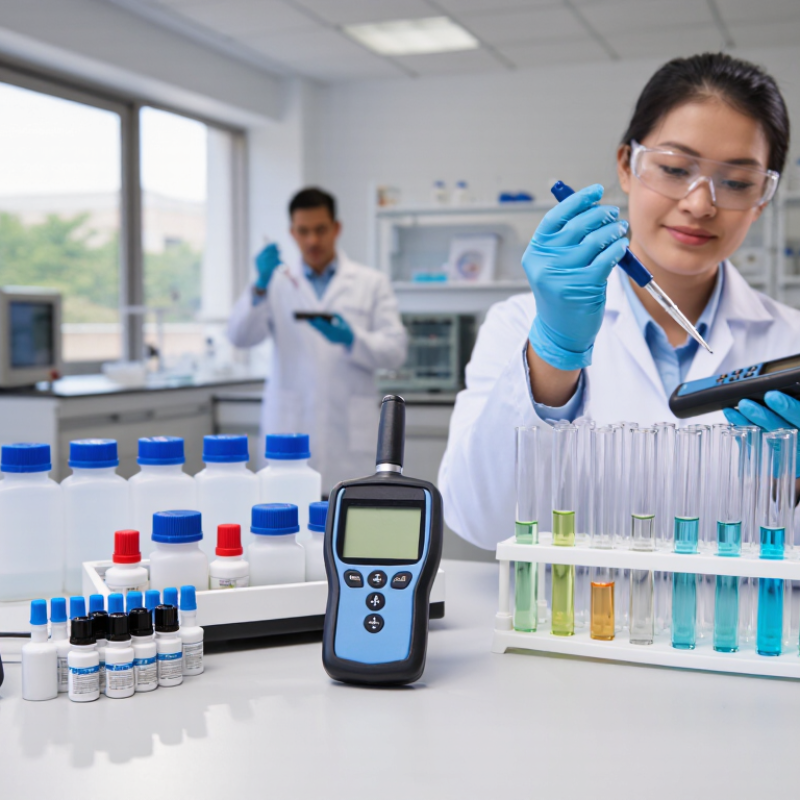
A useful pool water tester should give clear readings for pH, free chlorine, and total alkalinity. These measurements describe different parts of water balance, so one result cannot replace another. pH shows how acidic or basic the water is. Many pool-care guides use a target range of 7.2–7.8, though pool type and treatment instructions matter. Free chlorine indicates how much active sanitizer is available. Its appropriate level can vary with sunlight, swimmer load, and the sanitizer used. Total alkalinity helps resist sudden pH changes. A commonly used reference range is 80–120 ppm, but follow guidance for your pool.
When comparing Chinese manufacturers, check whether product specifications explain test ranges, resolution, and sample handling. Clear instructions matter. A precise-looking display is not enough if users cannot collect or interpret samples consistently. Color-comparison kits also depend on good lighting and fresh reagents. Some variation is normal; water testing is not perfectly exact.
Tips: Take samples away from return jets, use a clean container, and follow the test timing precisely. Compare readings over several days before making adjustments. Record the date and result. If readings seem inconsistent, repeat the test with fresh reagents or consult a qualified pool professional.

Chinese manufacturers of pool-water testers include specialist producers of reagent strips, optical instrument makers, and broader water-analysis equipment suppliers. Some focus on low-cost test strips for quick checks of pH and free chlorine. Others offer portable colorimeters with sample cells, timed reactions, and digital readings. A smaller group supplies electronic meters for parameters such as pH or oxidation-reduction potential. Product ranges vary; one factory may not make all three types.
For buyers comparing suppliers, inspect the measurement range, stated accuracy, and replacement-reagent availability. A colorimeter should include clear instructions for blanking and cleaning its sample cell. Digital meters need suitable calibration solutions and a practical sensor-care guide. Ask for a sample and test it against a known reference before placing a large order. Results can shift with temperature, old reagents, or a scratched vial. Small details matter.
Tips: Request recent calibration records and a sample report. Check whether the supplier explains storage conditions for strips and reagents. If the instructions feel vague, ask for a demonstration; a polished product photo proves very little.
GB 37488-2019 sets pool-water targets of pH 7.0–7.8 and free chlorine 0.3–1.0 mg/L. These figures give operators a practical range, not a substitute for repeated testing. The World Health Organization’s Guidelines for Safe Recreational Water Environments explain that pH affects chlorine disinfection. A small shift matters. At the poolside, sunlight, heavy use, and fresh water additions can change readings between checks. A dependable tester should therefore measure both pH and free chlorine, with clear units and a stated detection range.
When comparing pool water tester manufacturers in China, check calibration guidance, reagent shelf life, and performance records—not just the display. CDC’s Model Aquatic Health Code treats disinfectant and pH monitoring as core operational controls; local procedures should set testing frequency. Record results with the time and location. That makes a drifting reading easier to investigate. Even careful operators can miss a change, especially during busy periods. One measurement is only a snapshot.
Tips: Test at a consistent sampling point, away from return jets. Rinse the cell between samples, follow the kit’s timing instructions, and verify unusual results with a fresh sample. A neat number is not always a reliable one.
A reliable comparison starts with the measurement method, not the product brochure. Ask whether the tester uses color strips, reagents, or digital sensors, then request accuracy figures for each parameter. CDC guidance places pool pH at 7.0–7.8 and recommends at least 1 ppm free chlorine. A useful tester must resolve readings across those operating points, not merely display a wide range. Small differences matter.
Check the full test range: free and total chlorine, pH, alkalinity, calcium hardness, and cyanuric acid may all affect water management. CDC’s Model Aquatic Health Code offers operational benchmarks for public pools, while NSF/ANSI 50 provides a relevant equipment-performance reference. Neither citation proves a specific tester’s accuracy. Request method-specific validation data, detection limits, and repeatability results. Compare those figures under similar water temperature and sample conditions.
Calibration deserves equal scrutiny. For digital meters, ask for calibration instructions, recommended intervals, compatible reference solutions, and records showing how results are traceable. For reagent kits, check expiry dates and whether color readings were evaluated under controlled lighting. I would be cautious when a supplier quotes accuracy without stating the test method. That detail is easy to overlook. A small trial with known reference samples can reveal drift, confusing instructions, or inconsistent readings before a larger order.
| Comparison Dimension | What to Compare | Useful Technical Reference | Evidence to Request | How to Assess It |
|---|---|---|---|---|
| Measurement accuracy | Compare stated accuracy, resolution, repeatability, and measurement conditions for each parameter. Do not treat resolution as accuracy. | There is no single accuracy figure that applies to every pool tester. Performance depends on the method, instrument, sample, and operating conditions. | Model-specific datasheet, test report, stated units and tolerances, and results from repeated measurements or reference samples. | Prefer specifications that state a numeric tolerance and test conditions rather than claims such as “high accuracy.” |
| Free chlorine | Check whether the instrument measures free chlorine, total chlorine, or both, and whether it uses a colorimetric or electrochemical method. | DPD colorimetric tests are commonly used for pool chlorine. The available range is model-dependent; confirm that it covers the expected sample concentration. | Method description, measuring range, accuracy, reagent details, and instructions for blanking or zeroing the instrument. | Confirm the displayed result identifies the chlorine measurement type and unit, such as mg/L or ppm. |
| pH | Compare pH range, resolution, accuracy, electrode type, temperature compensation, and replacement-electrode availability. | CDC guidance for pools gives a pH range of 7.0–7.8. The tester’s measurement range should extend beyond the values expected in routine use. | pH electrode specifications, calibration instructions, buffer compatibility, and information on electrode storage and replacement. | Check that calibration can be performed with suitable pH buffer solutions and that the procedure is clearly documented. |
| Test range and units | Compare the minimum and maximum range for every parameter, along with selectable units and any dilution procedure for high readings. | Ranges vary by model and test method. A wider range is not automatically better if the instrument is insufficiently precise in the pool-water operating range. | A complete parameter-by-parameter range table, including detection limits, units, and any range-extension instructions. | Match the range to the intended pool type and routine readings; check for gaps around the values users need to monitor. |
| Calibration and verification | Determine which measurements require calibration, how often it is recommended, and whether the process is user-accessible. | Calibration requirements differ by technology. pH electrodes typically require buffer-based calibration; colorimeters may use a blank or zero reference and method-specific checks. | Calibration procedure, recommended interval, compatible reference materials, and instructions for recording or restoring calibration settings. | Look for clear procedures and readily available calibration materials; distinguish calibration from a simple functional check. |
| Other pool parameters | Check whether the tester supports alkalinity, cyanuric acid, bromine, salt, or other parameters needed for the application. | Each parameter may use a different method and have a different range. Confirm that the claimed measurement is supported by the supplied or specified sensor, reagent, or test method. | Parameter-specific method and range, required consumables, sample volume, and any interference or handling notes. | Compare only parameters that are relevant to the pool; verify that each has its own documented specification. |
| Sample handling and interference | Compare required sample volume, reaction time, cuvette requirements, temperature limits, and known interference warnings. | Colorimetric results can depend on reagent condition, sample handling, timing, and optical cleanliness. Probe readings can depend on sensor condition and sample environment. | Operating manual, sample preparation steps, maintenance instructions, and method-specific interference information. | Favor a repeatable workflow with clear cleaning and maintenance instructions and no ambiguous timing steps. |
| Quality documentation | Review traceability of test results, production inspection records, and documentation for the exact model being quoted. | General quality-system claims do not by themselves establish the measurement accuracy of a particular tester or test method. | Model-specific inspection records, applicable test reports, calibration documentation, and a controlled user manual. | Ensure documents identify the same model, configuration, and measurement method as the offered product. |
| Consumables and service | Compare reagent availability, electrode and sensor replacement, warranty terms, repair options, and technical support. | Consumables and sensors may have finite service lives or storage requirements; costs and availability depend on the specific product and supplier. | Consumables list, shelf-life and storage guidance, replacement-part information, warranty terms, and service response process. | Assess ongoing operating cost and support availability, not only the initial instrument price. |
Comparison note: Specifications and test ranges are model-specific, not universal manufacturer ratings. Request current datasheets and verification documents for the exact model being evaluated. CDC pool pH guidance is provided as an operational reference, not as an instrument specification.
The right Chinese pool water tester manufacturer depends on your facility’s workload, not its catalogue size. A hotel pool may need quick daily checks, while a busy aquatic centre benefits from instruments that record results and simplify shift handovers. CDC guidance recommends checking pool chlorine and pH at least twice daily. That makes clear displays, straightforward calibration, and readily available replacement sensors practical priorities. Small details matter. Can staff read the screen beside a wet deck? Can they replace a probe without sending the unit away?
Ask manufacturers for calibration procedures, accuracy specifications, service response times, and sample test records. Compare those records with your own manual test results before committing to a large order. The CDC’s 2013 inspection analysis found that about one in eight routine inspections of U.S. public aquatic venues led to immediate closure for serious violations. This is not a China-specific measure, but it shows why dependable monitoring matters. A low purchase price may still bring costly downtime. The comparison is imperfect: facilities differ, and test results depend on sampling technique. Even a strong instrument cannot correct a poorly collected sample. Choose a supplier that can explain the limits of its device, provide operator training, and support routine verification—not just promise high precision.
A facility’s tester should reliably measure and record both free chlorine and pH. The CDC recommends testing these levels at least twice per day, and more often when pool use is heavy.
Benchmark: CDC guidance for public pools. Testing frequency is a facility practice benchmark, not a manufacturer ranking. Follow applicable local requirements.
© 2023 JEM Electronics, Inc. – United States Cable Assembly. All rights reserved.