In 2026, choosing a Retail Store Cash Register means looking beyond the screen and price tag. A checkout counter has to handle real work: scanning a basket, taking payment, recording a return, and updating stock without slowing the line. “Retail is detail,” retail expert Paco Underhill has said. That reminder fits cash-register shopping well. A small delay at checkout can frustrate customers; a confusing menu can frustrate staff even more. Simple matters.
This guide explores leading cash registers and point-of-sale systems available to retailers in 2026. It considers ease of use, payment options, inventory tools, reporting, hardware durability, and the support offered by the seller. It also distinguishes a traditional register from a connected POS setup, since the right choice depends on store size and daily routines. A busy grocery counter has different needs from a small clothing shop. No single model suits every retailer. And specifications can mislead. A feature list may look impressive, yet prove awkward during a crowded Saturday shift. Before buying, retailers should check compatibility with existing equipment, ongoing costs, and the return process. Those details deserve attention. The comparison ahead is a starting point, not a substitute for testing the system with the people who will use it.
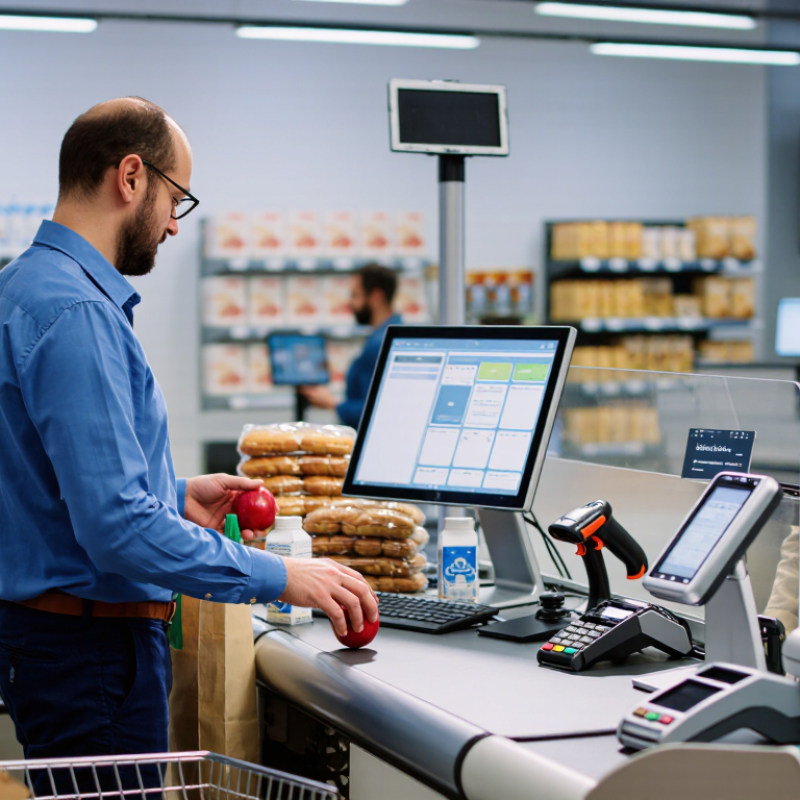
A retail cash register can be a simple drawer with a keypad or a connected checkout system. Traditional electronic registers total sales, print receipts, and open the drawer. They suit small shops with straightforward stock and limited reporting needs. A touchscreen point-of-sale system can also track inventory, staff sales, and daily totals. Mobile systems let staff take payments beside a fitting room or market stall, using a handheld device. Self-checkout stations shift scanning and payment tasks to customers. Each type changes the checkout experience.
Check the drawer.
According to the 2024 Global Payments Report, cash represented 16% of global in-store transaction value in 2023.
The Federal Reserve’s 2024 Diary of Consumer Payment Choice also found cash made up 16% of U.S. consumer payments by number in 2023.
These figures measure different markets and methods, but show why cash handling still matters alongside card and mobile payments. For a small shop, a basic register may be easier to maintain; a busy store may value live inventory updates and multiple checkout lanes.
One practical detail: check whether the system still works during an internet outage.
The awkward part is that more features can mean more staff training. Test the workflow with a real basket of goods before choosing.

Comparing Essential Features for Different Store Needs
The right cash register depends on what your store sells and how it operates. A small clothing shop may need a compact touchscreen, simple returns, and clear sales reports. A busy grocery store needs fast barcode scanning, dependable receipt printing, and scale support. For stores with several locations, shared inventory and user permissions can matter more than a large display. Speed matters.
Returns deserve attention, too. The National Retail Federation’s 2024 Retail Returns Landscape estimated that 16.9% of annual retail sales would be returned that year, worth about $890 billion. A register that can retrieve receipts and process exchanges smoothly may save staff time. The U.S. Census Bureau reported that e-commerce accounted for 16.1% of total U.S. retail sales in 2024. That makes reliable in-store and online inventory syncing useful for many retailers, though it may be unnecessary for a single-location shop.
Tips: Before buying, test the register with a real checkout: scan several items, apply a discount, print a receipt, and process a return. Ask about transaction fees, offline mode, and support. A low purchase price can hide recurring costs. I would still compare the system against a week of actual sales; product descriptions rarely show every snag.
A retail register’s purchase price is only the visible part of its cost. Compare the terminal, software subscription, payment-processing fees, installation, support, and replacement peripherals. A low-cost unit can become expensive when it needs proprietary accessories or costly service. Ask for a written estimate covering the full first year.
Payment choice matters at the counter. The Federal Reserve’s 2024 Diary of Consumer Payment Choice found that cash accounted for 16% of consumer payments in 2023. Worldpay’s 2024 Global Payments Report estimated digital wallets represented 30% of global in-store transaction value that year. A practical setup should handle cash, chip cards, contactless cards, and mobile wallets. Small details matter. Test refunds and split payments before buying, not during a busy shift.
Check compatibility with existing inventory, accounting, and online sales systems. Confirm that the register works with your barcode scanner, receipt printer, cash drawer, and chosen payment terminal. Ask whether sales data can be exported in a usable format. Also test what happens when the internet drops. Offline payments may have limits, and those limits are easy to overlook. I would compare a live demo with the actual checkout routine; a slick screen does not guarantee a smooth Saturday rush.
Comparison of common retail register configurations. Prices are indicative U.S. hardware estimates in USD; actual costs depend on configuration, retailer, taxes, and service plan.
| Register Type | Typical Hardware Cost | Payment Options | System Compatibility | Common Connections | Best Suited For | Key Consideration |
|---|---|---|---|---|---|---|
| Basic electronic cash register | $150–$600 | Cash; card acceptance usually requires a separate terminal | Generally works independently; inventory and sales reporting may be limited or require manual export | Power; some models support a receipt printer, cash drawer, or barcode scanner | Small shops with straightforward checkout needs and modest product ranges | Confirm that the model supports the required tax settings, receipt format, and external payment terminal. |
| Touchscreen point-of-sale terminal | $500–$1,500 | Typically supports cash and card payments through a compatible payment terminal | Depends on the operating system, POS application, and supported peripherals; verify compatibility before purchase | Ethernet or Wi-Fi; USB or Bluetooth peripherals; optional cash drawer and receipt printer | Independent retailers needing item lookup, staff permissions, and sales reports | Software subscriptions, payment processing, and installation may be additional costs. |
| Tablet-based POS bundle | $300–$1,000, excluding the tablet in some bundles | Cash and card payments with a compatible reader or terminal; some setups support contactless payments | Requires a supported tablet operating system and POS application; check peripheral and payment-terminal support | Wi-Fi; Bluetooth; optional dock, printer, scanner, and cash drawer | Pop-up shops, boutiques, and stores that value a compact checkout counter | Account for the tablet, stand, accessories, software plan, and reliable internet access. |
| All-in-one POS register | $800–$2,500 | Cash and card payments through supported integrated or paired payment hardware | Usually designed around a specific POS platform; confirm support for accounting, inventory, and ecommerce integrations | Ethernet or Wi-Fi; often includes or supports a receipt printer, cash drawer, and barcode scanner | Busy single-location stores seeking a consolidated checkout setup | Integrated components can simplify setup, but replacement parts and add-ons may be platform-specific. |
| Mobile POS terminal | $100–$500 for basic hardware; compatible phone or tablet may be extra | Card and contactless payments; cash handling requires a separate drawer or register | Requires a compatible mobile device, application, and supported payment service | Wi-Fi or cellular data; Bluetooth or direct device connection, depending on hardware | Mobile checkout, events, queue-busting, or secondary checkout points | Check battery life, network coverage, receipt options, and offline-payment limitations. |
| Self-checkout station | $2,000–$8,000+ per station, depending on configuration | Often supports card and contactless payments; cash acceptance requires additional hardware | Must integrate with the retailer’s POS, product database, payment system, and loss-prevention workflow | Typically wired network; scanner, display, payment terminal, and optional scale or cash module | High-volume stores with suitable floor space and staff support | Installation, maintenance, security measures, and customer assistance can materially increase total cost. |
Costs above are hardware estimates, not quotes. Software fees, payment processing rates, installation, taxes, warranties, and accessories are generally separate. Payment availability and system integrations vary by device, software, and payment provider; verify current requirements before buying.
A register should fit the work, not just the counter. A small boutique with one checkout and limited inventory may need quick item lookup, simple returns, and clear daily sales reports. A touchscreen register and dependable receipt printer may be enough. Keep the drawer layout simple. Extra terminals can add clutter and training time.
A busy grocery or convenience store needs a faster rhythm: barcode scanning, multiple payment options, and backup checkout capacity for rushes. Worldpay’s 2024 Global Payments Report found that digital wallets represented 30% of global in-store transaction value in 2023. That makes wallet acceptance worth checking, even for compact shops. The figure is global, not a forecast for every neighborhood. Small details matter.
Stores handling online orders should also look for inventory tracking and clear pickup-order status. The U.S. Census Bureau reported that e-commerce accounted for 16.1% of total U.S. retail sales in the fourth quarter of 2024, seasonally adjusted. That does not mean every store needs complex software. But disconnected stock counts can lead to awkward overselling. Test the real routine: scan a return, split a payment, then close the drawer after a rush. If those steps feel slow, reconsider the setup. No register is perfect.
Compare approximate upfront hardware costs for checkout workflows, from mobile checkout to a full counter lane.
How to read this: Bars show illustrative estimated hardware budgets per checkout station in USD. Mobile setups may suit small shops with flexible checkout; fixed counters add equipment for routine transactions; full lanes support busier workflows with peripherals such as a barcode scanner and receipt printer. Estimates vary by equipment and exclude software, taxes, and installation; they are not vendor quotes or a market survey.
Before buying a retail cash register in 2026, inspect the vendor’s service terms as carefully as the screen and receipt printer. A low price matters little when a till freezes during Saturday rush. Ask who answers support calls, the promised response time, and whether help is available evenings and holidays. Get the warranty length in writing. Check whether it covers labor, replacement parts, shipping, and onsite visits; “limited warranty” can leave costly gaps. Ask how long the model will receive security updates and how repairs affect stored sales data. Small details matter.
Support quality is not a minor issue. Uptime Institute’s 2024 outage analysis found that 54% of surveyed organizations said their most recent significant outage cost over $100,000. That study covers digital infrastructure, not checkout counters, so treat it as context, not a register-specific forecast. The 2024 Data Breach Investigations Report found that 68% of breaches involved a non-malicious human element. Ask whether remote support uses multifactor authentication, and whether access is logged and disabled after service. Request a written repair process, spare-parts timeline, and escalation contact. Test the support line before purchase. A polished sales demo proves little. No warranty removes every risk, and a checklist can still miss the awkward question: who helps when the system fails during a holiday rush?
© 2023 JEM Electronics, Inc. – United States Cable Assembly. All rights reserved.