China’s Smart Photo Booth market includes manufacturers serving weddings, retail promotions, brand activations, and entertainment venues. The strongest choice is not always the company with the flashiest product photos. Buyers should look closely at camera quality, lighting consistency, touch-screen response, print speed, software options, and support after delivery.
Photography pioneer George Eastman’s familiar line, “You press the button, we do the rest,” captures the promise of an easy photo experience. A modern booth, however, has more moving parts. A camera may perform well in a bright showroom but struggle under warm event lights. A glossy touchscreen can still feel sluggish when guests line up. Small details matter.
This guide examines leading Chinese manufacturers through practical questions: What can they customize? How clearly do they explain hardware specifications? Do they offer sample testing, setup guidance, and dependable communication? These checks help distinguish proven capabilities from attractive catalog claims. No ranking can replace a hands-on test. That is an imperfect part of the buying process, and worth admitting. Even a well-reviewed booth may need adjustments for a particular venue, audience, or workflow. The manufacturers discussed here should therefore be compared against your actual use case, not just their headline features.
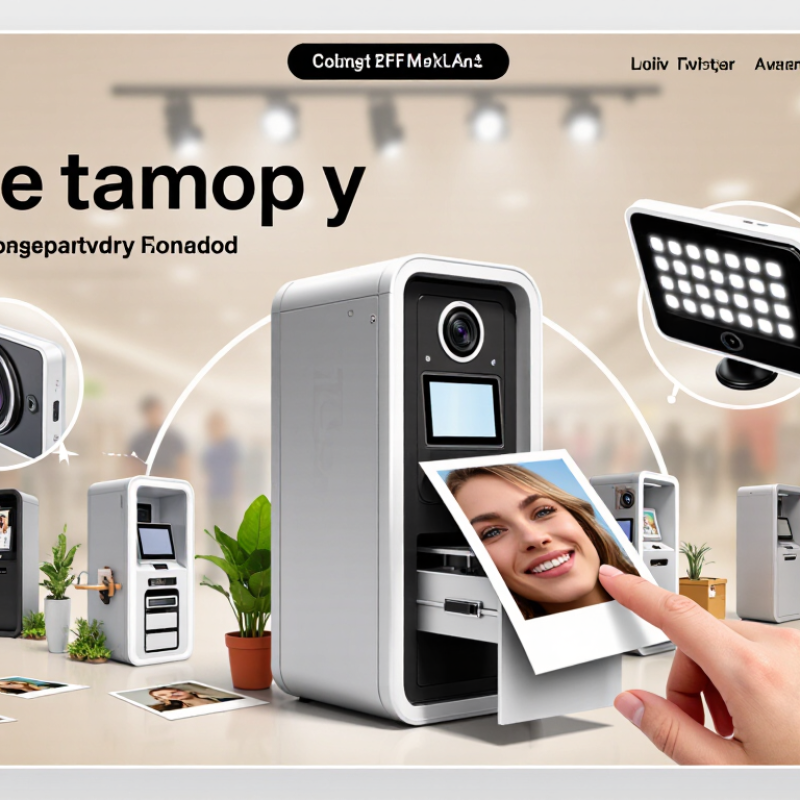
A smart photo booth combines imaging hardware with software that guides the guest from pose to finished photo. The camera and lens shape image detail, while adjustable LED lighting helps keep faces clear in dim venues. A responsive touchscreen should be easy to use, even for guests unfamiliar with the setup. Small details matter. A printer, when included, needs to produce consistent color and handle busy event queues.
The software manages capture, templates, basic edits, and delivery. Operators may need to change overlays for a wedding, retail promotion, or company event without rebuilding the workflow. Sharing options can include QR codes or email, with clear consent and sensible controls for stored images. Yet the screen can still lag, or a printer can run out of paper. Smart features do not replace practical testing.
Use cases vary. At a trade show, a booth can draw visitors and provide a branded keepsake. In a hotel, it can offer guests a simple activity; at a private event, it can create instant prints and a digital gallery. When comparing manufacturers in China, buyers can ask for sample images, a live software demonstration, component specifications, and details about maintenance and support. A polished demo is useful, but performance during a long event matters more.

Chinese smart photo booth manufacturers should be compared by finished image quality, not “4K” alone. ITU-R Recommendation BT.2020 includes 3840 × 2160 UHD, or about 8.3 megapixels. That is a useful capture benchmark, but it cannot prove sharp faces or clean shadows. ISO 12233:2023 describes methods for measuring digital-camera resolution. Ask suppliers for unretouched sample files, then inspect fine hair, fabric texture, and edge detail under booth lighting. A specification sheet can flatter.
Printing needs a separate check. A 4 × 6-inch photo at 300 pixels per inch requires 1200 × 1800 pixels, about 2.16 megapixels. In theory, a 4K frame has enough pixels; cropping, denoising, and resizing can still soften the result. Compare physical prints, not just screen previews. Check small text, skin tones, and gradients for banding. Ask each manufacturer to state whether “300 dpi” refers to printer-dot density or image resolution; the terms are often blurred. Request repeat prints from the same file, too. Consistency matters, though it is easy to overlook.
Chinese smart photo booth manufacturers serve three different environments: live events, retail spaces, and permanent installations. Event-focused makers typically offer wheeled or compact units, fast setup, touchscreens, lighting, and instant printing. For a wedding or product launch, check whether one operator can replace paper, clear jams, and keep the booth running through a busy evening. Small details matter.
Grand View Research estimated the global photo booth market at USD 818.8 million in 2023 and projected an 8.4% compound annual growth rate from 2024 to 2030. This points to expanding demand, but it does not prove that every supplier can deliver reliable equipment. Retail buyers should ask about remote content updates, payment options, data handling, and service response times. A polished demo is not enough.
Permanent installations need stronger enclosures, stable network connections, accessible maintenance panels, and clear warranty terms. Chinese manufacturers serving this segment may provide custom dimensions, software integration, and OEM production, but capabilities differ. Request a live demonstration and a written bill of materials. Also ask for references from comparable installations, spare-part lead times, and testing records. One weakness deserves attention: long-term support can be harder to judge than hardware quality, especially when the booth is installed far from the factory.
Comparison guide: This table describes common supplier and product profiles rather than ranking or identifying individual companies. Actual specifications, customization options, and service coverage vary by supplier and should be confirmed before purchase.
| Supplier Profile | Typical Booth Configuration | Common Smart Features | Best-Fit Applications | Installation and Support Considerations | Buyer Checks |
|---|---|---|---|---|---|
| Event-focused booth maker | Portable or modular enclosure with a camera, touchscreen, lighting, and a photo printer or digital sharing option. | On-screen prompts, custom event overlays, QR-code sharing, and options for digital galleries or data capture. | Weddings, trade shows, brand activations, parties, and other temporary events. | Confirm setup time, transport requirements, power needs, and whether an operator or local technical support is required. | Check print speed and consumable availability if printing is needed; test the user flow and sharing process under venue network conditions. |
| Retail-focused booth maker | Self-service kiosk or compact enclosure designed for repeated use in a shop, mall, or entertainment venue. | Touchscreen workflows, payment or access-control integration where supported, digital delivery, and remote status monitoring options. | Retail promotions, entertainment venues, shopping centers, and customer-engagement areas. | Assess accessibility, daily cleaning and replenishment needs, operating hours, and the process for remote troubleshooting. | Verify payment-system compatibility, privacy and consent settings, uptime expectations, and how software updates are managed. |
| Permanent-installation integrator | Fixed kiosk or built-in photo station configured for a specific site, with mounting, power, and network arrangements planned in advance. | May support integration with venue systems, scheduled content, remote diagnostics, and managed digital delivery, depending on the solution. | Museums, visitor attractions, hotels, campuses, and other locations with ongoing operation. | Plan for site surveys, mounting and safety requirements, network access, service access, and long-term maintenance responsibilities. | Request installation drawings, environmental and electrical requirements, warranty terms, spare-parts plans, and a documented support process. |
| OEM/ODM-oriented booth supplier | Configurable hardware platform that may be adapted with different enclosure dimensions, finishes, peripherals, or software workflows. | Feature sets depend on the selected hardware and software; options can include touchscreen control, printing, lighting, and digital sharing. | Buyers developing a custom booth program, private-label product, or multi-location deployment. | Agree on the division of responsibility for hardware, software, installation, and after-sales service before production. | Confirm sample approval, production specifications, quality-control criteria, certification requirements, lead times, and software ownership. |
| Hybrid event-and-retail supplier | Modular system that can be configured for temporary activations or adapted for longer-term placement. | May combine event branding tools with self-service controls and digital photo delivery; capabilities depend on the chosen configuration. | Organizations that need a booth for both campaign events and recurring venue use. | Check whether the same unit can withstand the intended frequency of use and whether each deployment requires a different setup. | Compare portability, enclosure durability, software licensing, and the cost of switching between event and unattended modes. |
When comparing smart photo booth manufacturers in China, buyers should test throughput under realistic conditions. Ask how many guests can complete a session in an hour, including payment, posing, image processing, and printing. A fast camera alone proves little. Try a busy-hour simulation with a queue, different lighting, and several print sizes. Record the time from guest arrival to finished photo. That matters.
Uptime depends on more than hardware. Request maintenance logs, spare-parts lead times, remote support hours, and clear warranty exclusions. Ask what happens when the printer jams on a Saturday evening. A showroom demo is not proof of reliable field performance. Not always.
Compare total cost of ownership over several years: equipment, shipping, software fees, paper, ink, repairs, and staff time spent restarting the booth. A low purchase price can become expensive if consumables are costly or replacement parts take weeks.
The estimate will still be imperfect; venue traffic and seasonal demand are hard to predict. Ask suppliers to state their assumptions, then compare them against a small pilot or documented operating data.
Who Are the Top Smart Photo Booth Manufacturers in China?
When evaluating Chinese smart photo booth manufacturers, look beyond image quality. Ask for current electrical safety test reports covering the exact booth configuration, including its printer, lighting, and power supply. Check grounding, cable strain relief, ventilation, and emergency shutoff access. A demo unit may look polished while hiding loose connectors. Request documented inspections and a spare-parts list.
Connectivity deserves equal scrutiny. Confirm supported Wi-Fi bands, Ethernet options, cellular availability, and offline functions. Ask how images are protected during transfer and storage, who can access administrator accounts, and how software updates are verified. Test recovery after a network drop, not just a smooth demo. Test offline. Export readiness varies by destination, so request invoices, packing details, origin information, and applicable conformity or radio documents. Verify local requirements with the importer or a qualified testing provider. Paperwork can lag hardware changes.
Tips: Match each certificate to the model and voltage. Photograph product labels and ports. Run a sample unit through a full event; one successful test is not proof. Small details matter.
© 2023 JEM Electronics, Inc. – United States Cable Assembly. All rights reserved.