Choosing the right wire to wire connector manufacturer can shape a product’s safety, reliability, and production efficiency. Global buyers often compare suppliers across automotive, industrial equipment, consumer electronics, energy systems, and other demanding applications. A connector may look simple, yet its performance depends on contact materials, housing design, terminal retention, sealing, and manufacturing consistency.
This guide introduces leading manufacturers for international sourcing decisions. It considers product range, engineering experience, quality management, testing capability, customization support, and supply continuity. Reliable manufacturers should provide clear datasheets, dimensional drawings, sample support, and traceable quality records. They should also explain current ratings, voltage limits, temperature ranges, mating cycles, and environmental resistance in practical terms.
Details matter.
For example, a connector used near an engine needs stronger vibration and heat resistance than one installed inside a control panel. Buyers should examine crimp performance, locking feedback, plating quality, and resistance to moisture. Recognized certifications can support evaluation, but certificates alone do not guarantee field performance. Real production experience still matters.
No manufacturer is ideal for every project. Some offer excellent customization but require higher minimum order quantities. Others provide fast delivery but limited engineering support. Published specifications may also leave important questions unanswered. Careful buyers should request samples, inspect test reports, and validate connectors in their own assemblies before placing large orders. This overview aims to support that process with balanced, practical information rather than simple rankings. Supplier capability can change over time, so direct verification remains essential.
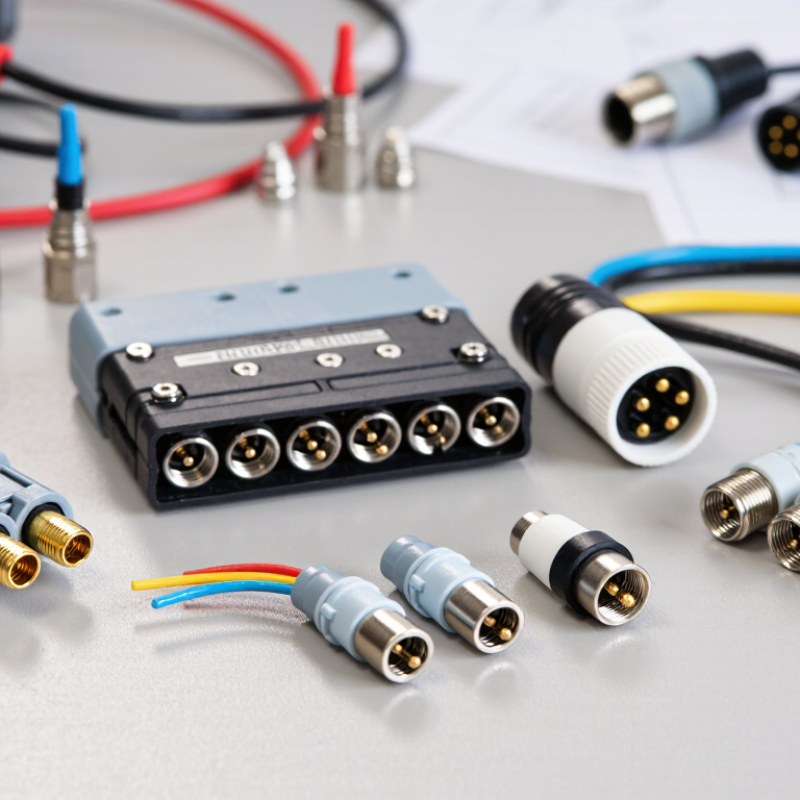
Wire-to-wire connectors join two separate cable ends within an electrical harness. They provide a removable path for power or signal transmission without soldering every connection. Small parts matter. A typical connector includes an insulating housing, conductive terminals, a locking feature, and cable-entry protection. Some designs also use seals, strain relief, or secondary locks.
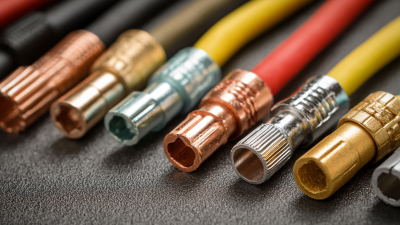
The housing keeps terminals aligned and reduces accidental contact. Terminals grip stripped conductors through crimping, welding, or another approved attachment method. A proper crimp should hold firmly without cutting the wire strands. That detail is often underestimated. During assembly, I would check pull strength, terminal position, and visible damage before installation. A loose terminal may pass a basic continuity test and still fail under vibration.
Core functions include electrical continuity, mechanical retention, polarization, and environmental protection. Connector selection depends on conductor size, current, voltage, temperature, vibration, and moisture exposure. For outdoor equipment, sealing performance can matter as much as contact resistance.
In compact assemblies, space and cable bend radius also influence reliability. One detail is easy to miss. Routing stress can transfer directly to the terminal. Design reviews should examine the complete harness, not only the connector body. Specifications may appear complete, yet field conditions can reveal gaps. Careful testing remains necessary.
Industrial buyers should match wire-to-wire connector types with current, vibration, moisture, and service access. Crimp connectors suit control panels and machines requiring repeatable electrical performance. IDC connectors terminate ribbon or flat cables quickly, reducing stripping work. Screw-terminal designs remain practical where technicians need visible, field-adjustable connections.
Spring-clamp connectors handle vibration well because their contact pressure stays consistent. Circular waterproof connectors protect outdoor equipment, while rectangular sealed connectors fit compact factory harnesses. Bishop & Associates’ 2024 Connector Industry Forecast reported global connector sales above US$80 billion, showing the scale of industrial interconnection demand. However, market size does not guarantee suitability. A connector rated for 10 amperes may still fail when heat, poor crimping, or cable movement increases resistance. I have seen this overlooked in dense control cabinets.
Tips: Check conductor size, contact plating, locking force, and IP rating together. Use a calibrated crimp tool, then inspect the crimp barrel and pull strength. For dusty production areas, leave enough clearance for cleaning and inspection. IEC 61984 provides useful safety guidance for connector selection and testing. Still, laboratory ratings can differ from factory reality. Test samples under real vibration, temperature, and bending conditions before approving a production harness.
Key Types of Wire-to-Wire Connectors for Industrial Applications
Typical maximum current values vary by conductor size, contact material, temperature rise, housing design, and sealing system. The figures below are representative engineering values commonly associated with industrial connector categories, not universal ratings for every product.
Top Wire to Wire Connector Manufacturers for Global Buyers
How to Evaluate Global Wire-to-Wire Connector Manufacturers
Choosing a wire-to-wire connector manufacturer requires more than comparing unit prices. Review its manufacturing experience with your wire size, insulation type, current rating, and working environment. Ask for sample parts, dimensional drawings, material data, and recent test records. A reliable supplier should explain its crimping, molding, plating, and inspection processes clearly.
Look closely at production control. Can the manufacturer trace resin batches, metal terminals, and operator inspections? Request evidence of pull-force testing, contact resistance checks, temperature cycling, and vibration testing. For outdoor equipment, ask how connectors handle moisture, dust, and corrosion. Photographs help, but physical samples reveal fit, locking force, and assembly effort.
Visit the facility when possible, or arrange a live video audit. Check whether inspection tools are calibrated and whether rejected parts are isolated. I have found that fast replies do not always indicate strong engineering support. A polished brochure proves little. Clear answers matter more. Confirm production capacity, tooling ownership, packaging details, lead times, and export documentation before approval.
Do not judge quality from one perfect sample. Test several batches under realistic conditions. Your own review may also be incomplete if field loads are underestimated. Compare failure data, not just promises. A dependable global manufacturer communicates risks early, supports design changes, and provides consistent records after production begins.
| Evaluation Dimension | Relevant Technical Data | Recommended Buyer Benchmark | Evidence to Request from the Manufacturer |
|---|---|---|---|
| Connector Configuration | Inline wire-to-wire, free-hanging, panel-mount, sealed, and locking configurations. | The supplier should offer the configuration required for the installation environment, including polarization and secondary locking where needed. | Product drawings, mating-part references, keying details, terminal-retention specifications, and assembly instructions. |
| Wire Cross-Section Compatibility | Common connector families support wire sizes such as 0.14–6.00 mm², depending on terminal design and current rating. | The approved wire range should cover the target cable size, conductor type, insulation diameter, and stripping length. | Terminal crimp charts, conductor-size tables, insulation-diameter limits, and validated crimp-tool specifications. |
| Current Rating | Wire-to-wire connector ratings commonly range from signal-level current to approximately 30 A or more, depending on contact size, wire gauge, temperature rise, and circuit arrangement. | Use the manufacturer’s derating curve rather than relying only on the headline maximum current rating. | Current-versus-temperature-rise test data, contact resistance results, conductor-size conditions, and applicable test standard. |
| Voltage Rating | Typical low-voltage connector systems are rated from approximately 30 V to 600 V AC/DC, subject to spacing, insulation, pollution degree, and certification requirements. | Select a voltage rating with sufficient margin for the system’s working voltage, transient conditions, and applicable safety standard. | Rated-voltage declaration, creepage and clearance measurements, dielectric-withstand results, and certification documentation. |
| Contact Pitch and Pole Count | Common pitches include 2.00, 2.54, 3.50, 3.81, 5.00, and 5.08 mm; single-row and multi-row versions are widely used. | The product range should match the required density, creepage distance, housing size, and mating orientation. | Dimensioned drawings, tolerance data, cavity numbering, polarization details, and mating-interface specifications. |
| Operating Temperature | Industrial connector families commonly specify ranges such as −40 °C to +85 °C, −40 °C to +105 °C, or higher for specialized designs. | The complete assembly rating should include housing, terminal, seal, wire insulation, and actual current load. | Temperature-cycle results, material declarations, derating curves, and test conditions for the complete mated connector. |
| Ingress Protection | Unsealed products may have no IP rating; sealed designs can be tested to ratings such as IP65, IP67, or IP68. | For outdoor, automotive, or washdown applications, require a stated IP rating for the mated and correctly assembled connector. | Ingress-test reports based on IEC 60529, seal-material information, assembly conditions, and cable-diameter limits. |
| Flammability and Insulation Material | Thermoplastic connector housings may use flame-retardant materials tested to classifications such as UL 94 V-0, V-1, or V-2. | For equipment exposed to fire-risk requirements, specify the required flammability class and material temperature index. | Material datasheets, flame-classification certificates, comparative tracking index data, and lot traceability. |
| Contact Resistance | Low milliohm-level contact resistance is expected in quality connector systems; the specified value depends on contact material, plating, and test current. | Compare initial resistance and resistance after environmental, mechanical, and durability testing under identical conditions. | IEC 60512 test reports, maximum initial resistance, resistance-change limits, and contact-plating thickness. |
| Durability and Mating Cycles | General-purpose connectors may be specified for dozens to hundreds of mating cycles; specialized products can be rated for more. | The cycle rating should exceed the expected service, maintenance, and field-replacement requirements. | Mechanical-operation test results, post-test contact-resistance data, insertion-force limits, and extraction-force limits. |
| Environmental Resistance | Relevant stresses include vibration, shock, humidity, thermal cycling, corrosion, dust, chemicals, and salt spray. | The qualification program should reflect the actual application environment rather than relying only on laboratory ratings. | Environmental qualification reports, vibration and shock conditions, humidity tests, salt-spray results, and chemical-compatibility data. |
| Standards and Certifications | Common references include IEC 61984, IEC 60512, IEC 60529, UL 1977, UL 94, RoHS, and REACH requirements, where applicable. | Certifications should apply to the exact housing, terminal, seal, and configuration being purchased. | Current certificates, scope pages, test reports, declarations of conformity, and controlled revision records. |
| Quality Management | A documented quality system should control incoming materials, molding, stamping, plating, crimping, inspection, and final release. | Prefer suppliers with a certified quality-management system and measurable process-control indicators. | Quality certificate, control plan, process capability data, inspection standards, corrective-action procedure, and audit results. |
| Supply Capacity and Lead Time | Delivery performance depends on tooling status, raw-material availability, production location, order quantity, and inspection requirements. | Evaluate quoted lead time, safety-stock options, production capacity, and contingency planning using recent delivery data. | Capacity statement, standard lead-time schedule, on-time-delivery data, production-location details, and business-continuity plan. |
| Tooling and Customization | Customization may involve cavity count, keying, wire length, seals, terminal plating, housing color, labeling, or application-specific tooling. | Confirm tooling ownership, design-change control, sample approval, and the effect of customization on cost and lead time. | Tooling quotation, ownership terms, 2D/3D drawings, first-article report, engineering-change procedure, and sample-validation plan. |
| Traceability and After-Sales Support | Traceability may cover material batches, mold numbers, production dates, operator records, inspection results, and shipment lots. | Require a defined complaint-response process, replacement policy, technical documentation, and multilingual support for international projects. | Lot-code format, retention policy, warranty terms, response-time commitment, failure-analysis process, and technical-support contacts. |
For global buyers, region matters because production habits shape connector quality, lead time, and tooling support. East Asia remains a high-volume manufacturing center for wire-to-wire connectors. China produced 30.16 million vehicles in 2023, according to the International Organization of Motor Vehicle Manufacturers. This scale supports automated crimping, high-speed molding, and broad material sourcing. The IEA’s Global EV Outlook 2024 reported that China represented about 60% of global electric car sales in 2023. That demand encourages faster connector development for battery systems and vehicle wiring. Yet scale can hide variation.
Europe emphasizes precision, traceability, and demanding environmental performance. Germany, Spain, and Central European countries support automotive and industrial supply chains with advanced tooling and inspection systems. North America offers strong engineering support, shorter regional delivery routes, and flexible production for specialized programs. OICA recorded more than 10 million vehicles produced in the United States during 2023, while Mexico produced over four million. These figures help explain the region’s connector demand. However, regional labels are imperfect. A capable factory may still lack stable resin control, test documentation, or backup tooling.
Tips: Compare factory capacity with actual monthly output. Request crimp-force records, salt-spray results, dimensional reports, and sample traceability. Check whether molds are maintained locally. Also ask for second-source material planning. Low prices look attractive, but unmanaged variation becomes expensive. Data from IEA and OICA offers useful direction, though it cannot replace an on-site audit or process review.
Top Wire to Wire Connector Manufacturers for Global Buyers
Quality standards should guide every wire-to-wire connector purchase. Look for controlled crimping, stable contact resistance, and secure housing locks. Reputable manufacturers provide inspection records, material declarations, and batch traceability. Ask for test data, not only catalog claims. Important checks include temperature cycling, vibration resistance, insulation performance, and terminal pull force. In factory audits, small details often matter. Uneven crimp marks can reveal poor tooling or rushed production.
Customization should match the application, not merely the appearance. Buyers may need different wire gauges, insulation materials, terminal plating, sealing levels, or cable lengths. A connector used near an engine needs stronger heat resistance than one inside office equipment. Request samples with production-grade materials. Test fit, insertion force, polarity, and locking behavior before approving a larger order. A beautiful prototype can still fail during repeated assembly.
Global purchasing involves more than unit price. Confirm applicable RoHS, REACH, UL, or regional requirements with current documents. Check whether certificates cover the exact material and product version. Review minimum order quantities, tooling ownership, lead times, packaging, and replacement policies. Clear drawings reduce costly misunderstandings across languages and time zones. I have seen delays caused by one missing pin definition. No checklist is perfect. Buyers should revisit specifications after field testing, because real installation conditions may expose weaknesses that laboratory samples miss.
© 2023 JEM Electronics, Inc. – United States Cable Assembly. All rights reserved.