Top Yellow Side Tables for Global Buyers in 2026
Yellow Side tables bring a clear burst of color to living rooms, bedrooms, hotels, and retail displays. In 2026, global buyers can choose from compact metal stands, painted wood designs, molded pieces, and mixed-material styles. The shade matters. Lemon yellow can feel lively, while mustard tones often pair more easily with wood and neutral upholstery. Product photos may not show the difference accurately, so request finish samples when color consistency is important.
This guide considers more than appearance. It looks at usable dimensions, stability, surface durability, assembly, packaging, and the clarity of supplier specifications. A small round table may suit a tight bedside space, but its base must still feel secure on uneven flooring. Details matter. Buyers should compare stated materials with sample quality and confirm carton dimensions, protective packing, and replacement-part options before placing larger orders. These checks are practical, not guarantees; finishes can vary between production runs, and a sample may not represent every unit. That deserves attention.
The selections are intended to help importers, retailers, designers, and project buyers narrow their options without assuming one style fits every market. A glossy yellow finish can look sharp in a bright showroom, yet show fingerprints under close inspection. Matte surfaces have trade-offs too. Use the product details as a starting point, then assess samples, supplier communication, and the needs of the intended room.
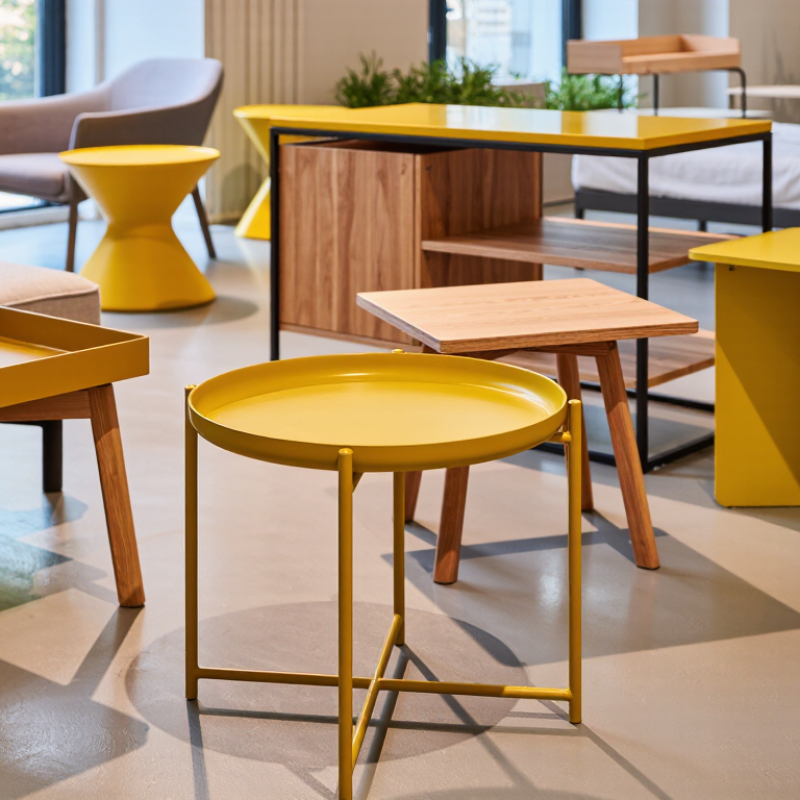
What Defines a Yellow Side Table in 2026?
What Defines a Yellow Side Table in 2026?
A yellow side table is defined by more than its paint color. It combines a useful footprint, stable construction, and a finish that suits its intended room. In practice, buyers should check the tabletop diameter, leg clearance, weight capacity, and surface resistance to spills. A soft butter-yellow finish can brighten a dim corner; a saturated ochre may feel more grounded beside dark upholstery. Color alone is insufficient. Ask for finish samples when possible, since screens can distort yellow tones. Also, “yellow” varies widely between suppliers, and that can make product comparisons less straightforward than expected.
Market context matters, but it does not prove a specific color is trending. Grand View Research valued the global furniture market at USD 747.72 billion in 2023 and projected continued growth through 2030. That broad figure signals a large, competitive category, not verified demand for yellow tables. For global purchasing, compare materials, packaging dimensions, care instructions, and documented quality checks. A compact table may travel efficiently, yet thin legs or a glossy top can show wear quickly. These trade-offs deserve a closer look.
Tips: Place a sample near the room’s actual lighting before choosing a shade. Check that the table stays steady on the floor, and request clear images of edges, joints, and the underside. A small detail, but it matters.
Which Styles and Materials Suit Different Spaces?
A yellow side table should suit the room before it becomes an accent. In compact apartments, choose a slim, open-legged design in soft butter yellow; it keeps the floor visible and avoids crowding a narrow sofa. A rounded top works well beside beds and children’s reading chairs, where sharp corners can catch sleeves or knees. For spacious living rooms, a deeper ochre or mustard table gives more visual weight. Small rooms need restraint.
Material choice depends on use and climate. Powder-coated steel handles frequent wiping in busy entryways, while sealed solid wood feels warmer beside a fabric armchair. Wood can move as humidity changes, so check its finish and joinery before buying. The U.S. Environmental Protection Agency recommends keeping indoor relative humidity ideally between 30% and 50%; it is a useful benchmark, not a universal climate rule. In humid homes, avoid unfinished wood. Ceramic tops resist stains, but they can chip if struck.
Durability matters, even for a small piece. The 2024 Global Status Report for Buildings and Construction estimates that buildings and construction accounted for 37% of global energy- and process-related carbon emissions in 2022. That figure does not measure side tables, but it supports choosing repairable furniture and responsibly sourced materials. Ask suppliers about replacement parts and finish repair. Pale yellow paint can show scuffs sooner than patterned veneer. Not perfect. A sample beside the actual sofa, checked in morning and evening light, can prevent an expensive color mismatch.
How Do Size, Storage, and Finish Affect Selection?
Choosing a yellow side table starts with its footprint, not its shade. Measure the sofa arm, nearby walkway, and available floor space before comparing styles. A compact table around 40 centimetres wide may suit a narrow apartment, while a broader top can hold a lamp and a glass without crowding them. Check height, too. A tabletop close to the sofa seat is easier to reach than one that sits noticeably lower. Measure twice.
Storage changes how useful the table feels each day. An open shelf keeps books and a charging cable visible, but can look cluttered quickly. A drawer hides small items and gives the room a calmer appearance. For buyers sourcing across regions, confirm internal dimensions rather than relying on product photos; a drawer may be shallower than expected. Also check whether handles or shelves affect assembly and packing needs.
Finish affects both colour and upkeep. Yellow can appear softer beside warm wood, or sharper against cool grey walls. Request a finish sample when possible, since screens and room lighting can shift the shade. Matte surfaces tend to show fewer reflections, while glossy finishes can be easier to wipe but reveal fingerprints. I would not assume that a brighter yellow always makes a room feel cheerful; in a dim corner, it may look heavier than expected. Consider the table under morning and evening light before settling on a finish.
What Should Global Buyers Check for Quality and Safety?
Top Yellow Side Tables for Global Buyers in 2026
A bright yellow finish can look warm in a showroom but appear sharper under cool warehouse lighting. Ask for a physical sample, then compare it with approved color references in daylight and indoor light. Check the surface for thin patches, bubbles, scratches, or uneven edges. On painted or coated metal, ask how the finish is tested for adhesion and wear. Wood tables should have smooth edges and joints without gaps or loose hardware. Small details matter.
Tips: Request clear photos of the underside, leg connections, and packaging. Confirm the table’s tested load capacity and ask for relevant safety or quality reports for your destination market. Press gently on each corner to check for wobble, and inspect feet or floor pads for secure fitting. If the table is tall or unusually narrow, assess its stability on a level floor. Ask for proof.
A reliable supplier should give consistent specifications, not just polished product images. Compare actual dimensions, materials, finish options, and packing details across samples and production units. Carton protection matters: crushed corners can expose legs or chip the finish during transit. I would also check whether touch-up materials are available, though this detail is easy to overlook. Yellow can vary slightly between batches, so agree on acceptable color variation before confirming a large order.
How Do Sourcing, Shipping, and Sustainability Shape Purchasing?
For global buyers, sourcing a yellow side table starts with more than color. Request a finished sample and inspect it in daylight; mustard, ochre, and lemon shades can look very different online. Ask suppliers to document the wood or metal type, coating, dimensions, and load capacity. Check whether the yellow finish varies between production batches. Small details matter. A sample may still differ from a full production run, so confirm acceptable color tolerances in writing.
Shipping choices affect both cost and condition on arrival. Compare assembled and flat-packed options, including the time needed for local assembly. Ask for carton dimensions, packed weight, and photos of drop-test procedures. These details help estimate freight and warehouse handling before an order is placed. Leave room in delivery schedules for port delays or damaged cartons. It is easy to underestimate the space a sturdy table needs.
Sustainability claims deserve specific evidence. Buyers can ask for material origins, recycled-content records, and details about coatings, rather than relying on broad environmental language. Durable joints, replaceable feet, and repairable surfaces can extend a table’s useful life. Yet a custom yellow shade may create leftover stock if demand shifts. That trade-off is worth discussing before production, even when the color looks perfect in a sample.