What Are Polyethylene Floats?
Polyethylene Floats are buoyant components commonly made from durable polyethylene, often through rotational molding. Their hollow shells can support docks, pontoons, marina walkways, and aquaculture equipment. Up close, a float may look simple: a molded body, sealed seams, and mounting points exposed to sun, spray, and repeated loading. Yet its performance depends on more than shape. Wall thickness, resin grade, UV stabilization, internal structure, and installation all matter.
The scale of plastics production helps explain why material selection deserves careful attention. PlasticsEurope’s Plastics—the Fast Facts 2024 report estimates that global plastics production reached 413.8 million tonnes in 2023. That figure covers plastics broadly, not polyethylene floats specifically, and should not be mistaken for float-market data. It does, however, underline the importance of evaluating plastic products by service life, maintenance needs, and end-of-life options.
Polymer scientist Dr. Chris DeArmitt is known for urging evidence-based assessment of plastics and their impacts. In paraphrase, his perspective is useful here: judge a material by measured performance across its life cycle, not by assumptions alone. Built for buoyancy. This guide explains what polyethylene floats are, how their construction affects use, and which specifications buyers should check. It also considers limitations, including puncture risk, aging from sunlight, and the need to confirm load capacity with manufacturer data. A float that looks robust on shore still needs documented ratings for the water conditions it will face.
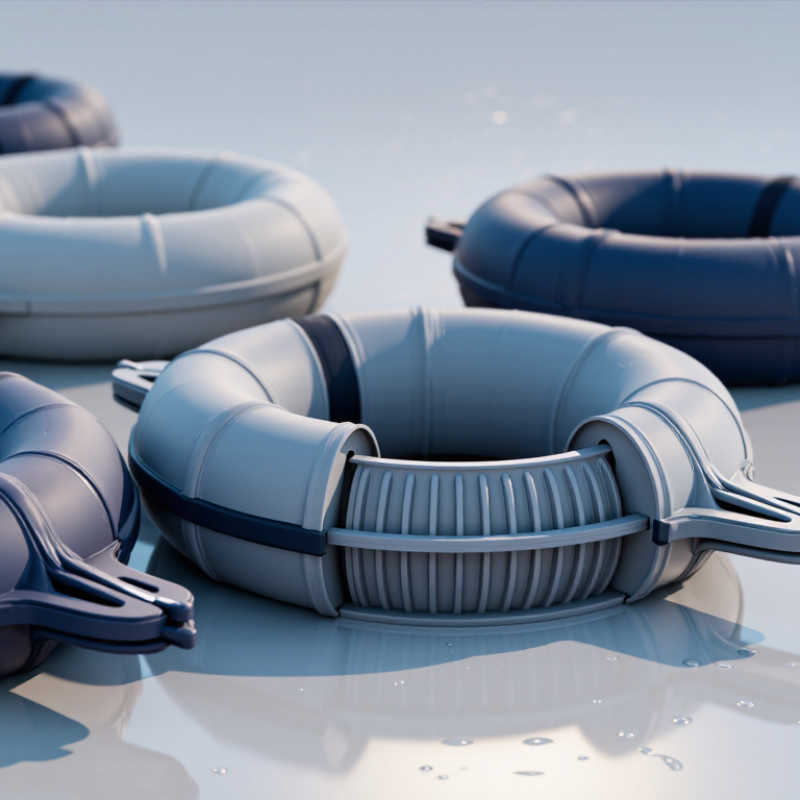
Polyethylene Floats Defined: Hollow or Foam-Filled Buoyancy Units
Polyethylene floats are buoyancy units made with a durable plastic outer shell. They may be hollow or filled with buoyant foam. A hollow float relies on its sealed interior to displace water; a foam-filled float uses closed-cell material inside the shell. Both have limits.
Hollow units are often lighter and may suit docks, pontoons, or other structures where weight matters. Their performance depends on the shell staying intact and sealed. Foam-filled designs can retain buoyancy if the outer shell is punctured, but they are typically heavier and may be harder to repair. Neither construction automatically guarantees a particular load capacity. Size, wall thickness, foam density, water conditions, and how the float is attached all matter.
Look closely at seams, mounting points, and exposed surfaces before choosing or installing a float. A small crack near a bolt can let water enter a hollow unit, while repeated rubbing against a dock can wear down either type. Small details matter. Check the manufacturer’s stated capacity and inspect floats periodically for damage or shifting. In practice, selecting the right unit can involve trade-offs; the lightest option is not always the most reassuring one.
What Are Polyethylene Floats?
Polyethylene floats are buoyancy units with a durable plastic shell. They may be hollow or filled with buoyant closed-cell foam.
Theoretical Gross Buoyancy by Displaced Volume
How to read this chart: Buoyancy depends on the float’s external volume, not whether it is hollow or foam-filled. Values use water densities of approximately 1.000 kg/L for fresh water and 1.025 kg/L for seawater. These are gross figures: subtract the float’s own weight and attached hardware to estimate usable payload.
Common Float Materials: HDPE Density of Approximately 0.94–0.97 g/cm³
Polyethylene floats are buoyant structures often made from high-density polyethylene, or HDPE. HDPE commonly has a density of approximately 0.94–0.97 g/cm³, below the density of freshwater. This difference helps a sealed float displace water and support a load. But polymer density is not the same as a float’s load capacity. The float’s size, wall thickness, shape, and fittings all matter. Small details matter.
Consider a dock float sitting low beside a dock after equipment has been added. Its HDPE may still fall within the stated density range, yet the added weight changes how much water it must displace. Internal compartments can help limit water entry if the shell is damaged, though construction quality remains important. I would not treat the density range as a guarantee; it is a useful material reference, not a complete buoyancy calculation. For a specific application, compare the float’s rated capacity with the expected load, including people, gear, and changing water conditions.
Float Construction: Rotomolded Shells, Sealed Chambers, and Foam Cores
What Are Polyethylene Floats?
Float Construction: Rotomolded Shells, Sealed Chambers, and Foam Cores
Many polyethylene floats start as a hollow shell made by rotational molding. Heat and rotation spread softened plastic around a mold, forming a continuous outer body. The result has no seam running along its sides, though openings and fittings still need careful sealing. Wall thickness and shape depend on the design. Details matter.
Inside, a float may rely on sealed air chambers, buoyant foam, or both. Sealed chambers keep water out when the shell and closures remain intact. Foam-filled designs add buoyancy inside the shell and may limit water movement if the exterior is punctured. But foam is not magic. Damage can still reduce performance, and a filled float may be heavier or harder to inspect. Not every float uses both systems.
Construction affects maintenance, too. Check plugs, attachment points, and the shell for cracks or distortion. A small leak can be difficult to spot at first, so changes in draft or unusual waterlogging deserve attention. In practice, the best design depends on load, exposure, and how easily the float can be checked. Even a robust shell needs sensible inspection.
Buoyancy Basics: 1 m³ of Fresh Water Provides About 1,000 kg of Gross Displacement
What Are Polyethylene Floats?
Buoyancy Basics: 1 m³ of Fresh Water Provides About 1,000 kg of Gross Displacement
A polyethylene float rises by displacing water. The U.S. Geological Survey’s Water Science School explains that one liter of water has a mass close to one kilogram. So, a fully submerged volume of 1 m³ displaces roughly 1,000 kg of fresh water. That is gross displacement. It is not usable payload. The U.S. Army Corps of Engineers’ Coastal Engineering Manual (EM 1110-2-1100) describes buoyancy through displaced-water volume, the same principle behind practical float sizing.
A sealed polyethylene float cannot safely carry the full theoretical 1,000 kg. Its shell, fittings, attached frame, and any trapped water all consume capacity. For example, if the complete float assembly weighs 120 kg, the simple static remainder is about 880 kg before adding a safety margin. Not a design load. Wave action, uneven loading, water temperature, and the desired freeboard can reduce practical capacity further. Picture a dock corner dipping when several people gather there: the float may remain buoyant, yet sit too low for comfortable use. Check manufacturer test data where available, and verify the assembled system’s weight and operating conditions. The arithmetic is simple; real installations deserve a second look.
Applications and Selection: Compare Load Ratings, Dimensions, and UV Protection
Polyethylene floats support docks, work platforms, floating pipes, and small access walkways. Compare rated load with the load actually carried, including people, equipment, and shifting cargo. A float’s gross buoyancy is not its usable capacity: subtract its own weight, then allow reserve for waves and uneven loading.
NOAA gives typical seawater density as about 1,025 kg/m³, versus roughly 1,000 kg/m³ for freshwater. So 100 litres of fully submerged displacement provides about 102.5 kilograms of gross buoyancy in seawater, before the float’s weight is deducted. Small details matter. Check whether a published rating describes one float or a complete assembly.
Dimensions determine more than fit. A wider float can improve lateral stability, while length and shape affect how loads spread across a dock. Confirm connection spacing and waterline height against the frame; a few centimetres can change how a platform sits.
For outdoor use, ask whether the polyethylene includes UV stabilizers and what test supports the claim. ASTM G154 describes accelerated fluorescent-UV exposure with moisture cycles. It is a useful comparison method, not a direct promise of years outdoors. Sunlight, heat, abrasion, and local conditions still matter.
A glossy surface may look reassuring, but it does not prove UV resistance. Compare test details, wall thickness, load-rating conditions, and replacement access before choosing. The weakest connection can become the real limit.