
A Chemical Blending Tank is more than a large container with an agitator. It is a controlled processing vessel designed to combine liquids, powders, additives, or compatible chemical ingredients. Its performance depends on tank geometry, mixer design, temperature control, material selection, and accurate dosing.
Mixing specialist Edward L. Paul described mixing as “the reduction of nonuniformities in order to achieve a desired process result.” This principle explains the tank’s real purpose. A properly designed Chemical Blending Tank creates consistent concentration throughout the batch. It can also reduce settling, improve heat transfer, and support repeatable production. Picture a stainless-steel vessel holding 5,000 liters of liquid. Inside, an impeller turns steadily while sensors monitor temperature and level. Small design decisions matter. A poorly positioned inlet can create dead zones. An oversized mixer may waste energy and damage sensitive ingredients.
Safety and reliability must guide every specification. Engineers should verify chemical compatibility, pressure limits, cleaning requirements, and emergency controls. Operators also need clear procedures and practical training. A tank that performs well in a laboratory may fail under full-scale production conditions. That gap deserves attention.
The technology is not flawless. Even advanced systems can produce uneven blending when viscosity changes unexpectedly. Regular inspection, sampling, and process validation remain essential. This article explains how Chemical Blending Tank systems work, which components influence performance, and how engineers can choose a safer, more dependable design for real industrial applications.
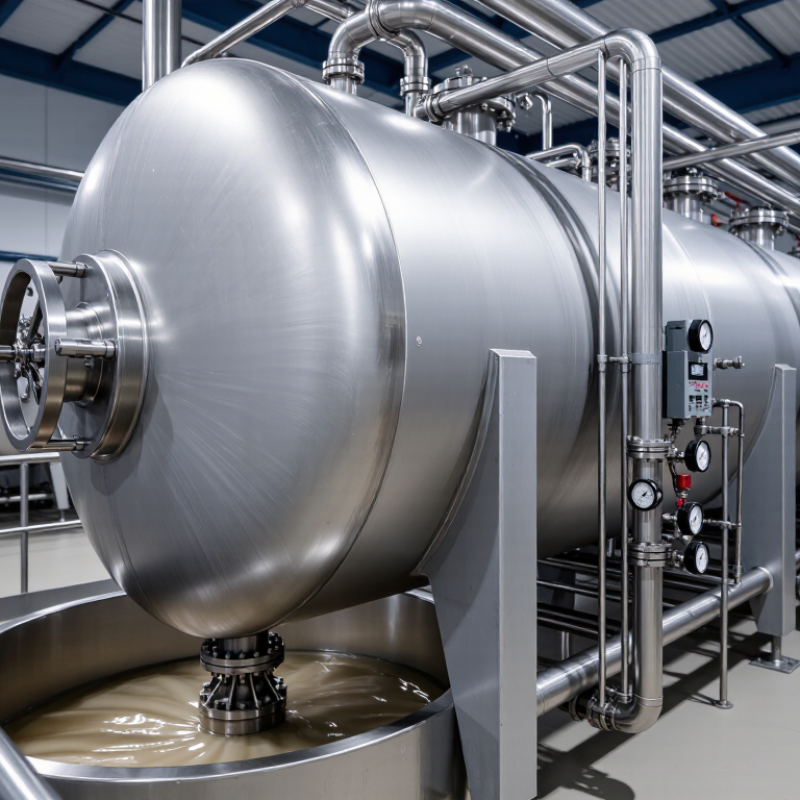
What Is a Chemical Blending Tank?
Definition and Purpose of a Chemical Blending Tank
A chemical blending tank is a vessel designed to combine two or more substances evenly. It may handle liquids, powders, or concentrated additives. An agitator creates movement inside the tank and supports consistent mixing. The main purpose is to produce a uniform batch with controlled composition, temperature, and concentration. Unlike a simple storage tank, it actively supports the blending process.
In practice, tank selection begins with the chemical properties, not capacity alone. Engineers review viscosity, corrosiveness, density, temperature, and batch size. They also examine the tank lining, seals, impeller design, and cleaning access. A poorly matched impeller can leave heavy material near the bottom. That wastes time and may create an uneven product. Small details matter.
A dependable blending system may include level sensors, temperature controls, dosing equipment, and ventilation. Secondary containment helps limit risks from accidental leaks. Operators should follow written procedures and verify instrument calibration regularly. Experienced teams also inspect unusual foam, heat buildup, or changes in mixing sound. These signs can reveal process problems early. No design is perfect. Real operations can be messier than diagrams suggest, especially when material behavior changes between batches.

A chemical blending tank is a controlled vessel for combining liquids, powders, or additives into a consistent mixture. Its performance depends less on appearance than on internal movement. During equipment reviews, engineers usually examine mixing time, viscosity, temperature, and cleaning access together. A polished shell alone proves very little.
The main components include the tank shell, motor, gearbox, agitator shaft, impellers, inlet ports, outlet valve, and access manway. Internal baffles reduce swirling and improve circulation. Without them, the liquid may rotate as one mass while the center remains poorly mixed.
Impeller selection must match the product. A pitched-blade design can create axial flow, while a turbine can provide stronger radial movement. Some applications need a low-speed anchor for thick materials. Others need a high-speed dispersing element.
Temperature control may come from a jacket or internal coil. Sensors should sit where readings represent the actual bulk liquid, not a stagnant corner. Mechanical seals help limit leakage around the rotating shaft. They also need inspection space and a realistic maintenance plan.
I have seen designs focus heavily on mixing power and overlook drainability. That is an expensive weakness. Sloped bottoms, smooth welds, and well-positioned outlets help reduce residue. Still, no internal layout is perfect. The final design should be tested with the real formulation, since small viscosity changes can alter circulation dramatically.
A chemical blending tank is a controlled vessel for combining liquids, powders, or additives into a uniform mixture. Its operation depends on more than simple stirring. Operators select the tank material, impeller design, temperature range, and feed sequence according to chemical compatibility and viscosity. A poorly chosen impeller can leave heavy material at the bottom.
During blending, measured ingredients enter through dedicated ports or metering systems. The agitator creates circulation, while baffles reduce swirling and improve vertical movement. Sensors monitor temperature, level, pressure, and sometimes conductivity or density. Automated controls can adjust mixing speed and dosing rates, but manual checks still matter. Instruments drift. People miss details.
The United Nations Global Chemicals Outlook II projects global chemical production could double by 2030 and triple by 2050, compared with 2017. That growth increases demand for repeatable blending and stronger process control. The U.S. Environmental Protection Agency’s 2022 TRI analysis recorded about 30.5 billion pounds of production-related chemical waste managed by reporting facilities. This figure reinforces the value of closed transfer lines, accurate batching, leak detection, and documented cleaning. Good blending is not only about achieving a target concentration. It also means preventing heat buildup, avoiding dead zones, and maintaining traceable operating records. A practical design review should question every assumption, especially when materials change.
A chemical blending tank combines liquids, powders, or additives into a uniform mixture. The following chart shows a representative operating sequence for a 1,000-liter aqueous batch.
The agitator begins after the main liquid is charged, additives are dosed gradually to reduce clumping, and blending continues until sampling confirms the required consistency. Actual times depend on viscosity, formulation, temperature, impeller design, and tank geometry.
A chemical blending tank combines liquids, powders, or additives under controlled mixing conditions. Its material and configuration must match the chemistry, temperature, viscosity, and required shear. The U.S. EPA’s 2020 Chemical Data Reporting database lists more than 8,000 chemical substances. That range shows why one universal tank design is unrealistic. No material is perfect.
316L stainless steel suits many hygienic and moderately corrosive formulations. It offers a smooth surface and supports easier cleaning. Carbon steel can reduce initial costs, but it may require a compatible lining. Polyethylene, polypropylene, and fiberglass-reinforced plastic resist selected acids and alkalis. Their temperature and mechanical limits need careful checking. A vertical tank with a top-entry agitator is common for general blending. Baffles improve circulation and reduce vortexing. Jacketed tanks manage heating or cooling. Horizontal tanks can help when headroom is limited, although solids may settle more easily. API 650 and ASME Section VIII provide useful design references, but neither replaces a process-specific review.
Tips: Define the worst-case chemical, not only the normal recipe. Check pH, density, viscosity, temperature, and cleaning chemicals. Ask for corrosion data at operating temperature. A vendor chart may look convincing, yet actual mixtures can behave differently. Leave enough space for foaming and thermal expansion. Inspect welds, gaskets, coatings, and agitator seals during commissioning. I would also test the smallest practical batch, because scale-up often exposes weak mixing zones.
| Tank Material or Configuration | Key Characteristics | Typical Chemical Compatibility | Common Tank Configuration | Advantages | Important Considerations |
|---|---|---|---|---|---|
| High-Density Polyethylene (HDPE) | Lightweight thermoplastic with good impact resistance and corrosion resistance. | Many dilute acids, alkalis, salts, detergents, and water-based formulations. | Vertical open-top or closed-top tank; flat, cone, or dished bottom. | Does not rust, relatively easy to fabricate, and generally lower installation cost than metal tanks. | Operating temperature, chemical concentration, and ultraviolet exposure must be checked before selection. |
| Polypropylene (PP) | Thermoplastic material with good chemical resistance and a higher temperature range than many polyethylene grades. | Selected acids, alkalis, salts, and other corrosive aqueous chemicals. | Vertical process tank with top-entry agitator and bottom outlet. | Useful for applications where chemical resistance and moderately elevated temperatures are required. | Resistance varies by chemical and temperature; mechanical strength can decrease at higher temperatures. |
| Fiberglass-Reinforced Plastic (FRP) | Composite material consisting of resin reinforced with glass fibers; the resin determines much of the chemical resistance. | Many corrosive liquids, including certain acids, alkalis, and salt solutions, when the correct resin system is used. | Vertical tank, horizontal tank, or scrubber-style vessel with internal lining or corrosion barrier. | Good corrosion resistance with a favorable strength-to-weight ratio. | Resin selection, laminate construction, temperature, and inspection of the corrosion barrier are critical. |
| Stainless Steel | Metallic construction offering high mechanical strength, cleanability, and a smooth internal surface. | Many water-based chemicals, process fluids, and formulations where sanitation or durability is important. | Closed-top vertical tank with sanitary fittings, spray ball, or bottom-entry discharge. | Strong, durable, suitable for cleaning systems, and available in polished or sanitary finishes. | Not universally corrosion-proof; chlorides, strong acids, and other chemicals may cause pitting or stress corrosion. |
| Carbon Steel with Lining | Structural steel tank protected by a compatible internal lining such as rubber, polymer, or glass-based material. | Specific corrosive chemicals, provided the lining is compatible with the service conditions. | Large vertical storage or blending tank with lined interior and external structural shell. | High structural strength and practical for large-volume installations. | Lining damage can expose the steel; regular inspection is needed, especially around mixers and outlets. |
| Glass-Lined Steel | Steel vessel with a fused glass coating that separates the process liquid from the metal shell. | Many aggressive and high-purity chemical services, subject to the coating manufacturer's compatibility data. | Closed vessel with top-entry agitator, baffles, and specialized glass-lined fittings. | Strong corrosion resistance and a nonporous internal surface. | Glass surfaces are rigid and can be damaged by impact, thermal shock, or unsuitable solids handling. |
| Open-Top Blending Tank | Tank with an accessible upper opening for charging solids, liquids, or removable equipment. | Nonvolatile or low-hazard formulations that do not require full containment. | Tank with removable cover, top-entry mixer, and optional grate or platform. | Easy loading, visual inspection, cleaning, and equipment access. | May require ventilation, splash control, dust management, or a cover depending on the chemical. |
| Closed-Top Blending Tank | Sealed or covered vessel designed to limit emissions, contamination, and operator exposure. | Volatile, odorous, moisture-sensitive, or hazardous liquids, subject to process requirements. | Closed tank with vent, manway, level instrument, feed ports, and agitator seal. | Improved containment and better control of vapors and environmental exposure. | Requires suitable venting, pressure or vacuum protection, and compatible seals and fittings. |
| Vertical Tank with Top-Entry Agitator | Upright cylindrical vessel with a mixer mounted through the top head. | General-purpose liquid blending, suspension, dilution, and chemical formulation. | Flat-bottom, dished-bottom, or cone-bottom vessel with baffles and one or more impellers. | Efficient use of floor space and flexible mixer arrangement. | Agitator speed, impeller type, baffle design, viscosity, and liquid height must be matched to the process. |
| Horizontal Blending Tank | Elongated vessel arranged horizontally, often supported on saddles or a frame. | Lower-viscosity liquids, mobile mixing processes, and applications with limited vertical clearance. | Horizontal cylindrical tank with side-entry or top-mounted mixer. | Suitable for low buildings and can provide a relatively low liquid working height. | May require careful mixer placement to prevent dead zones and uneven blending. |
| Cone-Bottom Tank | Tank with a sloped bottom that directs material toward a central or offset outlet. | Liquids containing suspended solids, powders, crystals, or materials requiring complete drainage. | Vertical tank with cone bottom, bottom outlet, and top-entry agitator. | Improves drainage, solids removal, and cleanout compared with a flat-bottom design. | Requires adequate support height and may need specialized mixer positioning for the cone area. |
| Jacketed Blending Tank | Tank fitted with an external jacket or heat-transfer surface for heating or cooling. | Temperature-sensitive formulations, viscous liquids, and processes requiring controlled thermal conditions. | Vertical or horizontal tank with jacket, insulation, agitator, and temperature sensor. | Provides controlled heat transfer without placing a heating element directly in the product. | Heat-transfer-fluid selection, jacket pressure, thermal expansion, and product mixing must be evaluated. |
What Is a Chemical Blending Tank?
Industrial Applications and Selection Factors
A chemical blending tank combines liquids, powders, or additives into a consistent mixture. Its design supports controlled mixing, heat transfer, and safe material handling. In industrial plants, these tanks serve water treatment, coatings, agriculture, food processing, and pharmaceutical production. Some handle low-viscosity liquids, while others process thick slurries that move slowly.
Selection begins with the chemical itself. Engineers check corrosion behavior, viscosity, density, temperature, and required batch time. Stainless steel may suit many applications, but aggressive chemicals can require lined steel or specialized polymers. The impeller also matters. A high-shear mixer disperses powders quickly, while a gentle paddle protects sensitive materials. Tank volume should match production demand, cleaning methods, and available floor space. Bigger is not always better.
A perfect blend is rarely instant. That assumption often fails during scale-up. Plant engineers should review laboratory data, mixing patterns, dead zones, and motor load before approving a final design. Temperature sensors, level controls, and sampling ports improve process reliability. They also help operators detect changes early.
Tips: Confirm chemical compatibility before selecting construction materials. Test the actual formulation, not only a substitute liquid. Leave room for expansion and foam. Document mixing speed, temperature, and batch time for repeatable production. During commissioning, inspect the tank under real operating conditions. Small adjustments may still be necessary.
© 2023 JEM Electronics, Inc. – United States Cable Assembly. All rights reserved.