In heavy-duty equipment, wear rarely arrives all at once. It starts as a polished strip inside a chute, a thinning patch beneath a hopper, or repeated impact near a transfer point. These small signs can lead to costly maintenance if they go unnoticed. Choosing a Hardox Liner can help manage abrasion and impact in demanding material-handling conditions. But the steel grade alone does not determine service life.
A sound selection begins with the material being moved, its particle size, moisture, flow speed, and impact angle. A liner handling sharp rock may face different wear patterns from one carrying wet aggregate. Fit, thickness, support, and installation also matter. Small details count. Even a tough plate can disappoint if material builds up behind it or the design concentrates impact in one spot. That is worth remembering.
Hardox wear-resistant steel is valued for combining hardness with strength, but actual performance depends on the grade and application. Compare expected wear against plate weight, fabrication needs, replacement access, and equipment limits. Ask suppliers for product data and confirm that the proposed solution suits the operating conditions. Site inspection helps, too: uneven wear marks can reveal where the design needs attention. No liner lasts forever. The practical goal is a reliable fit that reduces avoidable wear and makes maintenance more predictable.
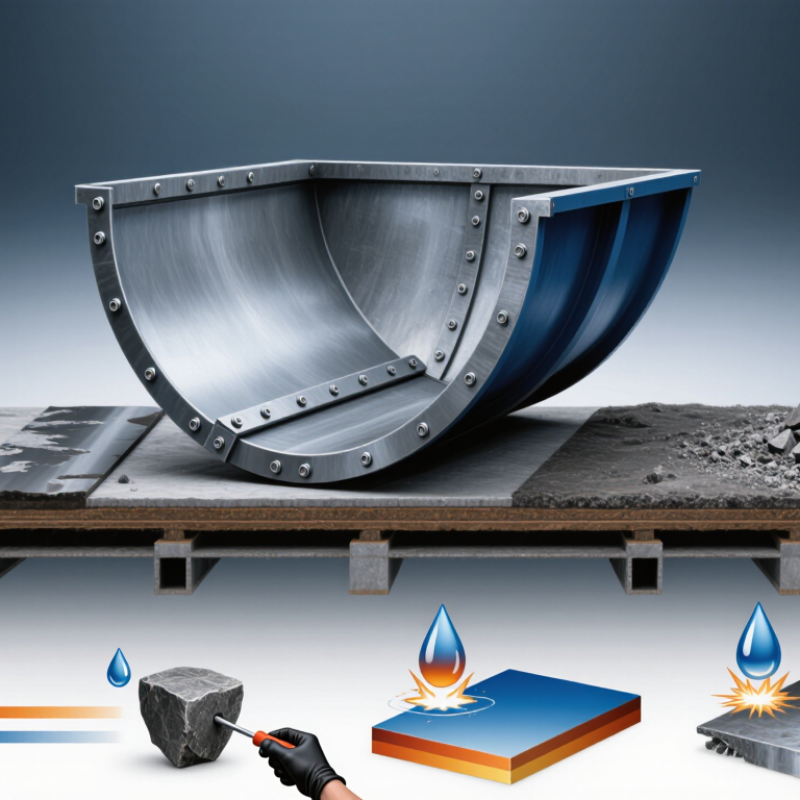
An abrasion-resistant liner is a replaceable steel plate fitted inside equipment such as dump bodies, hoppers, and chutes. Its job is to take the repeated scraping and impact that would otherwise wear the main structure. The steel is made with a controlled alloy composition, then cast and hot-rolled into plate. Heat treatment typically involves hardening by rapid cooling, followed by tempering to balance hardness with toughness. Too hard, and a plate may crack under impact; too soft, and it can wear quickly. The balance matters.
After heat treatment, plates are cut and formed to match the equipment. Brinell hardness testing, described in ISO 6506-1, helps verify a plate’s resistance to indentation, but hardness alone cannot predict service life. Impact, material flow, plate thickness, and installation all matter. World Steel Association’s World Steel in Figures 2024 reports 1,892.2 million tonnes of crude steel production in 2023; that industry scale provides context, not proof that any individual plate meets a particular specification. Ask for the grade, hardness range, and test documentation. Real service conditions are messier than a catalogue chart.

A heavy-duty liner needs more than a hard surface. Published mill datasheets commonly place AR400-class plate around 360–440 HBW and AR500-class plate around 470–530 HBW. These are typical ranges, not guarantees for every thickness or heat. ASTM E10-23 provides the Brinell hardness test method used to verify such values. Hardness matters. Higher hardness can slow abrasive wear from crushed rock sliding across a chute, but it may also reduce resistance to impact damage. A liner taking sharp blows from large stone needs a balanced specification, not the highest number on a sheet.
Yield strength helps a plate resist bending under load. Toughness helps it tolerate impacts without cracking, while thickness and support spacing affect how loads reach the liner. ASTM A370 describes mechanical testing methods, including Charpy impact testing, which can help assess impact behavior.
Not always. A hardness figure alone cannot predict service life; particle shape, moisture, impact angle, and maintenance all matter. Welding also needs care, since heat input and consumables can affect the heat-affected zone. Compare test results at the specified plate thickness, and check whether the test temperature reflects the site.
The overlooked detail is often the support structure behind the plate.
A heavy-duty liner faces two kinds of damage: sliding abrasion and sudden impact. High-hardness, quenched-and-tempered steel resists grooves as stone, ore, or scrap moves across its surface. Hard particles have a harder time cutting into the plate, so material loss can slow in chutes, hoppers, and truck bodies. That matters.
Impact resistance comes from more than surface hardness. The steel also needs enough toughness to absorb energy when a rock drops onto it. A well-matched liner can resist denting and cracking under repeated knocks, while its thickness and support structure help spread the load. Still, hardness is not magic. A sharp, heavy impact can damage any plate, especially near an unsupported edge or a poorly fitted joint.
In practice, performance depends on the material being carried, its size, and the drop height. Fine, abrasive sand wears differently from large, angular rock. Fit-up matters too: gaps can let material strike the base structure, and loose fasteners may create local movement. Inspect high-wear zones for grooves, cracks, and shifted sections. Even a durable liner needs suitable installation and timely checks.
Abrasion-resistant steel liners are commonly used in mines, quarries, and aggregate plants, where rocks repeatedly strike or scrape equipment. They protect dump truck bodies, loading buckets, hoppers, and transfer chutes. At a busy transfer point, sharp stone can wear a bare steel surface quickly. A replaceable liner helps limit damage to the main structure.
Ports and bulk-handling sites use liners in ship loaders, conveyor chutes, and storage bins carrying coal, ore, or gravel. Cement plants may install them in material hoppers and feeder sections. Recycling facilities also use liners where mixed debris slides through sorting equipment. The right choice depends on the material. Wet clay, for example, may stick rather than simply abrade the surface.
Thickness and shape matter. A liner that is too heavy can add unwanted load, while a poorly fitted panel may loosen under repeated impact. It depends. Operators should consider impact angle, material size, and how often the equipment runs before specifying a liner. Field inspections can reveal uneven wear, especially near corners and joints. Not every site needs the hardest available plate; sometimes easier replacement or a better fit matters more.
| Application | Typical Wear Challenge | Why a Wear-Resistant Steel Liner Can Help | Common Lining Locations |
|---|---|---|---|
| Mining and quarrying | Repeated impact and sliding abrasion from blasted rock, ore, and crushed stone. | A hard, abrasion-resistant surface can slow material loss and extend service intervals when the grade and thickness are matched to the duty. | Chutes, hoppers, bins, truck bodies, and crusher feed areas. |
| Material handling | Continuous contact with bulk solids, often concentrated at transfer points and bends. | Replaceable liner plates protect the supporting structure and can make worn areas easier to maintain. | Transfer chutes, conveyor loading zones, diverters, and discharge points. |
| Construction and earthmoving | Abrasive soil, gravel, and rock wear on equipment exposed to loading and dumping cycles. | Wear-resistant plate can help reduce wear in high-contact areas while keeping equipment weight and fabrication needs in view. | Bucket interiors, blades, dump bodies, and material-handling attachments. |
| Cement and aggregate processing | Dust and sharp, moving particles abrade equipment during conveying, storage, and processing. | Appropriately selected liners can protect equipment surfaces and support planned maintenance in high-wear zones. | Aggregate hoppers, screens, feed chutes, and transfer ducts. |
| Recycling and waste processing | Mixed materials can cause abrasive wear, with occasional impact from bulky or irregular items. | A liner can provide a replaceable wear surface; design should account for impact, material flow, and attachment method. | Shredder feed areas, sorting chutes, skips, and transfer bins. |
| Agriculture and bulk storage | Repeated movement of grain, feed, fertilizer, or other bulk materials can wear contact surfaces. | Wear-resistant plate may be useful where abrasion is significant, subject to corrosion, hygiene, and material-compatibility requirements. | Hoppers, elevator transitions, discharge chutes, and trailer floors. |
Selection depends on the material being handled, impact severity, abrasion pattern, plate thickness, fabrication requirements, and operating conditions. Confirm the appropriate steel grade and design with a qualified materials or engineering professional.
Choose an abrasion-resistant steel liner by matching it to the material and impact pattern, not hardness alone. Record feed size, drop height, moisture, and whether material slides or strikes the surface. A very hard plate may wear slowly under sliding abrasion but crack under repeated impact. For impact-sensitive applications, review Charpy test results; ASTM E23 specifies a method for measuring notched-bar impact toughness. Check plate thickness, fit, and the proposed welding procedure before installation. Small gaps can trap abrasive material.
Maintenance should be based on measured wear, not guesswork. Record baseline thickness at fixed points, then repeat readings on a schedule that reflects operating hours and material changes. Inspect welds, fasteners, corners, and discharge zones for cracks, looseness, or uneven thinning. NACE International’s 2016 IMPACT study estimated global corrosion costs at US$2.5 trillion annually, or 3.4% of global GDP; it also reported that corrosion-control practices could save 15–35% of those costs. Wet or chemically active service therefore deserves a compatibility check alongside abrasion testing. Still, inspection intervals may need adjustment after the first few readings.
Tips: Mark measurement points on a simple drawing. Photograph the liner during shutdowns. Compare wear rates before changing thickness or grade. Don’t rely on appearance alone.
Select liner hardness to match abrasion and impact conditions, then monitor wear and fasteners regularly.
Indicative hardness ranges: AR-class designations commonly refer to nominal Brinell hardness levels; actual ranges vary by specification, thickness, and supplier. Higher hardness can improve abrasion resistance, but impact conditions, fabrication requirements, and the equipment design also matter. Check material certificates and inspect liner thickness, cracks, and fasteners during routine maintenance.
© 2023 JEM Electronics, Inc. – United States Cable Assembly. All rights reserved.