Who Are the Best Wire Cable Manufacturers in China?
China’s wire cable manufacturers serve power grids, renewable projects, buildings, vehicles, and industrial plants. Choosing among them takes more than comparing prices. A bright product photo cannot reveal conductor purity, insulation consistency, or how a cable performs after years of heat and vibration.
Demand is growing. The International Energy Agency’s Electricity 2024 report says global electricity demand rose 2.2% in 2023 and forecasts average annual growth of 3.4% through 2026. More electricity needs dependable connections. IEA Executive Director Dr. Fatih Birol described the shift this way: “The Age of Electricity is here.” His comment is about the wider energy system, but it helps explain why cable quality matters.
What makes one Chinese supplier a stronger choice? This guide compares manufacturers through practical checks: product range, relevant certifications, testing capabilities, export experience, and evidence of consistent quality. Ask for test reports tied to the exact cable specification. Check conductor material, insulation type, voltage rating, and application conditions. Request samples when appropriate. Small details matter.
There is no universal “best” supplier. A factory suited to high-voltage transmission may not fit a building project or a flexible industrial cable order. Rankings also have limits; published claims do not replace independent verification. A little caution helps. The following overview offers a shortlist and a framework for assessing manufacturers before you request quotations or place an order.
Understanding China’s Wire and Cable Manufacturing Industry
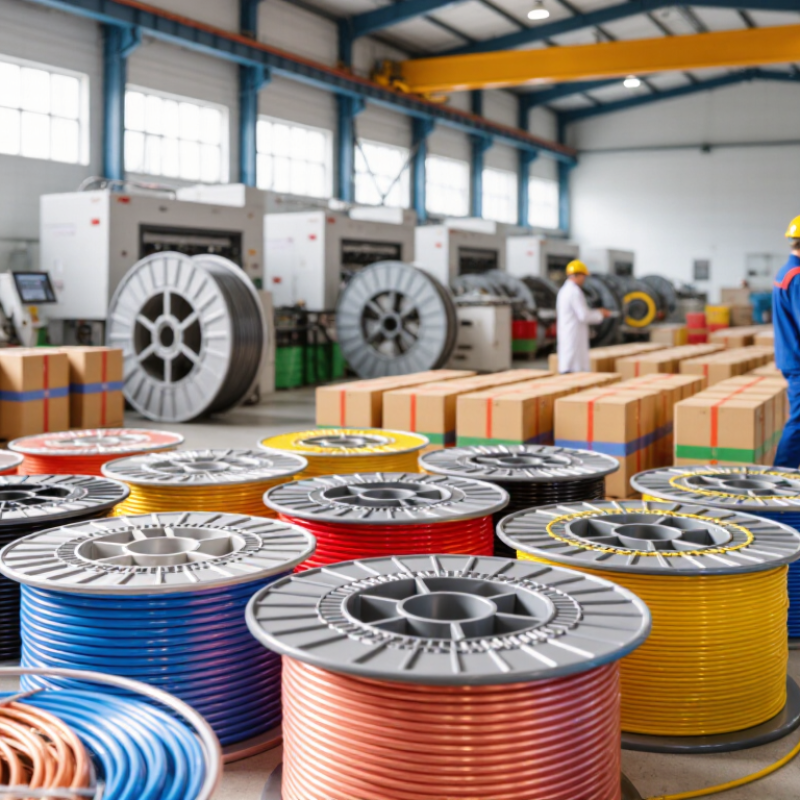
China’s wire and cable manufacturing industry serves construction, power, transportation, telecommunications, and industrial equipment markets. Production ranges from basic building wire to specialized cables designed for heat, moisture, vibration, or demanding installation conditions. Copper and aluminum conductors are common, while insulation and sheathing materials vary by application. The details matter. A cable that looks suitable on a product sheet may not match the installation environment.
Manufacturers differ in their production capabilities, testing procedures, and quality documentation. Buyers can ask how conductor dimensions, insulation thickness, and electrical performance are checked. Requesting test reports, material specifications, and traceability records helps make comparisons more meaningful. Factory visits or independent inspections may offer useful evidence, though neither guarantees consistent quality. A catalogue can look polished; the practical questions are often less tidy. I would also check whether samples match the final production specification, since that point is easy to overlook.
Tips: Define voltage, operating temperature, installation conditions, and required certifications before requesting quotes. Compare samples and documents, not price alone. Ask how defects are handled.
The industry’s scale can offer many sourcing options, but it also makes careful qualification important. Clear specifications reduce misunderstandings between buyer and supplier. Communication matters too. Confirm units, tolerances, packaging, and delivery expectations in writing, especially for custom cable orders.
Criteria for Evaluating Wire and Cable Manufacturers
Choosing a wire and cable manufacturer requires more than comparing prices. Start with the intended use: voltage, operating temperature, installation environment, and expected service life. A supplier should explain how its cable construction matches those conditions. Clear answers matter. Ask for relevant test reports and product specifications, then check that the documents describe the exact cable being quoted.
Look closely at quality controls. Reliable manufacturers can describe how they verify conductor dimensions, insulation thickness, and electrical performance during production. Ask whether batches are traceable and how defects are handled. For a practical check, compare a sample’s markings and dimensions with its specification sheet. Small mismatches deserve questions. Certifications can help, but they should be current and relevant to the product and destination market. Don’t treat a certificate as proof of every claim.
Also evaluate communication, production capacity, delivery planning, and support after shipment. Request realistic lead times and clarify how changes in order volume affect them. References from customers with similar applications can provide useful context, though they are not a guarantee. I would not rely on a polished factory presentation alone; it is easy to overlook routine controls when judging a brief visit. The evaluation takes time. Review the evidence, note uncertainties, and decide whether the manufacturer is willing to address them directly.
Leading Wire and Cable Manufacturers in China
China’s leading wire and cable manufacturers serve construction, energy, transport, and industrial projects. Their strengths often include broad production capacity and access to different conductor, insulation, and sheathing options. Yet a large factory is not automatically the right supplier. Cable performance depends on matching its design to the installation, operating temperature, and expected mechanical stress.
When comparing manufacturers, review technical data sheets, test records, and quality-control procedures. Ask how conductor size, insulation thickness, and batch traceability are checked. A sample inspection can reveal details that a catalog misses, such as uneven printing or rough jacket surfaces. Request clear answers about lead times and packaging, too. Some buyers focus heavily on price; that can obscure the cost of delays or inconsistent specifications. I would also verify claims independently, because polished documents do not answer every question.
Tips: Share the actual operating conditions before requesting a quote. Compare equivalent specifications, not just prices. Keep one point in mind: even a careful review cannot remove every uncertainty.
Comparing Manufacturers’ Products, Certifications, and Capabilities
Choosing the best wire cable manufacturer depends on the cable’s job, not a broad “best” label. Compare conductor materials, insulation types, voltage ratings, temperature limits, and available sizes. A cable for a compact control cabinet may need different flexibility and shielding from one used in a fixed installation. Request product data sheets and sample reports, then check that the details match your intended use. Details matter.
Certifications can indicate that products were assessed against defined standards, but verify the certificate number, issuing body, product scope, and validity. Requirements vary by market and application. A certificate for one cable family may not cover every model. Assess manufacturing capability, too: ask about testing equipment, batch traceability, quality checks, and how production changes are documented. A tidy factory tour is useful, but it cannot replace records. I would also compare lead times and minimum order quantities; these are easy to overlook.
Tips: Share a clear specification and ask for a sample from the proposed production process. Check markings, dimensions, and test results against the documents. Ask for evidence. If answers stay vague, pause before ordering.
Choosing the Right Manufacturer for Your Project
Choosing a wire cable manufacturer in China starts with the conditions on site, not a catalogue. Will the cable run through a hot plant, a damp tunnel, or a crowded equipment room? Define voltage, conductor material, insulation, fire performance, and installation environment before requesting prices. Small omissions matter.
Demand is rising. The International Energy Agency’s Electricity Grids and Secure Energy Transitions report says annual grid investment must exceed USD 600 billion by 2030, roughly double current levels. That scale makes dependable supply and consistent testing essential. Ask potential manufacturers for sample test reports, batch traceability, conductor resistance results, and clear production lead times. Check that certificates match the exact cable type and factory—not merely a similar product. Details count.
A factory visit, or a live video audit, can reveal whether testing equipment is calibrated and records are kept. Request a sample built to your specification, then have it independently tested when the application is critical. Compare the full landed cost, including packaging, inspection, and shipping. The lowest quote may not be the lowest-cost choice. Still, paperwork alone cannot prove careful production; that judgment can be wrong. Talk through a real production schedule and ask how defects are handled before placing a large order.