Blog

China Top Cable Wire Manufacturers and Suppliers

China’s cable wire industry serves construction, energy, telecommunications, transportation, and industrial automation markets. Manufacturers supply copper and aluminum conductors in many sizes, insulation types, and voltage ratings. Some produce standard building wires, while others develop customized cables for harsh environments. Yet supplier capability varies widely.

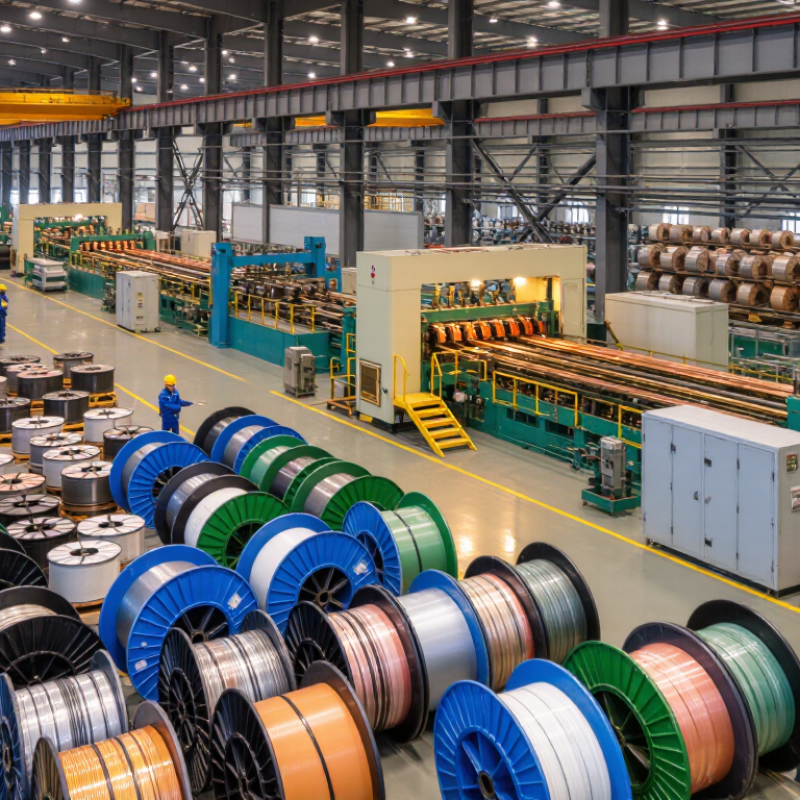
This guide examines China’s leading cable wire manufacturers and suppliers through practical sourcing criteria. It considers production capacity, conductor quality, insulation materials, testing procedures, delivery performance, and after-sales support. Factory experience matters. A reliable supplier should explain its process clearly, from copper rod drawing to final drum packing. Visitors may see testing equipment, aging chambers, spark testers, and neatly labeled cable reels.

Certifications also require careful review. ISO systems can support consistency, but they do not replace product testing or independent verification. Buyers should request current test reports, technical datasheets, sample lengths, and traceable batch numbers. A small sample can reveal conductor flexibility, jacket finish, printing accuracy, and dimensional stability. Packaging deserves attention too. Damaged wooden drums can expose cable ends to moisture during transport.

No ranking remains perfect for every project. Prices, factory capacity, export experience, and material costs change over time. Some suppliers communicate well but lack specialized products. Others offer strong engineering but slower response times. Therefore, this overview balances public information with realistic purchasing considerations. It encourages buyers to compare evidence rather than trust attractive claims. The best choice depends on application, compliance requirements, installation conditions, and long-term service expectations. Careful verification remains essential.
China Top Cable Wire Manufacturers and Suppliers

China’s Cable-Wire Industry: Market Scale, Output, and Export Data

China’s cable-wire industry has become a major manufacturing base for power, construction, telecommunications, and industrial equipment. Its domestic market is commonly valued above RMB 1 trillion, although estimates differ by product scope. Reported annual output often exceeds 60 million kilometers of cable. That figure sounds precise, but inconsistent statistical categories make direct comparisons difficult.

Customs data for HS 8544 indicate that China exported roughly US$30 billion in insulated wire and cable during 2023. Export volume covered low-voltage building wire, control cables, fiber-related products, and high-voltage systems. Demand remains strong in Southeast Asia, Europe, the Middle East, and Africa. Copper and aluminum prices can quickly change export values. Shipping costs and certification requirements also affect final quotations.

Tips: Buyers should check conductor material, insulation type, voltage rating, test reports, and factory production records. Ask for recent export documents, not only catalog claims. A factory may offer attractive pricing but lack experience with your destination’s standards. That risk deserves attention. Specifications should be confirmed before requesting samples, because small differences in cable diameter, shielding, or fire performance can alter project costs.

Cable Classifications: IEC 60228 Conductor Classes 1–5 Explained

China Top Cable Wire Manufacturers and Suppliers

IEC 60228 defines conductor performance through construction, flexibility, and resistance. Class 1 uses one solid wire. It suits fixed wiring with limited movement. Class 2 uses multiple strands, giving better installation flexibility. Classes 3 and 4 appear in some older references, but they are rarely used as current purchasing categories. Always check the edition and project specification. Class 5 uses fine strands for flexible cables, equipment leads, and repeated bending. The standard focuses on conductor resistance, not only strand count. That distinction is often missed.

The IEA Electricity 2024 report expects global electricity demand to grow by about 4% in 2024 and 2025. More power infrastructure increases demand for correctly classified conductors. In practice, Class 2 is common in fixed industrial cables, while Class 5 supports moving machinery. A higher class does not automatically mean better performance. It may increase cost, diameter, and termination difficulty. My practical observation is simple: selecting flexibility without checking installation stress can create avoidable failures.

Tips: Confirm the IEC edition, conductor class, nominal cross-sectional area, and maximum resistance. Ask for routine test records. Class 3 or 4 wording deserves careful review, not automatic acceptance.

China Top Cable Wire Manufacturers and Suppliers – IEC 60228 Conductor Classes 1–5 Explained

IEC 60228 classifies conductors by construction and intended flexibility. In the current classification, Class 1 is solid, Class 2 is stranded for fixed installations, and Class 5 is flexible. Classes 3 and 4 are not separate conductor classes in the current IEC 60228 designation.

The chart shows whether each numbered category is a current IEC 60228 conductor class. A value of 1 means the class is defined in the current classification; 0 means it is not separately designated. Class 6 is also recognized by IEC 60228 as an extra-flexible conductor but is outside the Class 1–5 scope shown here.

Power-Cable Ratings: GB/T 12706, 1–35 kV Systems, and XLPE at 90°C

For China’s 1–35 kV distribution networks, GB/T 12706 is more than a purchasing label. It defines key requirements for extruded-insulation power cables. Select voltage by U0/U and Um, not by nominal voltage alone.

Common ratings include 6/10, 8.7/15, 12/20, 18/30, and 21/35 kV. Ground-fault duration also affects the correct design.

XLPE insulation normally supports a 90°C continuous conductor temperature. Its short-circuit limit is commonly 250°C for up to five seconds, subject to the approved design. This rating does not guarantee safe operation in every installation.

Cable sizing must consider soil thermal resistivity, burial depth, spacing, screen losses, and ambient temperature. A cable may pass a laboratory test yet perform poorly in crowded ducts. That risk is easy to underestimate.

The National Energy Administration reported China’s 2024 electricity consumption at 9.85 trillion kWh, rising 6.8% year on year. The IEA’s Electricity 2024 report also projected global demand growth of about 4% in 2024.

These figures increase pressure on dependable medium-voltage networks. Suppliers should provide GB/T 12706 type-test evidence, routine-test records, conductor resistance results, and partial-discharge data.

Factory documentation matters. It is still not enough without installation control and independent verification.

Top Chinese Manufacturers: Capacity, ISO 9001, and IEC Certification

China’s leading cable wire manufacturers combine large production capacity with controlled quality systems. Capacity should mean more than factory size. It includes drawing machines, stranding lines, extrusion equipment, testing rooms, and trained operators. A reliable supplier can explain monthly output by cable type, conductor material, and voltage class. This detail matters. A crowded warehouse does not prove stable delivery.

ISO 9001 certification shows that documented processes guide purchasing, production, inspection, and corrective actions. Check the certificate’s validity, issuing body, and manufacturing scope. IEC certification adds technical confidence when products match relevant international standards. Ask for test reports covering conductor resistance, insulation thickness, tensile strength, and voltage performance. Certificates alone are not enough. In practice, buyers should compare recent reports with actual samples. Capacity claims can also mislead when several customers share one production line. I would question unclear figures, even when the factory looks impressive.

Tips: Request a factory video or live audit. Confirm equipment names and testing frequency. Review batch records before placing a large order. Ask how rejected cable is isolated and replaced. Keep written specifications, including conductor size, insulation material, packing method, and delivery tolerance. A small sample order may reveal more than a polished presentation.

China Top Cable Wire Manufacturers and Suppliers - Top Chinese Manufacturers: Capacity, ISO 9001, and IEC Certification

Evaluation Dimension Fact-Based Industry Reference Applicable Standard or Requirement Recommended Verification Evidence Procurement Relevance
Low-Voltage Building Wire PVC-insulated cables and wires are commonly designed for rated voltages up to and including 450/750 V. IEC 60227 series Product datasheet, type-test report, conductor-size schedule, and voltage marking. Suitable for residential, commercial, control, and general low-voltage installations when the specified product type is selected.
Low-Voltage Power Cable Power cables with extruded insulation are covered for rated voltages of 1 kV and 3 kV in the relevant IEC product standard. IEC 60502-1 Construction drawing, routine-test records, type-test report, and conductor resistance data. Useful for industrial distribution, infrastructure projects, and low-voltage power networks.
Medium-Voltage Cable Extruded-insulation power cables are standardized for rated voltages above 6 kV up to and including 30 kV. IEC 60502-2 Partial-discharge test results, dimensional inspection, type-test documentation, and routine-test records. Important for utility distribution, renewable-energy collection systems, mining, and industrial substations.
High-Voltage Cable Extruded-insulation cables above 30 kV up to and including 150 kV are addressed by a dedicated IEC standard. IEC 60840 Independent type-test certificate, qualification-test report, partial-discharge results, and production-test records. Confirms whether a supplier has the testing and production controls needed for transmission and sub-transmission projects.
Extra-High-Voltage Cable Extruded-insulation cables above 150 kV up to and including 500 kV are covered by the applicable IEC standard. IEC 62067 Prequalification or qualification testing, type-test certification, installation guidance, and quality records. Relevant when assessing suppliers for major transmission, interconnection, and grid-modernization projects.
Fire-Performance Capability Flame-retardant, low-smoke, and halogen-free properties are separate performance requirements and must not be assumed from the cable voltage rating. IEC 60332, IEC 60754, and IEC 61034, where applicable Flame-propagation, halogen-acid-gas, and smoke-density test reports matched to the exact product construction. Supports safer use in tunnels, transportation facilities, public buildings, data centers, and enclosed spaces.
ISO 9001 Quality Management ISO 9001 specifies requirements for a quality management system; it does not certify a specific cable design or guarantee product performance. ISO 9001:2015 Valid certificate, certification scope, issuing certification body, site address, and expiry date. Indicates that documented processes for production, inspection, corrective action, and continual improvement are in place.
Production Capacity Assessment Capacity is product-specific and depends on conductor lines, insulation and sheathing equipment, drum-handling capability, testing resources, labor, and operating shifts. Project-specific qualification requirement Installed-equipment list, monthly output by cable category, production schedule, bottleneck analysis, and recent delivery records. Prevents comparison based only on headline annual tonnage and confirms whether the supplier can meet the required cable type and delivery volume.
Conductor Manufacturing Key controls include conductor material, cross-sectional area, stranding configuration, electrical resistance, and dimensional consistency. IEC product standard and applicable conductor requirements Material certificates, resistance test results, conductor inspection records, and traceability documentation. Helps verify ampacity, voltage-drop performance, mechanical suitability, and consistency between production batches.
Routine and Type Testing Routine tests are performed on production lengths, while type tests demonstrate compliance of a cable design under specified conditions. Applicable IEC cable standard and project specification Signed routine-test certificates, independent laboratory reports, calibration certificates, and sample identification. Provides objective evidence that both the product design and the delivered production batch meet the agreed requirements.
Export and Documentation Readiness International projects commonly require consistent technical files, packaging information, inspection records, and shipment traceability. Contract requirements, applicable IEC standards, and destination-market regulations Technical datasheets, packing lists, certificates of origin, inspection plans, warranty terms, and approved drawings. Reduces customs, installation, inspection, and project-approval risks for overseas buyers.

Note: ISO 9001 certification relates to the quality management system, while IEC compliance applies to the specific cable design, voltage class, construction, and test requirements stated in the relevant standard.

Supplier Evaluation: 100% IACS Copper, Testing, MOQ, and Lead Times

China Top Cable Wire Manufacturers and Suppliers

A serious supplier audit should define “100% IACS copper” precisely. IACS measures conductivity, not complete chemical purity. At 20°C, 100% IACS equals approximately 58 MS/m. Ask for a mill certificate, copper assay, resistivity results, and batch traceability. IEC 60228 also provides useful conductor resistance requirements for cable selection. The USGS Mineral Commodity Summaries 2024 reported global mined copper production near 22 million metric tons in 2023. Demand pressure makes material substitution worth checking.

Testing should happen before shipment, not only after complaints. Request conductor resistance, diameter, tensile strength, insulation thickness, spark testing, and voltage tests. For specialized cables, require type-test evidence under the relevant IEC standard. Photos help, but they are weak evidence. Independent laboratory reports are stronger. One overlooked detail is temperature correction; resistance readings can change noticeably without it.

MOQ and lead time need written conditions. A low MOQ may hide higher unit costs or limited testing. A realistic quotation should separate tooling, sample approval, production, inspection, and transport time. Standard cable may ship in 15–30 days, while custom constructions often require longer scheduling. Treat these figures as estimates. Port delays happen. A supplier promising every delivery in seven days deserves careful questioning. Sometimes the uncomfortable answer is the most reliable one.

Go to Top